Scaling Infrastructure Is Easy. Scaling Operations Is Not.
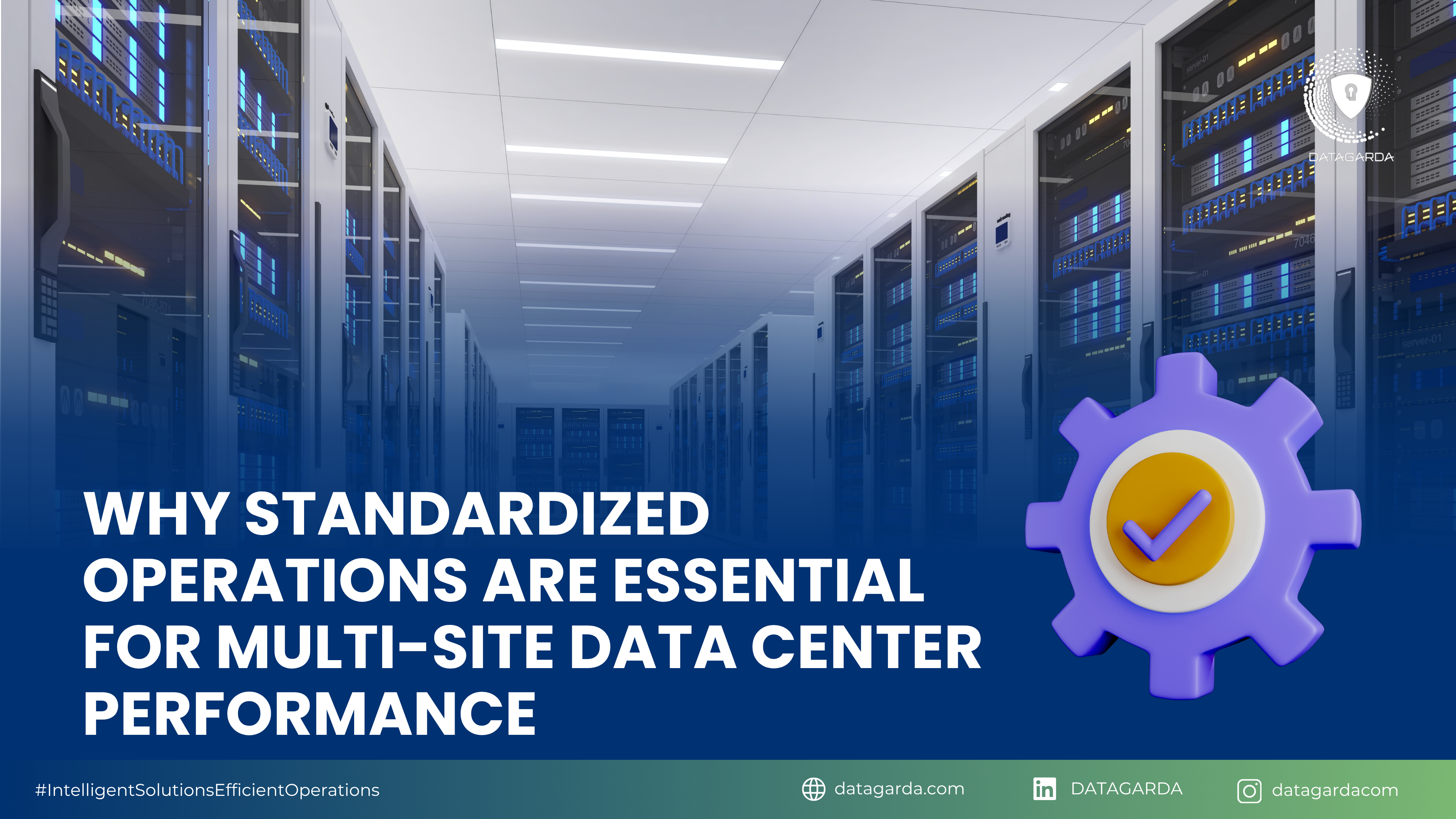
As organizations expand their digital footprint, many are moving from managing a single data center to operating multiple facilities across different cities, regions, or even countries.
This expansion supports business growth, improves redundancy, and brings digital services closer to users. However, it also introduces a new operational challenge: maintaining consistent performance across every location.
While hardware, power systems, and networking technologies may be standardized, operational practices often are not.
Different maintenance procedures, reporting methods, operational cultures, and governance models can create inconsistencies that directly impact performance, reliability, and business continuity.
For organizations operating multiple sites, standardized operations are no longer just a best practice—they are a strategic necessity.
Why Multi-Site Operations Become More Complex Over Time
As the number of facilities grows, operational complexity increases exponentially.
Common challenges include:
- Different Standard Operating Procedures (SOPs)
- Inconsistent maintenance schedules
- Varying incident response practices
- Different reporting formats
- Limited enterprise-wide operational visibility
- Uneven compliance with governance standards
These inconsistencies make it difficult for executive leadership to evaluate infrastructure performance across the organization.
Without operational consistency, every new facility introduces another layer of risk.
The Cost of Operational Inconsistency
When each site operates independently, organizations often experience:
Slower Incident Response
Different escalation procedures delay coordination during critical events.
Uneven Infrastructure Performance
Facilities perform differently despite having similar technology investments.
Limited Executive Visibility
Leadership struggles to compare performance across locations due to inconsistent reporting.
Higher Operational Costs
Duplicated processes, inconsistent maintenance, and inefficient resource allocation increase operating expenses.
Greater Compliance Risk
Maintaining regulatory compliance becomes more difficult when operational standards differ between sites.
Operational inconsistency is rarely visible on financial statements—but its impact is often reflected in higher risk and lower operational efficiency.
What Standardized Operations Actually Mean
Standardization is not about making every facility identical.
It is about establishing a common operational framework that enables every site to perform at the same high standard while allowing flexibility for local requirements.
A standardized operating model typically includes:
- Unified Standard Operating Procedures (SOPs)
- Common maintenance methodologies
- Consistent asset management practices
- Standard incident response workflows
- Enterprise-wide reporting structures
- Shared governance and compliance frameworks
- Common performance indicators (KPIs)
The result is a more predictable, measurable, and scalable operation.
Five Pillars of High-Performing Multi-Site Operations
1. Standardized Operational Procedures
Clearly documented and consistently implemented processes reduce variability and improve operational reliability.
2. Centralized Operational Visibility
A unified operational dashboard enables executive teams to monitor infrastructure health, service availability, maintenance activities, and operational risks across all locations.
Visibility supports faster, data-driven decision-making.
3. Consistent Asset Lifecycle Management
Applying the same lifecycle planning, maintenance schedules, and replacement strategies across every site improves reliability and extends asset value.
4. Governance and Compliance
Enterprise-wide governance ensures every facility follows the same operational standards, audit requirements, and risk management practices.
Strong governance builds confidence for executives, customers, and regulators alike.
5. Continuous Performance Improvement
Standardized KPIs make it possible to benchmark facilities, identify best practices, and continuously improve operational performance across the organization.
Performance becomes measurable—not subjective.
Why Standardization Creates a Competitive Advantage
Organizations with standardized multi-site operations benefit from:
- Greater operational consistency
- Faster incident response
- Improved infrastructure reliability
- Better executive visibility
- Reduced operational risk
- More efficient resource utilization
- Easier expansion into new markets
- Stronger business continuity
Rather than managing multiple independent facilities, organizations create one coordinated operational ecosystem.
That consistency becomes a competitive advantage.
How Datagarda Supports Multi-Site Operational Excellence
At Datagarda, we help organizations establish operational consistency across their digital infrastructure through a structured approach to governance, operational excellence, and infrastructure management.
Our capabilities include:
- Multi-Site Operational Assessment
- Infrastructure Operations Audit
- Standard Operating Procedure (SOP) Development
- Infrastructure Governance Framework
- Operational Readiness Assessment
- Asset Lifecycle Management
- Executive Operational Reporting
- Business Continuity & Resilience Advisory
Our objective is to help organizations build data center operations that are scalable, resilient, and consistently high-performing across every location.
Conclusion
As enterprises continue expanding their digital infrastructure, operational consistency becomes just as important as technological capability.
Organizations that standardize operations gain more than efficiency—they gain visibility, resilience, governance, and the confidence to scale.
The highest-performing multi-site data center environments are not defined by the number of facilities they operate.
They are defined by the consistency with which those facilities operate.
Standardized operations transform multiple data centers into one high-performing enterprise infrastructure.
Build Consistent Performance Across Every Data Center
As your infrastructure grows, operational consistency becomes a strategic asset.
Partner with Datagarda to strengthen multi-site operations through governance, operational assessments, infrastructure lifecycle management, and enterprise-wide operational excellence.
Standardize operations. Strengthen resilience. Scale with confidence.