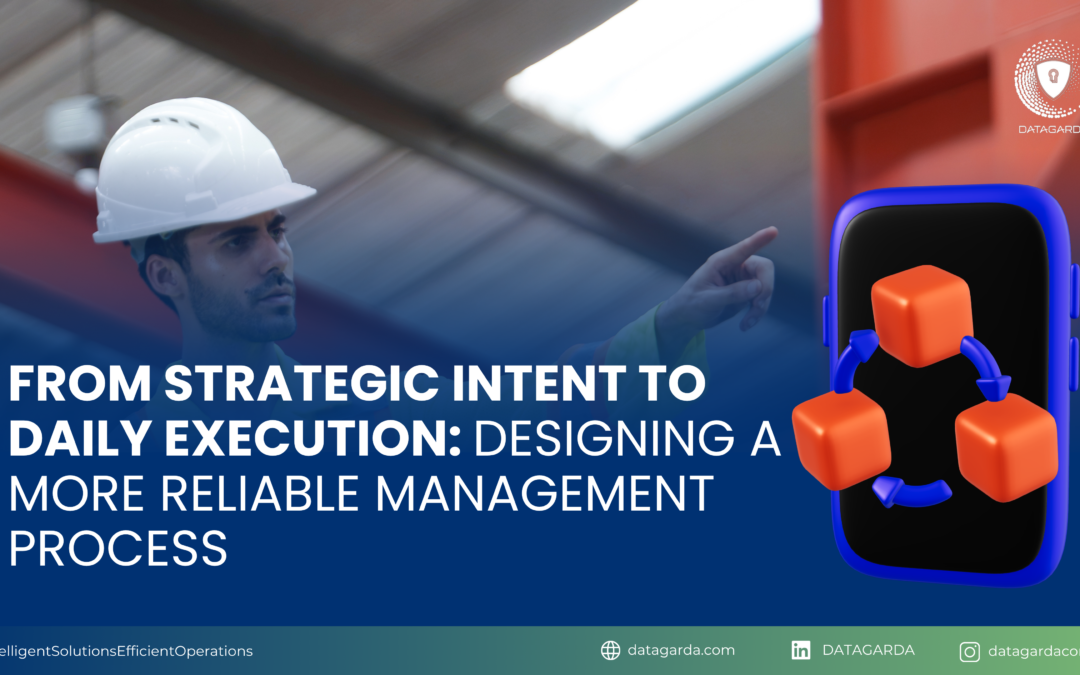
Meetings are where priorities are aligned, decisions are made, and responsibilities are discussed. Yet for many organizations, the real challenge begins after the meeting ends.
Action items are documented. Teams understand what needs to be done. Deadlines are established. But as daily operational demands increase, commitments can lose momentum, responsibilities become less visible, and important decisions may take longer than expected to translate into progress.
The issue is not necessarily a lack of meetings or documentation. It is the gap between management decisions and consistent execution.
For organizations seeking greater operational reliability, follow-through must become more than an administrative activity. It must be part of how everyday operations are managed.
When Decisions Do Not Translate Into Progress
A meeting can create alignment, but alignment alone does not guarantee execution.
Without a structured approach to follow-through, organizations may encounter familiar challenges:
- Actions remain open without clear accountability.
- Teams struggle to prioritize commitments alongside ongoing responsibilities.
- Dependencies and unresolved decisions slow down execution.
- Management receives updates without sufficient visibility into actual progress.
- Repeated follow-up becomes necessary to maintain momentum.
Over time, these challenges can affect project delivery, operational coordination, and management confidence.
The underlying problem is often not the decision itself. It is the absence of a consistent process connecting decisions, responsibilities, and execution.
Follow-Through Is Where Operational Discipline Becomes Visible
Operational discipline is demonstrated not only through established processes, but through the consistency with which organizations execute them.
Reliable follow-through requires several elements to work together.
1. Clear Ownership of Every Commitment
Every meaningful action needs a defined owner, an expected outcome, and an agreed timeframe.
When ownership is clear, teams can take responsibility for progress while management has a more reliable basis for reviewing execution.
2. Consistent Monitoring of Progress
Action items should not disappear into meeting records after they are assigned.
A consistent review process helps organizations identify outstanding commitments, understand progress, and recognize when additional attention is required.
The objective is not to monitor every activity excessively. It is to maintain sufficient visibility over commitments that matter to operational outcomes.
3. Visibility Into Dependencies and Constraints
Progress rarely depends on one individual or team alone.
An action may require approval, information, resources, or coordination with another function. When these dependencies remain unclear, even well-defined responsibilities can become difficult to execute.
Making these constraints visible enables management to understand where progress is being held back and where intervention may be necessary.
4. Timely Escalation and Management Support
Not every commitment will progress according to plan.
A reliable operating process should distinguish between actions that are progressing normally and those requiring management attention.
Timely escalation helps organizations address unresolved issues before they become broader delivery or coordination challenges.
From Meeting Documentation to Everyday Execution
Meeting minutes remain valuable. They provide a record of decisions, discussions, and responsibilities.
However, documentation becomes significantly more useful when it is connected to an execution process.
Organizations need a consistent way to translate decisions into action, maintain accountability, review progress, and identify issues that require attention.
This is where structured project management and operational coordination become important.
Instead of treating follow-up as a separate administrative task, organizations can integrate it into their existing management routines.
The result is a more connected operating process—where decisions remain visible beyond the meeting, responsibilities are easier to track, and management has a clearer understanding of execution.
Why Structured Execution Matters to Management
For leadership, the value of follow-through extends beyond completing individual action items.
It supports a broader management objective: maintaining visibility into whether organizational priorities are moving forward as expected.
A structured execution process can help management better understand:
- Which commitments are progressing and which remain unresolved.
- Where accountability or coordination needs improvement.
- Which dependencies are affecting delivery.
- Where management decisions or support are required.
- Whether recurring execution issues indicate a broader process weakness.
This perspective shifts management attention from activity reporting toward execution visibility.
It also reinforces an important principle: operational reliability is not built through isolated decisions. It develops through consistent execution across everyday activities.
Strengthening Follow-Through With DataGarda
Building reliable follow-through requires more than reminding teams to complete their action items. It requires an operating approach that connects management priorities, responsibilities, coordination, and progress visibility.
DataGarda helps organizations strengthen project management and operational processes through structured approaches to planning, coordination, execution, and management visibility.
By supporting more disciplined project execution and clearer operational coordination, DataGarda helps organizations establish a stronger connection between decisions and delivery.
For organizations managing multiple priorities, teams, and interdependent activities, this connection can become an important foundation for more consistent execution.
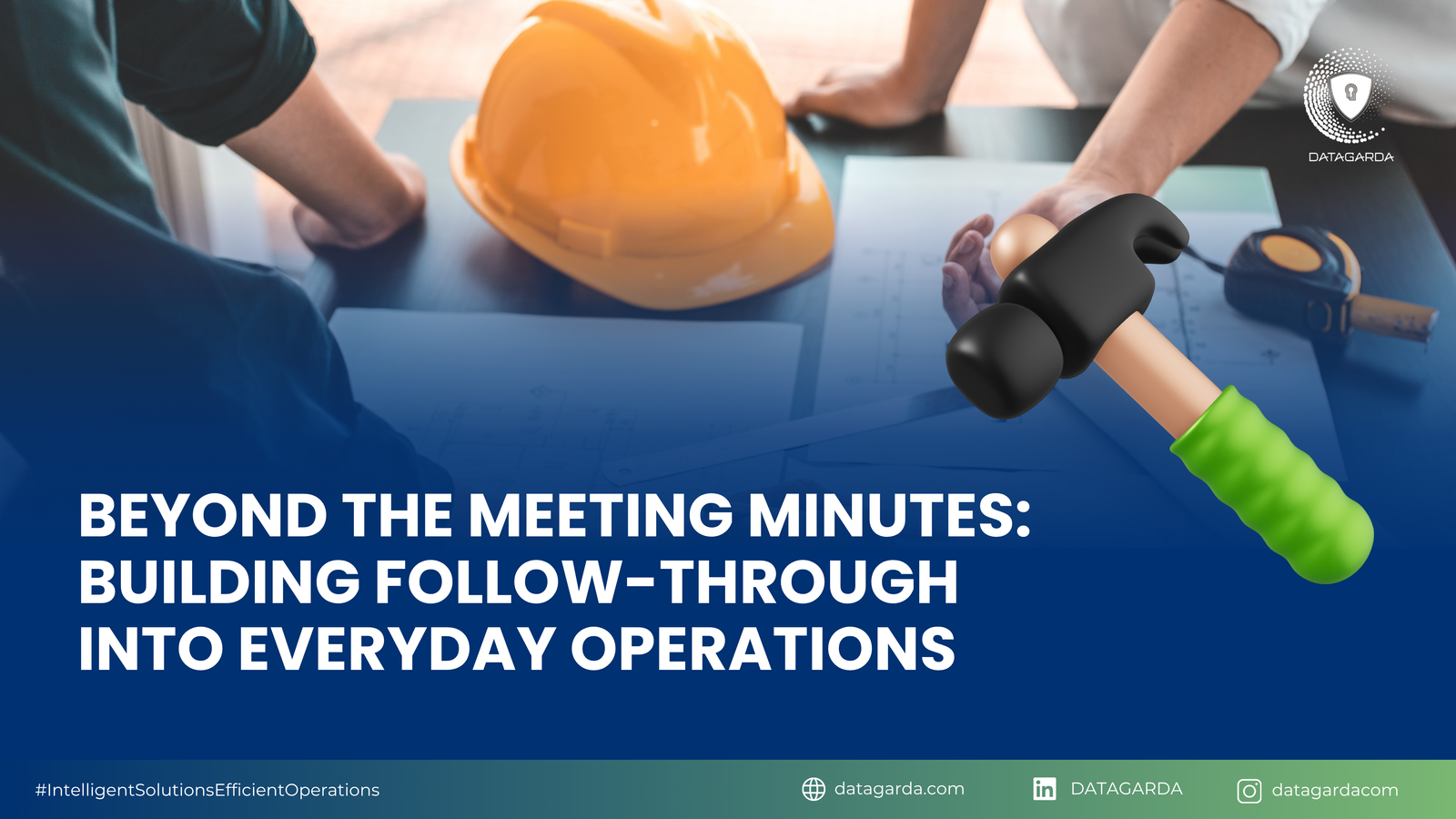
Beyond the Meeting Minutes, the real opportunity is building an operating process where commitments translate into progress.
Turn Better Follow-Through Into Better Execution
Is your organization looking to improve project coordination, strengthen accountability, or gain clearer visibility into execution?
Connect with DataGarda to explore how structured project management and operational processes can help your organization turn management commitments into measurable progress.
DataGarda — Intelligent Solutions, Efficient Operations.