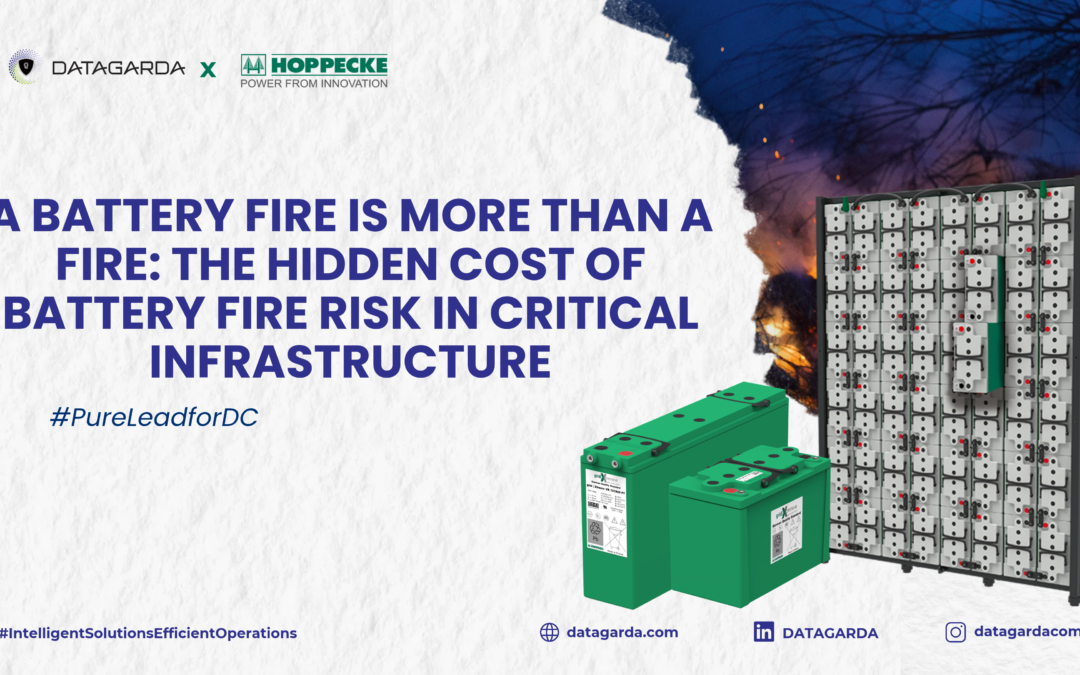
A data center fire is rarely just an infrastructure incident.
When critical digital infrastructure is disrupted, the consequences can extend far beyond damaged equipment. Government services may become unavailable, operational continuity can be compromised, and the economic impact may continue long after the fire has been extinguished.
A recent case in South Korea demonstrates how these consequences can unfold.
According to a September 7, 2026, report by Yonhap News Agency, an audit found that unlicensed subcontractors carried out battery replacement work at the National Information Resources Service before a fire damaged servers and disrupted government administrative services nationwide.
The incident, which occurred on September 26, 2025, reportedly required 95 days for affected services to return to full normal operation.
The audit also identified failures involving contractor qualification, safety precautions during battery replacement, fire safety inspections, and incident response.
The lesson for critical infrastructure operators is clear: infrastructure resilience depends not only on equipment, but also on the quality of execution, safety governance, and operational readiness surrounding it.
Battery Replacement: A Critical Activity With Operational Consequences
Battery replacement is an essential part of maintaining power continuity in data centers.
UPS battery systems support critical loads during power interruptions, making their condition, maintenance, and replacement important elements of infrastructure reliability.
However, battery replacement is also a maintenance activity involving electrical systems, operational dependencies, and potentially significant safety risks.
The South Korean incident illustrates why battery-related projects should not be treated as routine procurement or maintenance exercises.
A replacement project requires more than selecting the appropriate battery technology. It also requires qualified personnel, controlled work procedures, appropriate safety measures, and clear accountability across contractors and subcontractors.
When these elements are not properly managed, a maintenance activity intended to improve reliability can introduce new operational risks.
The Contractor Governance Gap
One of the most important findings in the reported audit was the involvement of subcontractors that lacked the required qualifications or licenses for the work.
This raises a broader management question:
How effectively can organizations control safety and execution when project responsibilities extend across multiple contractors?
Contractor governance is particularly important in critical infrastructure environments, where maintenance activities may interact with energized systems, operational equipment, and restricted facilities.
A structured contractor management process should establish:
- Verification of contractor qualifications and applicable licenses.
- Clear accountability across subcontracting arrangements.
- Defined work scopes and safety responsibilities.
- Appropriate work authorization and risk assessment.
- Controlled execution and supervision.
- Verification that required safety measures are implemented.
The objective is not simply administrative compliance. It is ensuring that critical work is performed under conditions that support operational reliability.
Safety Governance Must Extend Beyond the Equipment
The reported audit also identified concerns involving fire safety inspections and the response to the incident.
These findings reinforce an important principle: infrastructure safety cannot depend exclusively on the technical condition of equipment.
Safety governance must connect operational procedures, inspection readiness, decision-making authority, and emergency response.
For data center operators, this means maintaining a management process that supports:
Inspection readiness: Safety inspections should be integrated into operational governance rather than treated as interruptions to business activity.
Work authorization: Maintenance activities should proceed only under appropriate controls and authorization.
Operational coordination: Contractors, facility operators, and relevant stakeholders should understand their responsibilities before work begins.
Emergency preparedness: Incident response procedures should be established, coordinated, and appropriate to the facility’s operational risks.
Management visibility: Critical safety issues, unresolved risks, and operational constraints should be visible to the people responsible for decisions.
These elements help create a more disciplined approach to infrastructure risk management.
Battery Technology and the Importance of Lifecycle Decisions
Battery selection is an important part of data center power strategy. Yet technology decisions should be considered alongside installation, maintenance, replacement, and end-of-life management.
Different battery technologies have different characteristics, operational requirements, and risk profiles. These differences should be evaluated within the context of the facility’s power architecture, operational priorities, and safety requirements.
For organizations considering UPS battery systems, the decision should extend beyond initial performance or procurement cost.
Relevant considerations include:
- Battery technology and application suitability.
- Installation and maintenance requirements.
- Replacement planning and operational coordination.
- Safety controls throughout the battery lifecycle.
- Long-term reliability and lifecycle cost.
- Recycling and end-of-life considerations.
No battery technology eliminates the need for proper engineering, safety controls, qualified personnel, and operational governance.
A resilient power infrastructure requires the right combination of technology, implementation discipline, and lifecycle management.
The Role of HOPPECKE in a More Disciplined Power Strategy
As a battery technology specialist, HOPPECKE brings an important perspective to the discussion of critical power infrastructure: battery technology decisions should be evaluated within the broader context of reliability, lifecycle management, and application requirements.
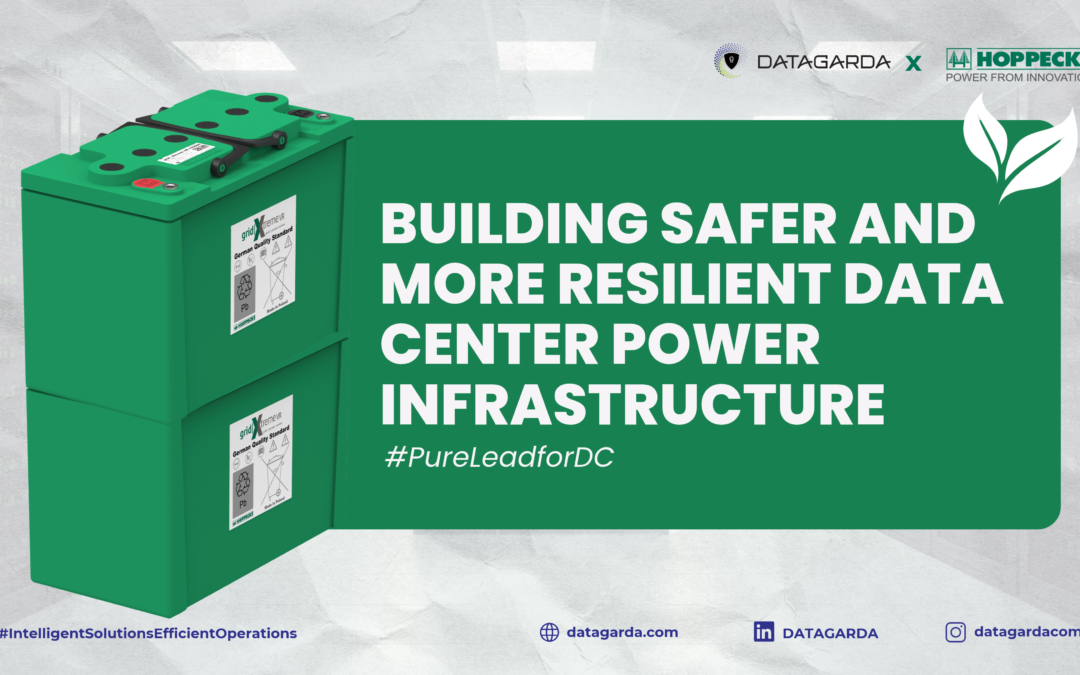
HOPPECKE’s Pure Lead AGM battery technology offers an alternative approach for UPS applications, with characteristics that differ from lithium-ion battery systems.
Its sealed AGM design, high-power capabilities in appropriate applications, and established lead-acid recycling ecosystem provide relevant considerations for organizations evaluating their power infrastructure strategy.
However, technology selection is only one part of the decision.
The reliability of a battery system also depends on appropriate system design, installation quality, maintenance practices, and the safety discipline applied throughout its operational lifecycle.
This is where technology expertise and operational execution must work together.
DataGarda’s Perspective: Resilience Is Built Through Execution
At DataGarda, infrastructure resilience is understood as a combination of technical readiness, operational discipline, and management oversight.
Critical infrastructure projects require structured planning, qualified execution, clear accountability, and coordination between the organizations involved.
Battery replacement, maintenance, and infrastructure upgrades should therefore be approached as operationally significant activities—not merely technical tasks.
By supporting structured project management, operational coordination, and execution visibility, DataGarda helps organizations strengthen the processes that underpin infrastructure reliability.
Combined with appropriate technology expertise from partners such as HOPPECKE, organizations can take a more comprehensive approach to evaluating power infrastructure decisions and managing operational risks.
Beyond Equipment: Protecting Digital Continuity
The South Korean data center fire demonstrates how a single infrastructure incident can disrupt services far beyond the facility itself.
The broader lesson is not that one battery technology or one equipment category is inherently responsible for every incident.
It is that critical infrastructure reliability depends on decisions made throughout the system—from technology selection and contractor qualification to maintenance execution, safety governance, and emergency readiness.
Resilience is not established when equipment is installed. It is maintained through disciplined decisions and execution throughout its lifecycle.
Strengthen Your Critical Power Infrastructure Strategy
Planning a UPS battery replacement, evaluating power infrastructure options, or reviewing operational readiness?
Connect with DataGarda and HOPPECKE to explore a more structured approach to critical power infrastructure, battery lifecycle considerations, and operational reliability.
DataGarda × HOPPECKE — Technology Expertise. Operational Discipline. Infrastructure Resilience.