The Battery Decision Behind Infrastructure Resilience
In critical infrastructure, power continuity is not simply an engineering requirement. It is a business necessity.
Data centers, telecommunications facilities, and other mission-critical environments depend on uninterrupted power to maintain essential services. Within these environments, Uninterruptible Power Supply (UPS) systems play a vital role by providing backup power when the primary supply is disrupted.
At the heart of every UPS system is a critical component: the battery.
Yet, selecting a UPS battery is not always a straightforward decision. As battery technologies evolve, infrastructure operators increasingly evaluate different options, particularly Pure Lead and Lithium-Ion.
Both technologies offer distinct characteristics and potential advantages. However, their suitability depends on more than energy capacity or initial procurement cost.
For critical infrastructure leaders, the decision should consider a broader set of factors: safety, power requirements, operating conditions, maintenance, lifecycle expectations, space utilization, and total cost of ownership.
The real question is not simply which battery technology is more advanced. It is which technology is better aligned with the operational requirements and risk profile of the infrastructure it supports.
1. Why UPS Battery Selection Matters
UPS batteries provide temporary power during interruptions in the primary electrical supply, helping connected systems remain operational while backup power arrangements take effect.
In a data center, this function supports the continuity of critical IT infrastructure and digital services.
However, battery systems also introduce operational considerations throughout their lifecycle, from procurement and installation to monitoring, maintenance, replacement, and eventual disposal.
A battery decision can influence:
- Power availability and backup duration
- Infrastructure footprint and space utilization
- Safety requirements and facility design
- Maintenance planning and operational workload
- Replacement schedules and lifecycle expenditure
- Long-term infrastructure flexibility
This is why battery selection should be approached as a strategic infrastructure decision rather than an isolated equipment purchase.
2. Understanding the Two Technologies
Pure Lead and Lithium-Ion batteries use different electrochemical technologies and have different design characteristics.
Understanding these differences helps infrastructure operators evaluate which solution is appropriate for their specific UPS application.
Pure Lead: An Established Technology with High-Performance Developments
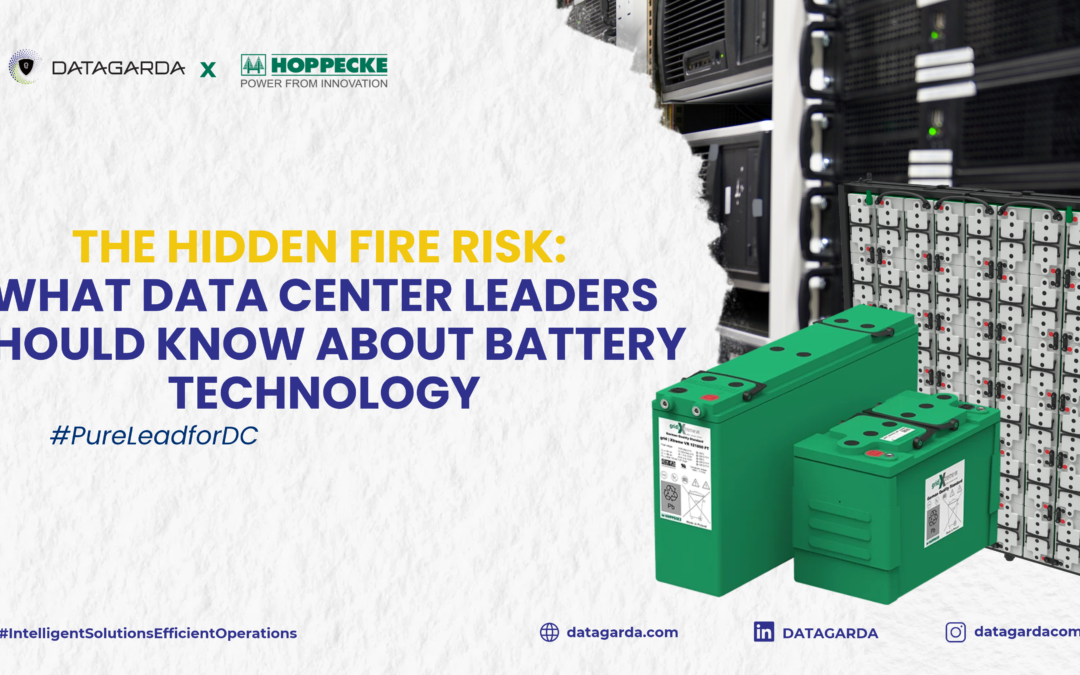
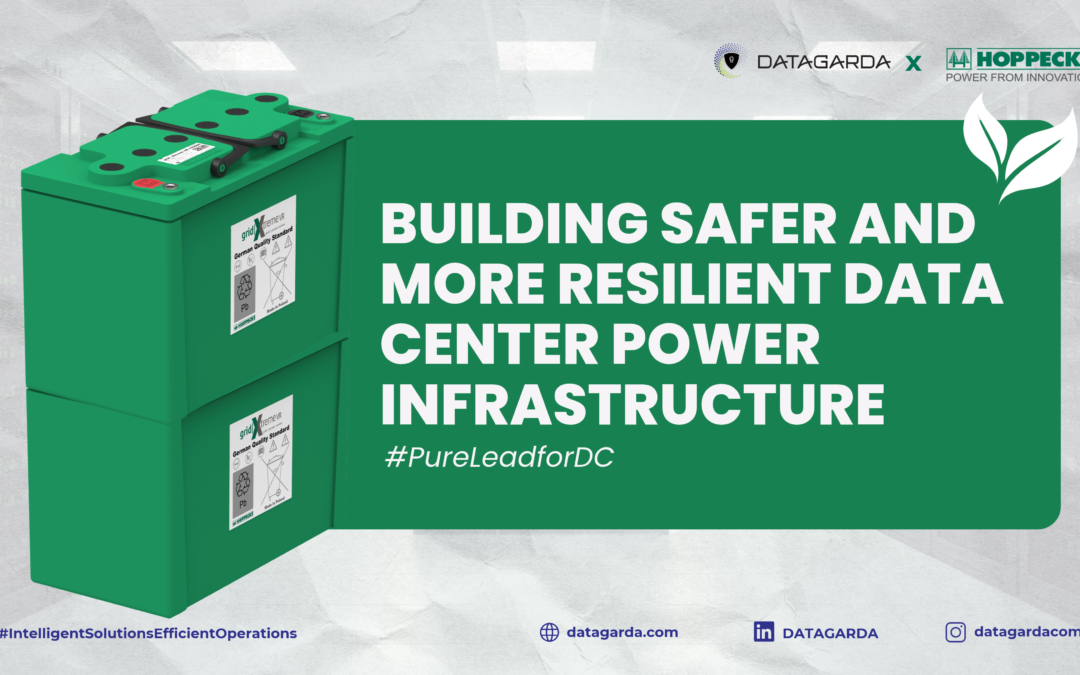
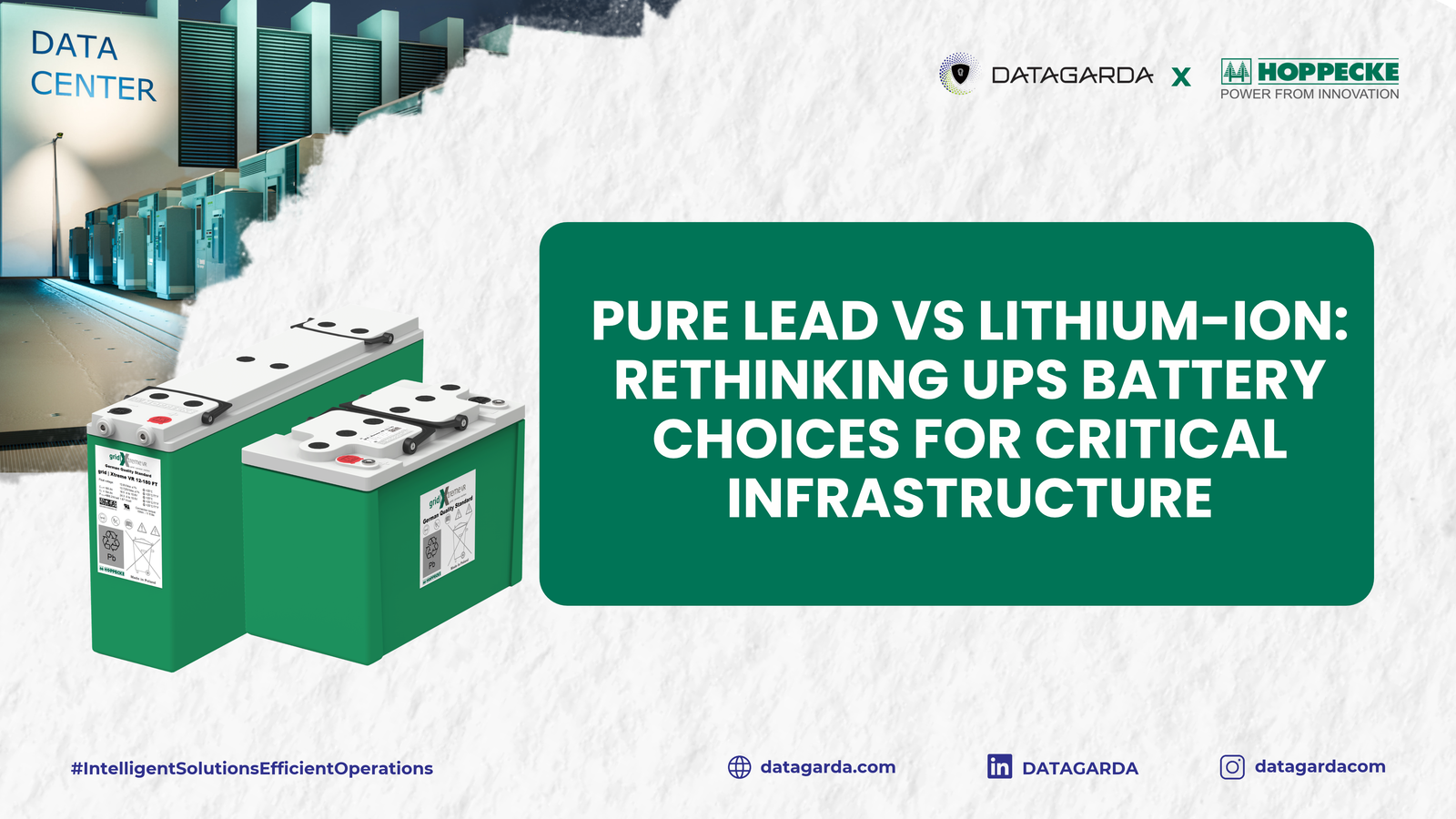
Pure Lead batteries belong to the lead-acid battery family. HOPPECKE’s grid | Xtreme VR range uses High Performance Pure Lead (HPPL) technology in a sealed AGM (Absorbent Glass Mat) design.
According to HOPPECKE’s product documentation, HPPL technology uses high-purity lead electrodes with improved corrosion resistance. This enables thinner electrodes and a greater number of electrodes within the battery design, supporting higher energy and power density.
For critical power applications, the grid | Xtreme VR product range is designed to support:
- High-current discharge performance
- High power density and efficient space utilization
- Operation in demanding temperature environments
- Reduced maintenance requirements
- Fast charging capability
- Partial State of Charge (PSoC) operation
- Design life of up to 15 years at 20°C, subject to operating conditions
The sealed AGM construction also means routine distilled-water refilling is not required.
These characteristics make HPPL Pure Lead a relevant option for standby power applications where high-current performance, predictable operation, and lifecycle considerations are important.
Lithium-Ion: A Technology Focused on Energy Density and System Integration
Lithium-Ion batteries have become an important option across modern energy storage and power applications.
In UPS environments, their characteristics can include:
- High energy density
- Lower weight for certain system configurations
- Integrated battery management and monitoring capabilities
- Fast recharge capability
- Flexible system configurations
However, Lithium-Ion UPS installations also require careful consideration of battery management systems (BMS), system integration, charging parameters, thermal management, and fire protection requirements.
Different Lithium-Ion chemistries, including NMC and LFP, also have different performance and safety characteristics. They should not be treated as a single, uniform technology category.
The suitability of a Lithium-Ion solution therefore depends on its chemistry, system architecture, operating conditions, and the requirements of the facility.
3. Pure Lead vs. Lithium-Ion: What Should Infrastructure Leaders Compare?
Rather than focusing on a single specification, infrastructure leaders should evaluate battery technologies across several decision areas.
A. Safety and Risk Management
Battery safety is one of the most important considerations in critical infrastructure.
Lithium-Ion systems require appropriate battery management, monitoring, thermal management, and fire protection strategies based on the selected chemistry and installation design.
Pure Lead AGM systems have a different electrochemical and thermal risk profile. They do not have the same characteristic lithium-ion thermal runaway mechanism, but they are not risk-free. Electrical faults, overheating, incorrect charging, poor installation, and inadequate maintenance can still create hazardous conditions.
HOPPECKE’s grid | Xtreme VR incorporates design features such as individual pressure-relief valves, backfire-inhibiting elements, and flame-retardant housing materials.
For infrastructure operators, the important consideration is to evaluate the complete battery installation—not just the chemistry or product specification.
Safety planning should include:
- Appropriate system design and installation
- Electrical protection and isolation
- Temperature monitoring and ventilation
- Qualified installation and maintenance personnel
- Inspection and emergency response procedures
No battery technology eliminates the need for proper safety engineering and operational controls.
B. Power Performance and Space Utilization
UPS batteries must deliver the required power within a specific discharge period.
For data centers, the relevant evaluation is not simply battery capacity. It is whether the complete battery system can meet the required power, voltage range, and backup duration within the available installation space.
Pure Lead HPPL technology is designed to provide high-current discharge performance through its electrode design and battery construction.
Lithium-Ion systems can offer higher energy density and lower weight, depending on the selected chemistry and system configuration.
The comparison should therefore consider:
- Required backup duration
- Discharge power and voltage range
- Battery configuration
- Available floor space
- Rack or cabinet requirements
- Expansion requirements
HOPPECKE’s grid | XtremeStack is an example of how battery system design can further influence space utilization. Its modular stacking approach is intended to optimize the installation footprint and simplify system expansion.
C. Lifecycle and Maintenance
Initial purchase cost is only one part of the investment.
Infrastructure operators should also consider maintenance requirements, expected service life, replacement planning, monitoring, and end-of-life management.
HOPPECKE specifies a design life of up to 15 years at 20°C for grid | Xtreme VR. Actual service life depends on operating temperature, charging conditions, application, installation, and maintenance.
Its sealed AGM design does not require routine distilled-water refilling, while accessible impedance measurement points support inspection and maintenance activities.
Lithium-Ion systems may offer integrated monitoring and other system-level capabilities. However, they also require appropriate BMS management, qualified commissioning, and consideration of system compatibility throughout their operating life.
The key is to evaluate lifecycle requirements as part of the original infrastructure design—not only when replacement becomes necessary.
D. Total Cost of Ownership (TCO)
A lower initial price does not automatically translate into a lower long-term investment.
Total Cost of Ownership should account for the complete system and its operational requirements.
Relevant cost considerations include:
- Initial battery and system investment
- Installation and commissioning
- Battery room or cabinet requirements
- Monitoring and maintenance
- Energy consumption and charging
- Replacement and disposal
- Recycling and transportation
- Operational disruption during maintenance or replacement
HOPPECKE’s comparison materials position grid | Xtreme VR as a cost-effective option for certain standby applications.
However, the actual economic outcome depends on the UPS configuration, required autonomy, local installation conditions, operating profile, and project-specific costs.
For decision-makers, a lifecycle-based comparison provides a more meaningful basis for investment than procurement price alone.
4. The Role of Battery Technology in Infrastructure Resilience
Battery selection is only one part of a wider infrastructure resilience strategy.
The reliability of a UPS installation also depends on how the system is designed, installed, integrated, monitored, and maintained.
A suitable battery can support power continuity, but its contribution to resilience depends on the operational environment surrounding it.
This includes:
Infrastructure Planning
Battery selection should align with the facility’s power requirements, space constraints, operating environment, and future capacity plans.
Project Execution
Installation and replacement activities require qualified contractors, clear work procedures, electrical safety controls, and coordinated execution.
Operational Visibility
Battery condition, system performance, maintenance requirements, and potential issues should remain visible to the teams responsible for infrastructure reliability.
Lifecycle Governance
Organizations need clear ownership of inspection, maintenance, replacement planning, and end-of-life management.
These considerations are particularly important for data centers, where infrastructure dependencies can extend across multiple teams, contractors, and operational functions.
5. Lessons from Critical Infrastructure: Risk Extends Beyond Technology
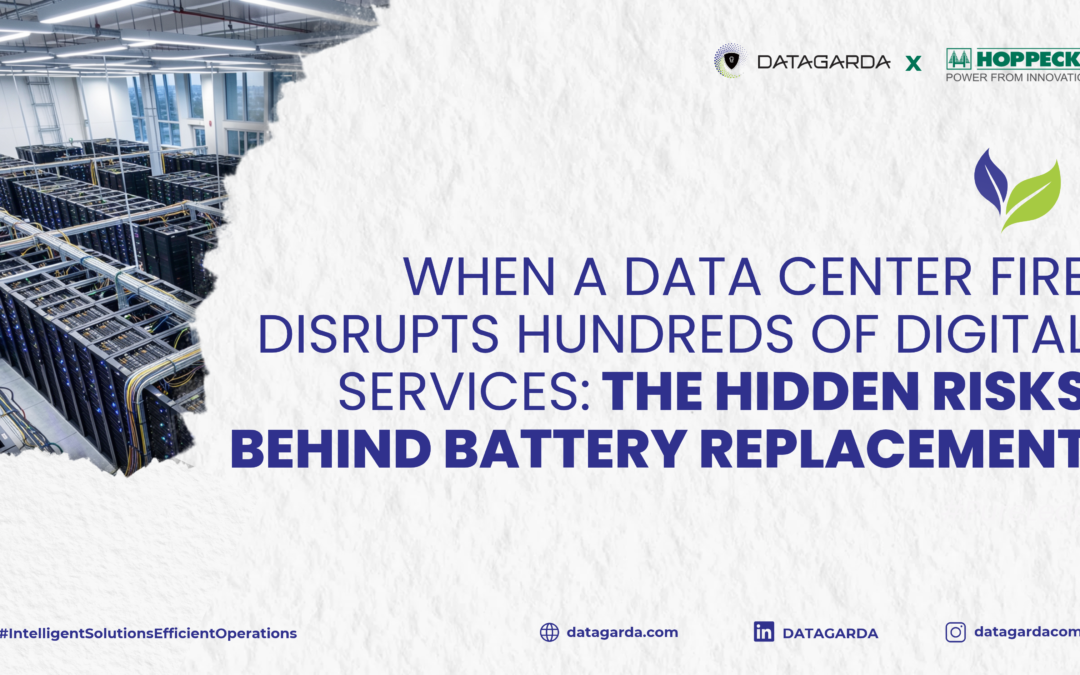
A September 2026 Yonhap report on findings from South Korea’s Board of Audit and Inspection highlighted the operational consequences of weaknesses in a battery replacement project at the National Information Resources Service.
The September 26, 2025 fire disrupted government online administrative services, with full normalization taking 95 days.
The audit identified issues involving subcontractor qualifications, safety measures, inspection decisions, and emergency response.
The report did not establish that a particular battery chemistry caused the incident. Its broader relevance lies in the governance of critical infrastructure work.
The case illustrates why battery-related projects must be managed with clear accountability, qualified personnel, appropriate safety procedures, and operational oversight.
Technology selection matters. But the way technology is installed, maintained, and governed matters just as much.
6. How Should Data Center Leaders Make the Decision?
There is no universal battery solution for every critical infrastructure environment.
The right choice depends on the operational requirements and priorities of each facility.
Before selecting a UPS battery system, decision-makers should evaluate five essential questions:
- What are the power requirements?
Define the required discharge power, backup duration, voltage range, and UPS compatibility. - What are the facility’s safety requirements?
Evaluate the technology’s risk profile, installation design, monitoring, and fire protection needs. - How will the system perform throughout its lifecycle?
Consider expected service life, operating temperature, charging conditions, maintenance, and replacement planning. - What are the space and expansion constraints?
Assess footprint, rack configuration, accessibility, and future infrastructure requirements. - What is the complete cost of ownership?
Include installation, maintenance, monitoring, replacement, transportation, and end-of-life management.
A structured evaluation helps organizations select a battery system that supports both technical requirements and long-term operational objectives.
7. DataGarda × HOPPECKE: A More Informed Approach to Critical Power Infrastructure
The discussion around Pure Lead and Lithium-Ion reflects a broader challenge for modern data centers: making infrastructure decisions that balance performance, safety, lifecycle considerations, and operational readiness.
HOPPECKE contributes its battery technology expertise through solutions such as grid | Xtreme VR, developed with High Performance Pure Lead technology for demanding standby power applications.
DataGarda brings a broader operational perspective to critical infrastructure, emphasizing structured project management, operational coordination, execution visibility, and disciplined delivery.
Together, these perspectives encourage infrastructure leaders to look beyond individual equipment specifications and consider the complete environment in which critical power systems operate.
Because resilient infrastructure is not defined by technology alone.
It is built through informed decisions, disciplined execution, and consistent operational management.
Choose for the Entire Lifecycle, Not Just the Initial Requirement
Pure Lead and Lithium-Ion each have distinct characteristics that may make them suitable for different UPS applications.
Lithium-Ion can offer advantages in energy density, weight, and integrated system monitoring. High-performance Pure Lead AGM solutions offer an established battery technology with high-current capabilities, reduced maintenance requirements, and long design-life potential under specified operating conditions.
The best choice is not determined by a single specification or technology trend.
It requires a balanced assessment of safety, performance, infrastructure constraints, lifecycle expectations, and total cost of ownership.
For critical infrastructure leaders, the priority should be clear: select a UPS battery solution that aligns with the facility’s operational requirements and supports long-term resilience.
Beyond battery capacity. Design for resilience.
Strengthen Your Critical Infrastructure Strategy with DataGarda
DataGarda supports organizations in strengthening project management, operational coordination, and execution visibility—helping critical infrastructure initiatives move forward with greater clarity, accountability, and operational discipline.
Explore how a structured approach to infrastructure execution can support long-term operational resilience.
DataGarda — Intelligent Solutions, Efficient Operations.
This article draws on HOPPECKE product documentation for grid | Xtreme VR and grid | XtremeStack, alongside the Yonhap News Agency report dated September 7, 2026. Product performance and lifecycle statements are subject to specified application and operating conditions. Battery selection should be based on project-specific engineering, safety, and lifecycle assessments.