Performance Alone Is No Longer Enough
As AI workloads, hyperscale facilities, and mission-critical digital services continue to grow, battery systems have become one of the most critical components of modern data center infrastructure.
Traditionally, organizations have evaluated battery technologies based on capacity, runtime, lifecycle costs, and energy efficiency.
Today, however, executive decision-makers are asking a broader question:
How does battery technology influence infrastructure safety, operational resilience, and long-term business risk?
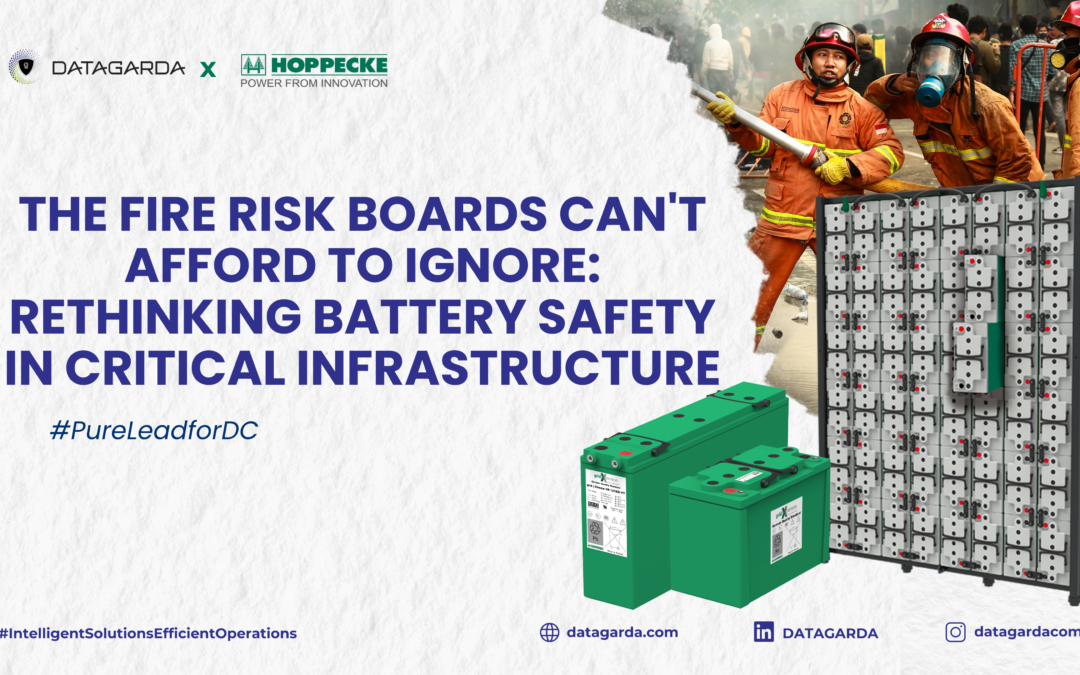
Recent incidents involving battery fires have highlighted that battery selection is no longer solely an engineering decision—it is a strategic risk management decision that deserves attention in every boardroom.
Understanding the Fire Safety Challenge
Lithium-ion batteries have become widely adopted across many industries because of their high energy density and compact design.
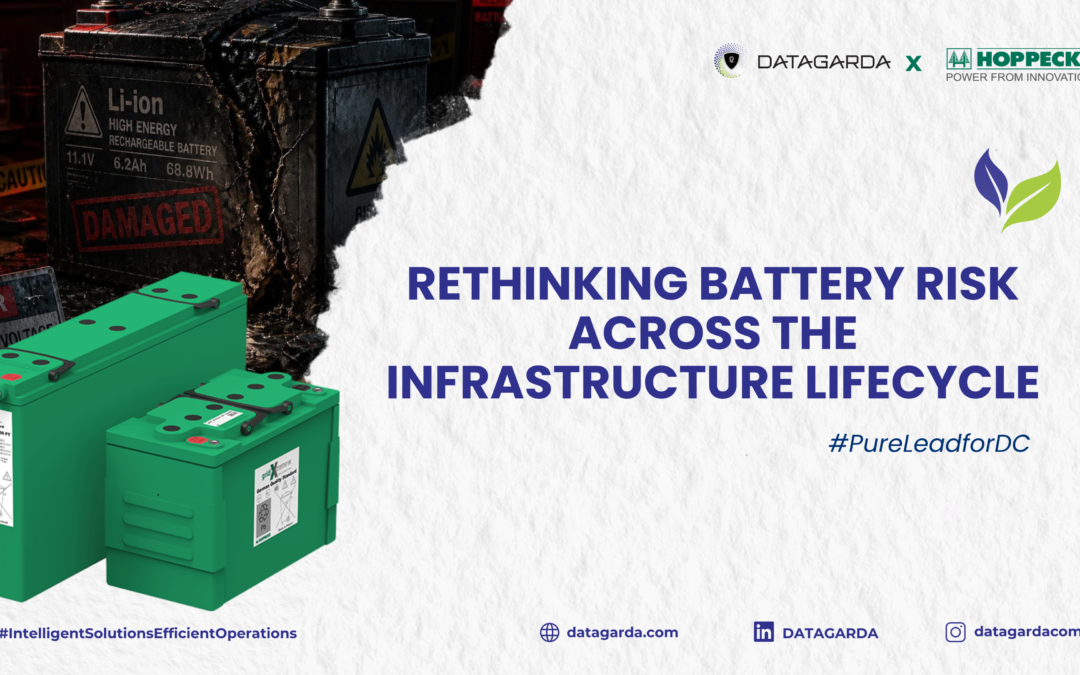
However, they also present a unique safety consideration: thermal runaway.
Thermal runaway is a chain reaction within a battery cell that can be extremely difficult to stop once initiated.
It occurs when the internal temperature of a battery reaches a critical level, triggering chemical reactions inside the cell. These reactions generate additional heat and may release oxygen, allowing the reaction to continue independently.
Conditions that may contribute to thermal runaway include:
- Excessive overheating
- Physical damage to battery cells
- Overcharging
- Internal cell failure
In addition, many lithium-ion battery designs contain:
- Flammable liquid electrolytes
- Flammable polymer separators
These characteristics make fire prevention, monitoring, and battery selection increasingly important considerations for critical infrastructure environments.
For organizations operating data centers, the discussion extends beyond battery performance to include operational safety and business continuity.
Battery Fire Safety Is a Business Risk
Battery-related incidents can affect much more than equipment.
A serious battery failure may lead to:
- Service disruption
- Operational downtime
- Damage to critical infrastructure
- Business continuity challenges
- Regulatory scrutiny
- Financial losses
- Reputational impact
As digital infrastructure becomes central to business operations, infrastructure resilience depends on minimizing avoidable operational risks.
Fire safety should therefore be considered an essential element of infrastructure governance—not merely a facilities issue.
Looking Beyond Technical Specifications
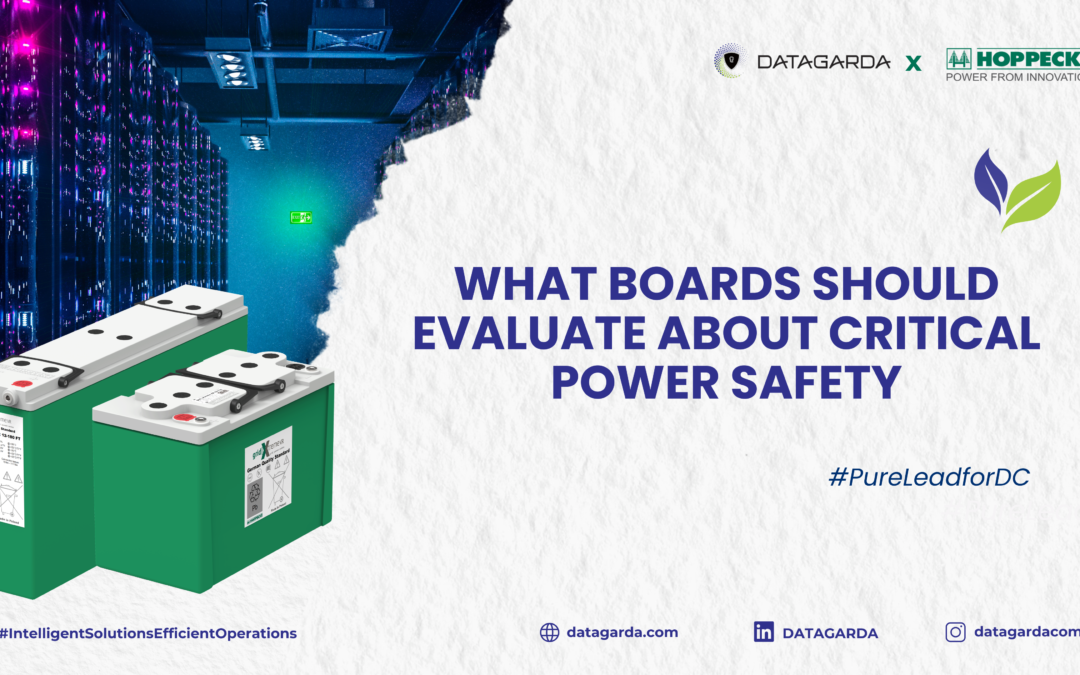
When evaluating critical power infrastructure, organizations should assess battery technologies using a broader set of criteria.
Key considerations include:
Operational Safety
How does the technology support a safer operating environment?
Lifecycle Reliability
Can the battery deliver consistent performance throughout its expected service life?
Maintenance Requirements
Does the technology simplify inspection, monitoring, and preventive maintenance?
Risk Profile
What operational risks should be considered throughout the asset lifecycle?
Business Continuity
How does the battery strategy support uninterrupted digital operations during critical events?
Selecting battery technology should align with both operational objectives and enterprise risk management strategies.
Why Safer Battery Technologies Are Gaining Attention
As organizations place greater emphasis on infrastructure resilience, many are reassessing battery technologies based on long-term operational performance and safety characteristics—not solely on energy density.
Technologies designed with robust construction, proven reliability, and lower operational complexity can help organizations strengthen critical power strategies while supporting long-term lifecycle management.
The objective is not simply to maximize performance, but to create infrastructure that balances reliability, operational continuity, and safety.
Governance Must Include Critical Power Strategy
Infrastructure governance extends beyond servers, networks, and cooling systems.
Critical power assets deserve the same level of strategic oversight.
Executive teams should regularly evaluate:
- Battery health and condition
- Lifecycle planning
- Preventive maintenance programs
- Fire safety preparedness
- Operational monitoring
- Emergency response procedures
- Technology refresh planning
Integrating battery management into infrastructure governance enables organizations to reduce operational uncertainty and improve resilience.
The Datagarda × HOPPECKE Approach
Datagarda and HOPPECKE share a common objective: helping organizations build digital infrastructure that is resilient, reliable, and prepared for long-term business growth.
By combining Datagarda’s expertise in:
- Infrastructure Governance
- Operational Excellence
- Business Continuity
- Infrastructure Lifecycle Management
- Operational Readiness Assessments
with HOPPECKE’s decades of experience in critical power and industrial battery solutions, organizations can adopt a more comprehensive approach to infrastructure risk management.
Together, we help enterprises evaluate critical power systems not only for performance, but also for operational safety, lifecycle value, and long-term resilience.
Conclusion
As digital infrastructure continues to evolve, battery technology should be evaluated through a broader strategic lens.
Performance remains important—but it is only one part of the equation.
Organizations that prioritize fire safety, operational resilience, governance, and lifecycle planning are better positioned to protect critical operations while supporting sustainable business growth.
The most valuable infrastructure investments are not simply those that deliver power.
They are the ones that deliver confidence, resilience, and long-term operational trust.
Build Safer and More Resilient Critical Infrastructure
Battery strategy should strengthen both operational performance and enterprise resilience.
Partner with Datagarda and HOPPECKE to assess your critical power infrastructure, improve operational governance, and build a lifecycle-driven strategy for safer, more resilient data center operations.
Go beyond performance. Build infrastructure that protects your business.