In critical infrastructure, battery systems are expected to provide one thing above all else: reliable power when it matters most.
But battery technology also introduces its own set of operational and safety considerations.
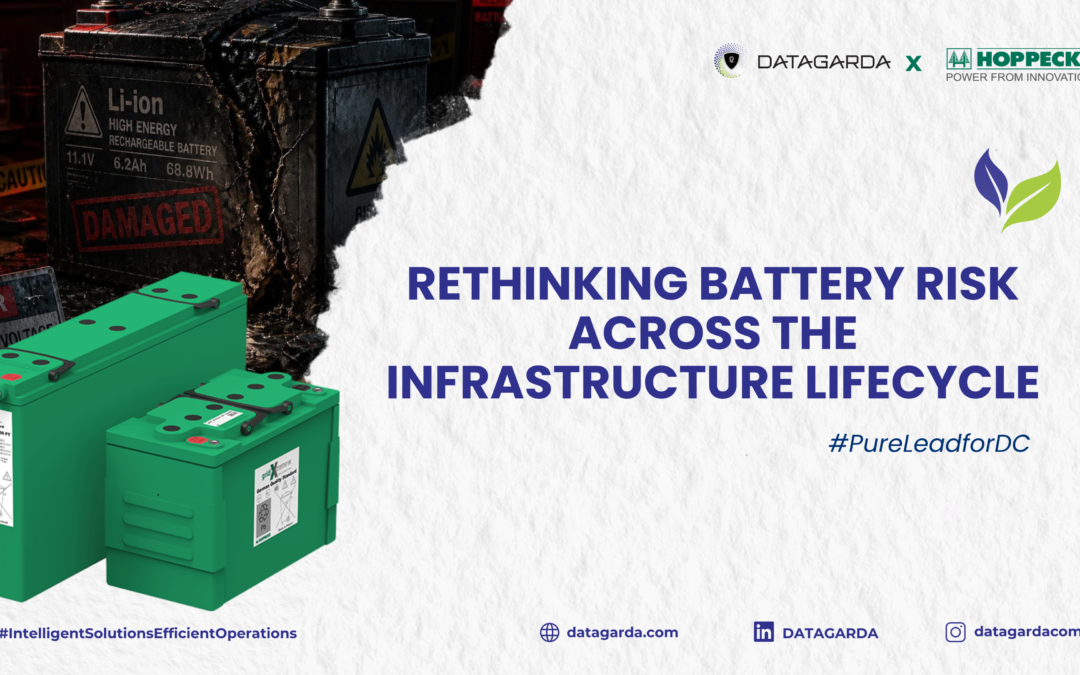
For lithium-ion batteries, one of the key concerns is thermal runaway—an uncontrolled self-heating process that can lead to extremely high temperatures, gas or electrolyte venting, smoke, and potentially fire. UL Research Institutes identifies thermal runaway as one of the primary safety risks associated with lithium-ion batteries.
For data centers and other mission-critical facilities, understanding how this process can begin is therefore not simply a technical exercise. It is part of understanding infrastructure risk.
Three conditions deserve particular attention:
Overheating.
Physical damage.
Overcharging.
What Is Thermal Runaway?
Thermal runaway is a chain reaction in which a lithium-ion cell enters an uncontrollable self-heating state.
Under normal operating conditions, heat generated during charging and discharging can dissipate from the cell. During thermal runaway, however, the rate of heat generation can exceed the cell’s ability to dissipate it, causing the temperature to rise rapidly.
As the temperature increases, chemical reactions inside the cell can accelerate. This can result in gas generation, venting, extremely high temperatures, smoke, and fire. Under certain circumstances, thermal events can also propagate to adjacent cells within a battery system.
This is why the conditions that initiate thermal runaway deserve attention long before an incident occurs.
1. Overheating: When Heat Becomes a Risk Multiplier
Heat is a normal part of battery operation.
The risk emerges when operating conditions cause temperatures to move beyond the intended range or when the battery cannot adequately dissipate the heat being generated.
External high-temperature environments are among the off-nominal conditions that can contribute to thermal runaway.
For critical infrastructure, this makes thermal management and environmental conditions important parts of battery risk management.
A battery installation should therefore be considered not only in terms of capacity and runtime, but also:
- Operating temperature
- Heat dissipation
- Installation environment
- Ventilation and thermal management
- Monitoring and protection mechanisms
- Maintenance and inspection practices
The question is not simply:
How much power can the battery provide?
It is also:
How reliably can the battery operate within its intended environmental conditions?
This distinction becomes increasingly important as infrastructure becomes denser and power requirements increase.
2. Physical Damage: A Risk That May Start Before the Failure
Physical damage represents another potential pathway to battery failure.
Lithium-ion cells rely on internal components, including separators, to keep the electrochemical system functioning safely. Damage or defects that compromise the integrity of these components can contribute to internal short-circuit conditions and potentially initiate thermal runaway.
Physical damage can therefore become more than a maintenance issue.
It can become a safety consideration.
For critical power environments, battery inspection should consider signs such as:
- Mechanical damage
- Deformation
- Swelling
- Abnormal temperature
- Leakage or venting
- Damaged connections or components
- Other visible changes from expected operating conditions
The broader principle is straightforward:
A battery’s physical condition is part of its operational risk profile.
That means battery safety cannot depend exclusively on monitoring electrical performance. Physical condition, installation quality, maintenance practices, and environmental conditions also matter.
3. Overcharging: When Electrical Conditions Exceed Safe Limits
Overcharging is another recognized off-nominal condition associated with lithium-ion battery risk.
According to UL Research Institutes, overcharge can result from issues such as incompatibility between the cell and charger or problems with the battery management system (BMS).
This highlights an important point:
Battery safety is not determined by the battery alone.
The battery operates as part of a wider system involving:
- Charging equipment
- Battery management systems
- Protection mechanisms
- Electrical controls
- Monitoring systems
- Operating procedures
Modern lithium-ion batteries incorporate protective mechanisms designed to help control conditions such as overvoltage, overcurrent, and overtemperature.
But protection mechanisms are only one layer of a broader safety strategy.
For critical infrastructure, the objective should be to prevent abnormal conditions from escalating, rather than relying solely on a protection mechanism after an abnormal condition has already occurred.
Why These Three Conditions Matter to Data Centers
A battery incident in a critical facility does not necessarily remain a battery problem.
The potential consequences can extend across the infrastructure environment.
A thermal event can introduce risks involving:
Power continuity → Facility safety → Equipment availability → Business operations → Reputation
This is why battery technology deserves consideration within a broader data center risk management framework.
Data center leaders should evaluate battery systems not only according to traditional metrics such as capacity, runtime, and lifecycle cost, but also through the lens of:
Safety
How does the battery technology respond to abnormal operating conditions?
Resilience
How does the system behave when environmental or operational conditions become challenging?
Monitoring
How quickly can abnormal conditions be detected?
Maintenance
Can potential problems be identified before they become critical?
Lifecycle
What happens to the battery throughout installation, operation, maintenance, and eventual replacement?
This broader perspective is particularly relevant for critical infrastructure, where the cost of failure can extend far beyond the battery itself.
Beyond the Battery: Designing for Safer Critical Power
The objective is not simply to identify whether a battery technology has risks.
The more important question is:
How should those risks influence infrastructure design and operational decisions?
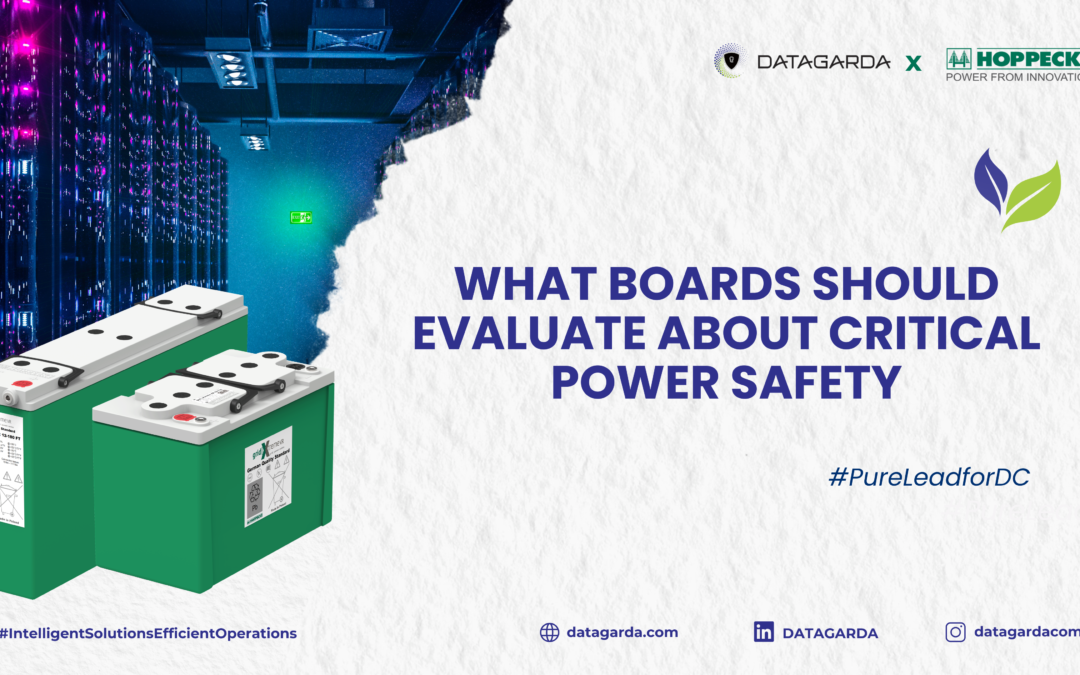
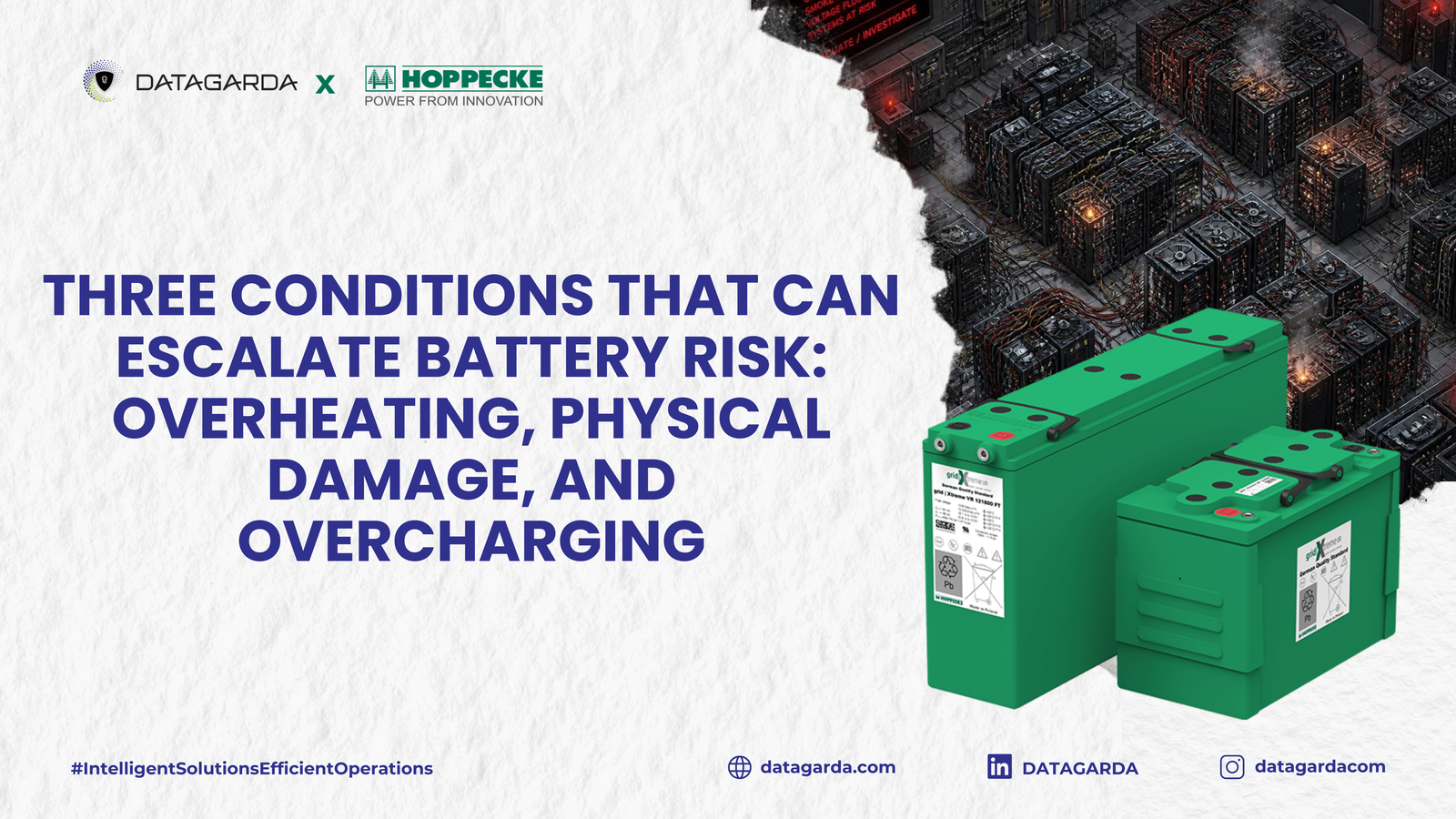
HOPPECKE’s grid | Xtreme VR, for example, is a pure lead AGM battery incorporating Enhanced Stability Standard (ESS) technology. According to its technical datasheet, ESS provides improved resilience against thermal runaway, better charge acceptance, and more consistent voltage behavior. The product is also designed for demanding environments and has an extended permissible operating temperature range.
This illustrates an important principle in critical power planning:
Battery selection should be evaluated as part of the overall infrastructure risk strategy—not as an isolated equipment decision.
The DataGarda × HOPPECKE collaboration is focused on helping organizations understand these considerations and evaluate safer, more resilient approaches to critical power infrastructure. The campaign is designed to provide decision-makers with deeper education while creating a path toward technical consultation, audits, and solutions.
A More Strategic Approach to Battery Risk
Overheating, physical damage, and overcharging may appear to be individual technical issues.
But together, they highlight a larger infrastructure question:
How prepared is your critical power system to prevent an abnormal battery condition from becoming a business-critical incident?
For data center operators, infrastructure leaders, CIOs, CTOs, and risk teams, battery safety should therefore be considered alongside uptime, resilience, operational continuity, and long-term infrastructure planning.
Because in critical infrastructure, reliability is not only about keeping the power on. It is also about understanding what could cause that power system to fail—and designing accordingly.
Build a Safer Critical Power Strategy
Understanding battery risk is the first step toward making better infrastructure decisions.
DataGarda works with strategic technology partners such as HOPPECKE to support organizations in evaluating critical power infrastructure, from technology considerations through implementation and ongoing operational needs. The DataGarda × HOPPECKE campaign specifically positions pure lead technology as an alternative approach for critical infrastructure applications, supported by education, technical consultation, and implementation expertise.
Want to understand the battery risks within your critical infrastructure?
Talk to DataGarda about your critical power requirements and explore a safer, more resilient approach.