Why UPS battery selection should be treated as a business continuity and infrastructure risk decision—not simply a cost decision.
In critical infrastructure, the decision to reduce upfront costs can sometimes create risks that are far more expensive later.
This is particularly relevant to UPS battery systems.
A battery may appear to be a relatively small component within a data center’s overall infrastructure. But when that battery supports an uninterruptible power supply protecting critical IT loads, its performance directly contributes to the facility’s ability to maintain continuity when normal power is interrupted.
That makes battery selection more than a procurement decision.
It becomes a question of reliability, safety, lifecycle performance, and business continuity.
As data centers become increasingly dependent on continuous digital operations, boards and infrastructure leaders need to ask a more important question:
Are we optimizing the purchase price of the battery—or the long-term resilience of the infrastructure it protects?
The Hidden Risk Behind “Cheaper” UPS Batteries
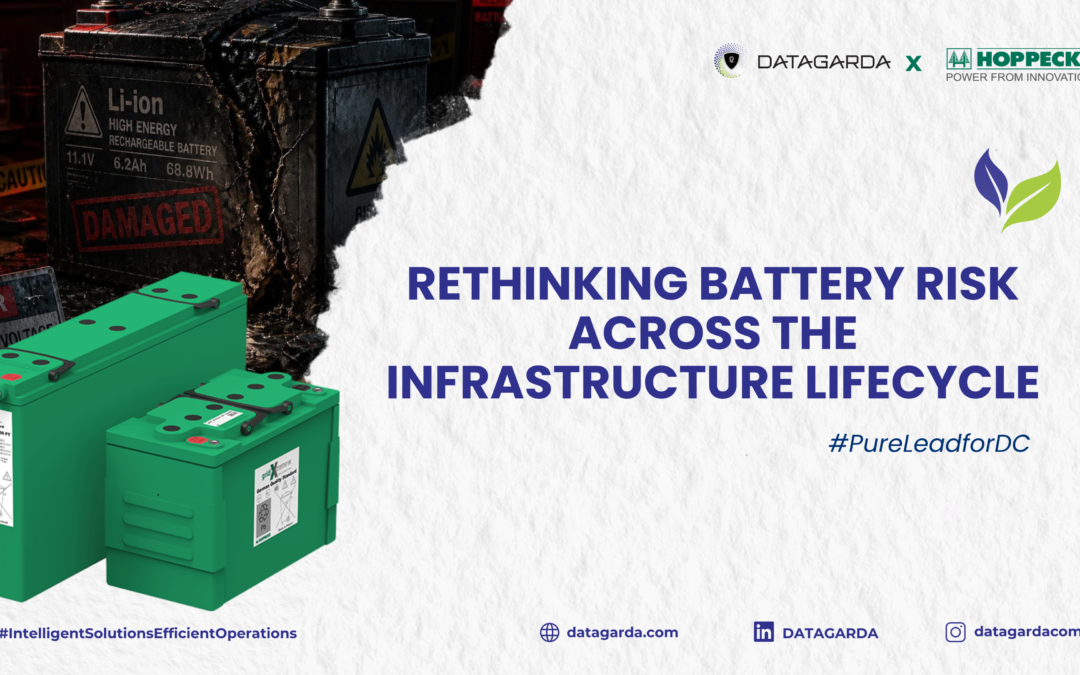
The video accompanying this collaboration highlights a practical concern: using non-original or unsuitable UPS batteries simply because they appear to offer cost savings.
The problem is that battery systems should not be evaluated by price alone.
A UPS battery must perform within a specific electrical, thermal, and operational environment. Its capacity, discharge characteristics, charging behavior, temperature tolerance, installation configuration, and compatibility with the UPS system all influence how effectively it can perform its intended function.
When a battery does not deliver the expected performance, the consequences can extend beyond the battery itself.
A compromised backup-power system can potentially affect:
-
UPS runtime
-
Critical load continuity
-
Maintenance requirements
-
Replacement cycles
-
Operational reliability
-
Infrastructure safety
-
Business continuity
The cost of the battery may be visible on a procurement spreadsheet.
The cost of an unexpected infrastructure failure is much harder to quantify.
Battery Capacity Is Not the Same as Battery Reliability
One of the easiest mistakes in battery procurement is to focus on a single specification: capacity.
A battery can have an attractive nominal capacity while still requiring careful evaluation of how it performs under actual operating conditions.
For critical infrastructure, decision-makers should consider a broader set of questions:
Can the battery deliver the required discharge performance?
How does it behave under high-current applications?
How does temperature affect its performance and lifetime?
How does the battery respond to charging conditions?
What maintenance requirements exist over its lifecycle?
How does its construction contribute to operational safety?
These questions become especially important when the battery is part of a UPS system supporting a critical data center environment.
Thermal Runaway: Why Battery Safety Belongs in the Boardroom
Battery safety is not only an engineering issue.
It can become a business continuity issue.
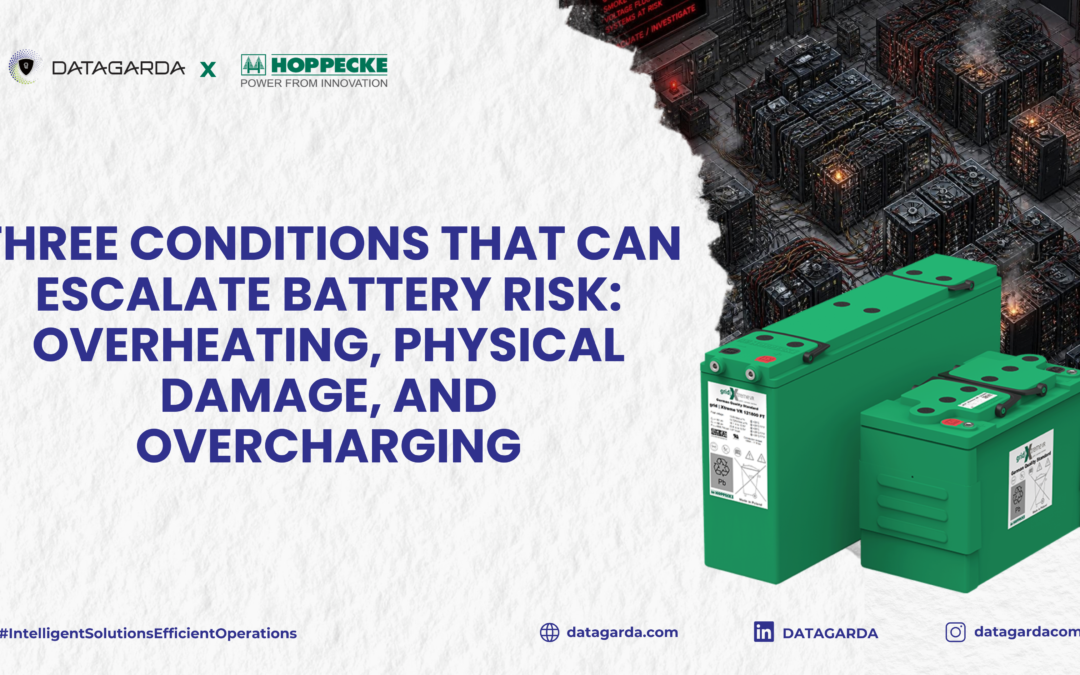
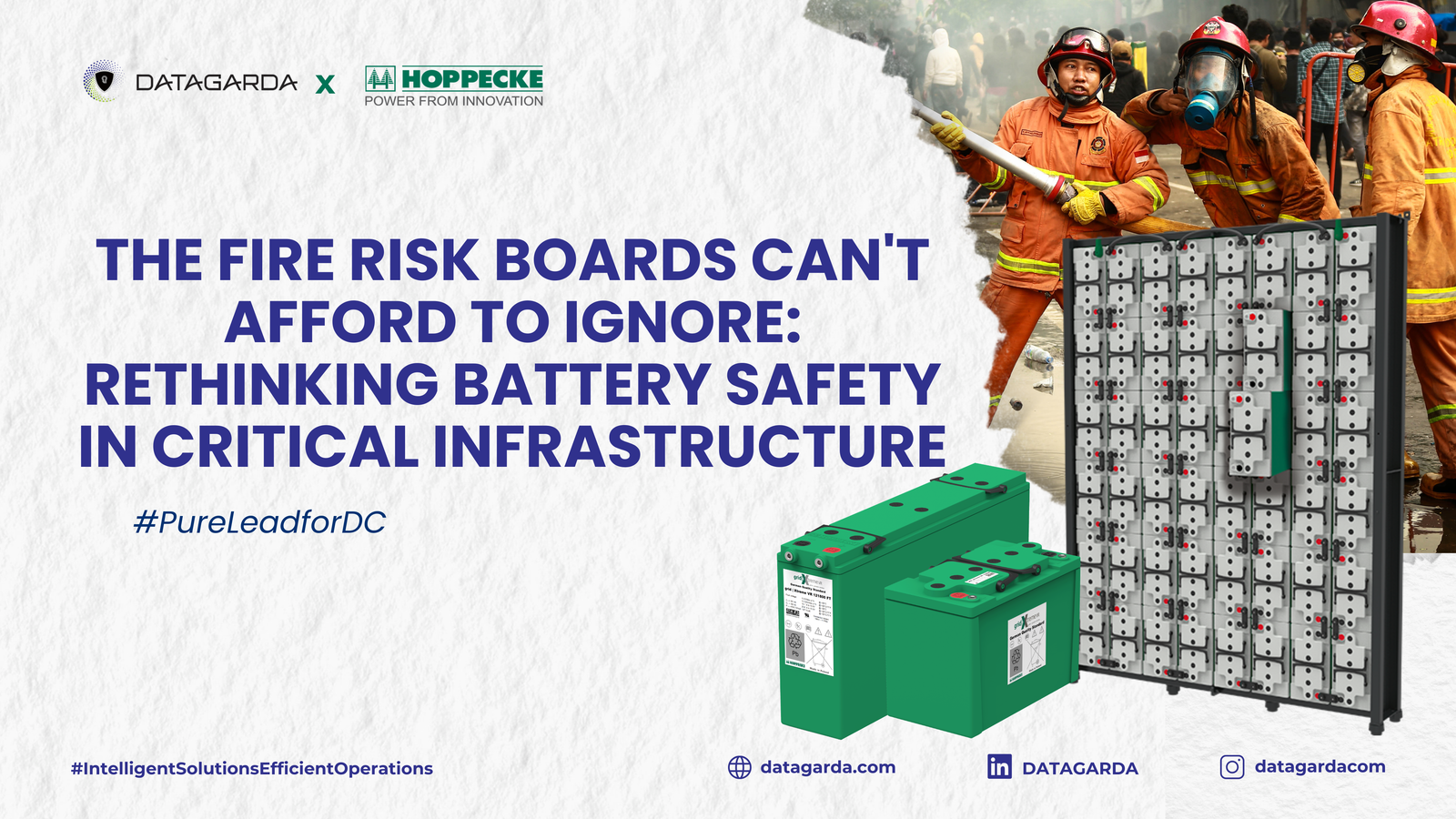
One of the risks discussed in the HOPPECKE campaign is thermal runaway, where uncontrolled heat generation can lead to a rapidly escalating thermal event.
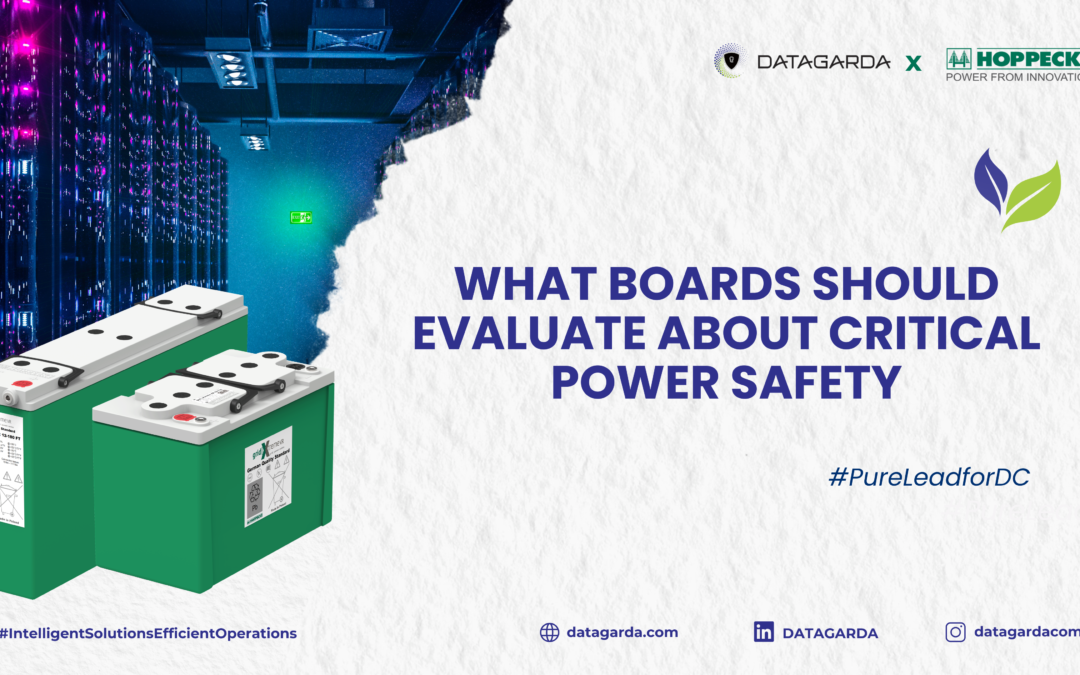
The HOPPECKE grid | Xtreme VR data sheet describes its Enhanced Stability Standard (ESS) technology as providing improved resilience against thermal runaway, alongside better charge acceptance and more even voltage behavior. The same technology is positioned as contributing to longer service life and reduced service costs.
This distinction is important.
The objective should not be to claim that one battery technology makes a critical facility completely immune to fire.
Instead, the engineering question is:
How does the selected battery technology manage and reduce the risks associated with its operating environment?
That is a much more useful question for infrastructure leaders.
Why Battery Technology Matters in Critical Infrastructure
A UPS battery does not operate in isolation.
It is part of a larger power infrastructure that includes:
Utility Power
↓
Switchgear
↓
UPS
↓
Battery Energy Storage
↓
Critical IT Load
When utility power is interrupted, the battery becomes a critical part of the continuity chain.
Any weakness in that chain can affect the system’s ability to perform when it is needed most.
This is why battery selection should be evaluated alongside the UPS system, operating environment, maintenance strategy, monitoring capability, and overall resilience requirements.
The Lifecycle Cost Is More Important Than the Purchase Price
A lower initial price can be attractive.
But critical infrastructure decisions should also consider the total cost of ownership.
This includes:
-
Initial acquisition
-
Installation
-
Commissioning
-
Maintenance
-
Monitoring
-
Replacement frequency
-
Cooling requirements
-
Downtime exposure
-
Operational risk
-
End-of-life management
HOPPECKE positions the grid | Xtreme VR around longer service life and reduced service costs, with ESS technology contributing to optimized lifecycle costs.
The product data sheet also states a 15-year design life and an operating temperature range extending from -40°C to +55°C, with short peaks up to 60°C under the specified conditions.
This illustrates an important principle:
The cheapest battery at procurement is not necessarily the lowest-cost battery over the infrastructure lifecycle.
Temperature Is Part of the Safety Equation
Battery performance and longevity are also closely connected to operating temperature.
The HOPPECKE grid | Xtreme VR uses pure lead AGM technology and is designed for demanding high-temperature environments. Its data sheet states that the permissible operating temperature range has been extended to 55°C, compared with 45°C previously, and that its design can help reduce battery-room air-conditioning requirements.
This is relevant to data center operators because battery environments must be managed as part of the wider facility thermal strategy.
The question is therefore not simply:
“What battery should we buy?”
It is:
“What battery technology is appropriate for the operating environment in which our critical power system must perform?”
Originality, Compatibility and the Risk of False Savings
Cost optimization is a legitimate objective.
But in critical power infrastructure, cost optimization needs to be approached carefully.
A non-original or unsuitable replacement battery may appear financially attractive if viewed only through its purchase price.
However, decision-makers should also evaluate:
Compatibility
Is the battery appropriate for the UPS system and its charging characteristics?
Performance
Can it deliver the required power and runtime under the expected operating conditions?
Safety
What design characteristics contribute to operational safety?
Reliability
How does it perform over its intended service life?
Maintenance
What resources are required to maintain and monitor it?
Lifecycle
What is the expected replacement cycle and total cost of ownership?
These questions help move battery procurement from a price comparison toward a risk-based infrastructure decision.
Safety Should Not Be an Afterthought
For critical infrastructure, battery safety should be considered from the beginning of the lifecycle.
The HOPPECKE documentation states that its batteries should be installed, commissioned, and operated according to the manufacturer’s operational instructions as well as applicable international and regional standards, including IEC 62485-2, which covers safety requirements for secondary batteries and battery installations.
That reinforces another important principle:
Battery safety is not created by the battery alone.
It depends on the combination of:
Battery Technology
+ Correct Installation
+ Proper Commissioning
+ Appropriate Charging
+ Thermal Management
+ Monitoring
+ Maintenance
+ Operational Discipline
A high-quality battery still needs to be correctly designed into the system and properly operated.
From Battery Procurement to Infrastructure Governance
For boards and senior executives, the conversation should move beyond:
“How much does the battery cost?”
Instead, the questions should become:
What risk does this battery introduce?
What risk does it reduce?
What is its expected lifecycle?
How does it behave under demanding conditions?
How compatible is it with the UPS system?
What happens if the battery does not perform as expected?
What is the potential business impact of a failure?
This is where battery safety becomes a governance issue.
A battery is a technical component.
But the decision to select, install, maintain, and replace that battery affects availability, operational risk, capital expenditure, maintenance planning, and business continuity.
A Safer Approach to Critical Power Decisions
The goal should not be to create fear around battery technology.
It should be to make better decisions.
A robust battery strategy should consider:
1. Application Fit
Select a battery technology appropriate for the UPS and critical load.
2. Safety Characteristics
Understand the battery’s behavior and safety features under relevant operating conditions.
3. Environmental Conditions
Evaluate temperature, installation environment, ventilation, and cooling requirements.
4. Lifecycle Economics
Look beyond purchase price toward total cost of ownership.
5. Maintenance Strategy
Establish appropriate inspection, monitoring, testing, and replacement practices.
6. Business Continuity
Evaluate the consequences of battery failure—not only the cost of battery replacement.
This is the difference between buying a battery and designing a resilient critical power strategy.
The Boardroom Question
The most important question is not:
“Can we find a cheaper UPS battery?”
It is:
“Can we justify the risk of compromising a critical power system simply to reduce the initial purchase cost?”
For data centers and other mission-critical facilities, the battery is part of the infrastructure responsible for maintaining continuity when normal power is unavailable.
That makes its selection worthy of the same level of attention given to other critical infrastructure decisions.
Building Safer Critical Infrastructure with DataGarda & HOPPECKE
Critical power resilience requires the right combination of technology, engineering, installation, commissioning, maintenance, and operational discipline.
Through the collaboration between DataGarda and HOPPECKE, organizations can evaluate battery solutions for critical infrastructure with a focus on safety, reliability, lifecycle performance, and operational requirements.
HOPPECKE’s grid | Xtreme VR is a pure lead AGM battery technology designed for demanding applications. Its ESS technology is specified to provide improved resilience against thermal runaway, better charge acceptance, more consistent voltage behavior, and longer service life.
For organizations reviewing their existing UPS battery strategy, the next step should not simply be replacing batteries.
It should be understanding whether the existing battery infrastructure is still aligned with the facility’s risk profile and operational requirements.
Is your UPS battery strategy optimized for price—or for resilience?
Talk to DataGarda to assess your critical power requirements and explore a safer, lifecycle-focused battery strategy with HOPPECKE.