A Critical Power Decision Is Also a Risk Decision
Critical power systems are fundamental to the resilience of mission-critical infrastructure.
For data centers, backup battery systems help maintain continuity when the primary power supply is disrupted. As digital infrastructure becomes increasingly important to business operations, investments in critical power are becoming more strategic.
Yet battery selection is often discussed primarily in terms of:
- Capacity
- Runtime
- Performance
- Efficiency
- Lifecycle
- Cost
These factors matter.
But for board-level decision-makers, another question deserves equal attention:
What happens when a battery fails—and how can that failure escalate?
Understanding the battery failure chain helps executives recognize why battery safety should be considered before approving a critical power investment.
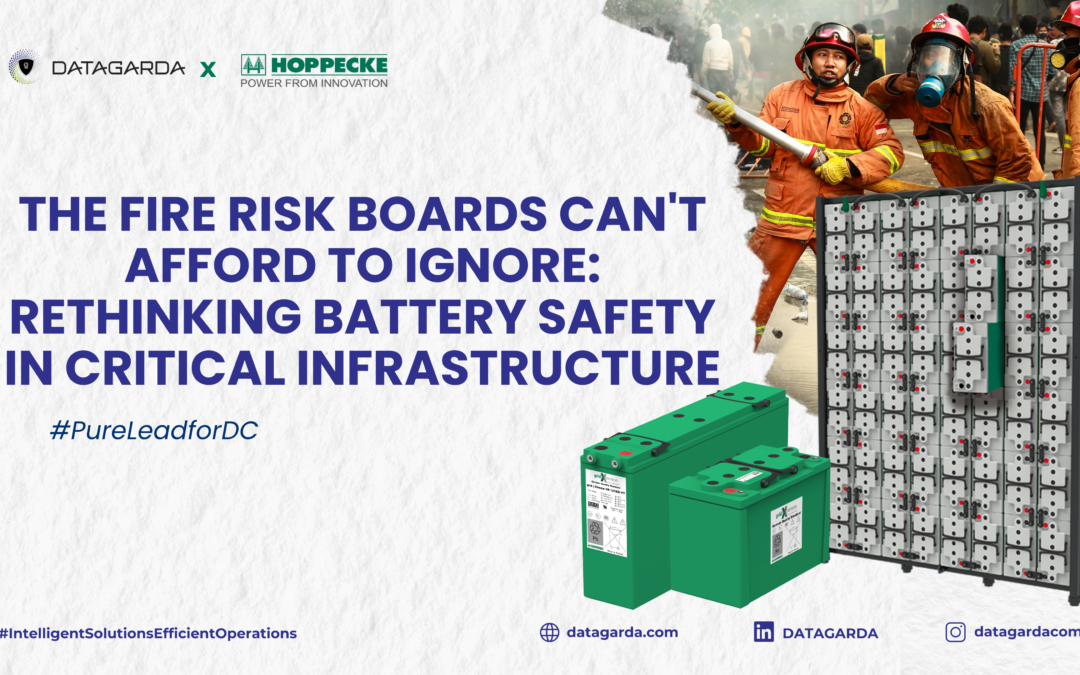
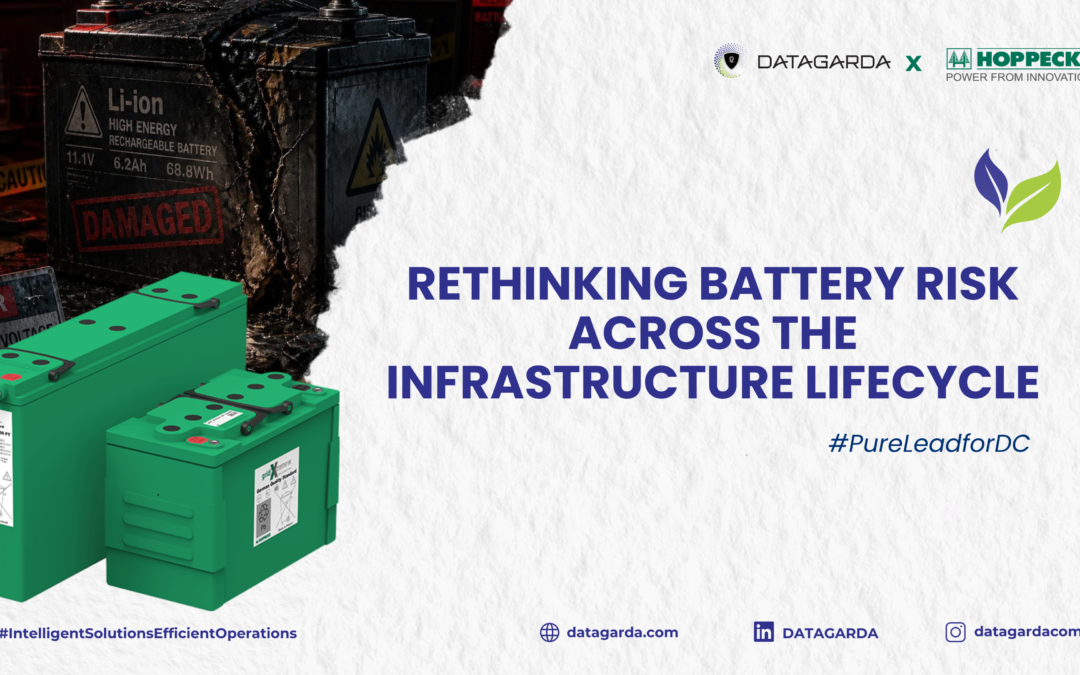
From an Initial Condition to a Potential Fire Risk
Battery-related incidents do not necessarily begin as a fire.
The risk can develop through a sequence of conditions that ultimately leads to thermal runaway.
The simplified chain is:
Overheating / Physical Damage / Overcharging
↓
Thermal Runaway
↓
Fire & Explosion Risk
This chain is important because it demonstrates why battery safety cannot be evaluated only by looking at the final outcome.
Understanding the conditions that can contribute to thermal runaway is part of understanding the overall infrastructure risk.
1. Overheating: When Temperature Becomes a Risk Factor
One of the conditions identified in the reference material is overheating.
A battery cell can experience increasing internal temperature. When the temperature reaches a critical point, it can trigger chemical reactions inside the cell.
This is particularly important because thermal runaway involves a self-reinforcing process.
For executives, the important consideration is not simply the temperature of a battery at a given moment.
It is understanding:
How is battery temperature managed, monitored, and controlled throughout the operating lifecycle?
2. Physical Damage: An Infrastructure Risk That Can Be Overlooked
Physical damage is another condition that can contribute to thermal runaway.
In a mission-critical environment, battery systems are part of a larger physical infrastructure ecosystem.
Therefore, battery safety considerations should extend beyond the battery itself and include the environment in which the system is installed and operated.
Executive oversight should consider whether appropriate processes exist for:
- Installation
- Inspection
- Maintenance
- Asset handling
- Physical condition monitoring
- Incident response
The objective is to ensure that potential sources of risk are identified before they develop into more serious operational issues.
3. Overcharging: Why Operational Control Matters
The third condition identified in the reference is overcharging.
This highlights an important point for infrastructure leaders:
Battery safety is influenced not only by technology, but also by how the system is operated.
Charging conditions, monitoring, maintenance, and operational controls therefore form part of the broader battery risk management strategy.
A critical power investment should consider the complete operating environment—not simply the equipment specification.
Understanding Thermal Runaway
Thermal runaway is a chain reaction within a battery cell that can be very difficult to stop once it has started.
It occurs when the temperature inside the battery reaches a point that causes a chemical reaction to occur inside the cell. According to the reference material, this reaction can produce oxygen and contribute to the continuation of the process.
This makes thermal runaway fundamentally different from an ordinary equipment fault.
Once the process begins, the reaction itself can contribute to further heat generation.
That is why understanding the conditions that can contribute to thermal runaway is important when assessing battery safety in critical infrastructure.
Why Lithium-Ion Battery Characteristics Matter
Today’s lithium-ion batteries can contain:
- A liquid flammable electrolyte
- A flammable plastic separator
These characteristics are relevant when assessing the potential fire and explosion risks associated with lithium-ion battery systems. This does not mean that every lithium-ion battery installation will experience thermal runaway or fire.
Rather, it means that the potential failure characteristics of the selected technology should be part of a comprehensive infrastructure risk assessment.
For board-level decision-makers, this distinction matters.
The objective is not to make decisions based on fear.
It is to make decisions based on a clear understanding of performance, safety, operational conditions, and potential business impact.
Why Boards Need to Understand the Chain
Technical teams may be responsible for managing battery systems day to day.
But the decision to invest in critical power infrastructure often involves executive leadership because it affects:
Business Continuity
Critical power systems support the continuity of digital operations.
Infrastructure Safety
Battery technology introduces specific operational considerations that should be understood.
Capital Investment
Critical power infrastructure represents a significant long-term investment.
Operational Risk
Battery failure can potentially affect the wider infrastructure environment.
Lifecycle Management
The investment must be managed from installation through operation, maintenance, and eventual replacement.
The board does not need to become a battery engineer.
But it does need enough context to ask the right strategic questions.
Questions Boards Should Ask Before Approving a Critical Power Investment
Before approving a new battery system or infrastructure expansion, executive teams should ask:
1. What are the relevant failure modes of the selected battery technology?
Understanding potential failure scenarios is fundamental to informed investment.
2. What conditions could contribute to thermal runaway?
Overheating, physical damage, and overcharging should be considered within the risk assessment.
3. How will battery condition be monitored throughout its lifecycle?
Installation is only the beginning of infrastructure management.
4. What operational controls are in place?
Technology performance depends on how systems are operated and maintained.
5. How does the battery strategy support business continuity?
Critical power decisions should ultimately connect to the organization’s resilience objectives.
6. What happens when the battery reaches the next stage of its lifecycle?
Replacement, maintenance, and lifecycle planning should be considered before the initial investment is approved.
From Battery Selection to Lifecycle Risk Management
A resilient critical power strategy should follow the complete lifecycle:
Select
Evaluate technology characteristics, operational requirements, and risk.
↓
Install
Ensure appropriate infrastructure design and operating conditions.
↓
Monitor
Track battery condition and relevant operational parameters.
↓
Maintain
Apply appropriate preventive maintenance and operational controls.
↓
Assess
Continuously evaluate asset condition and risk exposure.
↓
Replace
Plan technology refresh before aging infrastructure becomes a critical business risk.
This approach shifts battery management from a one-time procurement decision to a continuous infrastructure governance process.
The DataGarda × HOPPECKE Perspective
The collaboration between DataGarda and HOPPECKE brings together infrastructure operations and critical power expertise.
DataGarda’s perspective emphasizes:
- Infrastructure governance
- Operational excellence
- Risk management
- Lifecycle management
- Business continuity
- Infrastructure resilience
HOPPECKE brings its expertise in battery technologies and critical power solutions.
Together, the focus is on helping organizations consider critical power investments from a broader perspective:
Not only how much power the system can provide, but how the technology, operations, safety, and lifecycle strategy contribute to overall infrastructure resilience.
The Boardroom Takeaway
A battery failure should never be viewed only as an isolated technical event.
The potential chain—from overheating, physical damage, or overcharging to thermal runaway and fire risk—shows why battery technology deserves strategic attention.
For boards and executive leaders, the most important decision is not simply choosing a battery.
It is ensuring that the organization’s critical power strategy is based on:
Performance + Safety + Operational Control + Lifecycle Management + Business Continuity
That is how a technical investment becomes a strategic resilience decision.
Conclusion
Critical power investments are designed to protect business continuity.
That makes understanding their potential failure modes equally important.
Thermal runaway demonstrates how an initial condition within a battery cell can develop into a much larger safety concern. Overheating, physical damage, and overcharging are therefore not simply technical considerations—they are part of the broader risk conversation surrounding critical infrastructure.
Boards do not need to manage the battery room.
But they should understand the battery failure chain well enough to challenge assumptions, evaluate risk, and make informed infrastructure investment decisions.
Because the best critical power strategy is not simply the one that provides backup power.
It is the one that is designed with the entire risk lifecycle in mind.
Make Critical Power a Strategic Decision
DataGarda × HOPPECKE helps organizations approach critical power through a broader lens—connecting battery technology with infrastructure governance, operational excellence, lifecycle management, and business resilience.
Understand the risk. Ask better questions. Invest with confidence.