The Incident Is Not Always Where the Failure Begins
A critical infrastructure incident rarely begins with the moment something catches fire, a system stops working, or a service becomes unavailable.
In many cases, the warning signs appear much earlier.
A contractor qualification is not properly verified. A maintenance activity moves forward without the required safety controls. An inspection is postponed or rejected. A project milestone is reported as completed without sufficient verification.
Individually, these may appear to be administrative or operational oversights. Together, they can expose an organization to significant infrastructure risk.
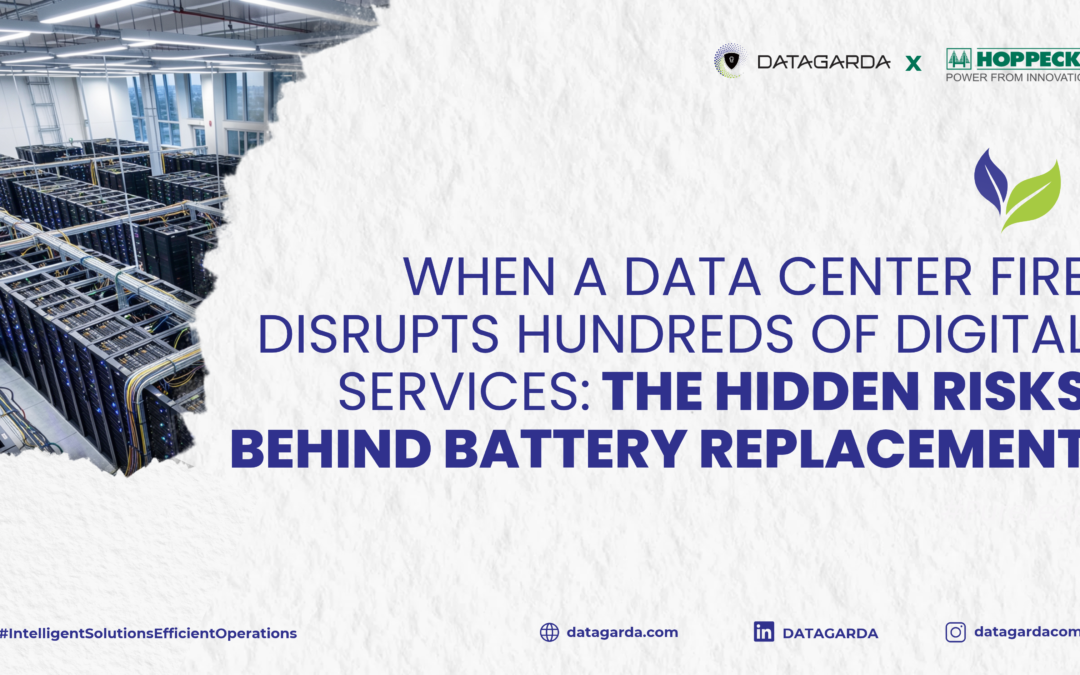
A fire at South Korea’s National Information Resources Service in September 2025 illustrates why these early warning signs deserve greater attention.
According to an audit report published by South Korea’s Board of Audit and Inspection (BAI), the battery replacement project involved multiple layers of subcontracting, ultimately reaching two firms that were not appropriately licensed. The audit also identified inadequate safety measures during the work, insufficient contractor verification, and shortcomings in fire safety inspection and emergency response.
The fire damaged servers and disrupted government administrative services across the country. Full service normalization took 95 days.
The incident raises a question that every data center operator and infrastructure leader should consider:
What if the most important warning sign was not the fire itself, but the milestones that were missed before it happened?
1. When Project Completion Becomes More Important Than Project Control
Infrastructure projects are commonly managed through milestones.
Contractor appointments, equipment delivery, installation, testing, inspection, and handover are all tracked to ensure that work progresses according to schedule.
However, completing a milestone does not automatically mean that the underlying activity has been executed safely or correctly.
The South Korean data center incident illustrates this distinction.
According to the BAI findings reported by Yonhap on September 7, 2026, the original contractor for the battery replacement project subcontracted the work to another company, which then passed it to two unlicensed firms.
The data center had received information that external personnel would be involved, but reportedly failed to verify whether those firms held the appropriate licenses and registrations.
This exposes an important weakness in project governance.
Knowing who is performing the work is not the same as verifying whether they are qualified and authorized to perform it.
For mission-critical facilities, project control must extend beyond schedules, procurement documents, and completion reports.
It must include:
- Contractor qualification and authorization.
- Visibility across subcontracting arrangements.
- Clear responsibility for work execution.
- Verification of safety requirements before work begins.
- Documented approval and acceptance processes.
A milestone should represent verified readiness, not simply a completed administrative step.
2. Battery Replacement Is an Operational Risk, Not Just a Maintenance Task
Battery replacement is a necessary part of maintaining UPS infrastructure.
In a data center, UPS batteries provide temporary power when the primary electrical supply is interrupted, helping maintain continuity while backup power systems respond.
However, replacing batteries in a live or mission-critical environment requires careful planning and appropriate safety controls.
The BAI audit reported that the firms involved in the South Korean replacement project performed the work without safety measures such as switching off power to the battery rack.
This is an important reminder that maintenance execution cannot be separated from electrical safety, work authorization, and operational coordination.
A responsible battery replacement process should consider several areas:
- Qualified personnel
Organizations must verify that contractors and technicians possess the necessary qualifications, authorization, and experience for the work assigned.
- Approved work procedures
The scope of work, applicable safety controls, isolation requirements, and responsibilities should be clearly established before execution.
- Electrical safety and work authorization
The work method must follow the approved electrical safety procedure and the manufacturer’s instructions. Required isolation, verification, and permit controls must be established before work begins.
- Supervision and coordination
Facility operators, project managers, contractors, and relevant safety personnel need clear communication and accountability throughout the activity.
- Inspection and documentation
Work completion should be supported by appropriate inspection, testing, and acceptance records.
The lesson is straightforward: a battery replacement schedule is not proof that a replacement activity is ready to proceed.
Readiness must be verified before execution begins.
3. The Warning Signs Were Already There
One of the most important findings from the South Korean audit was that the incident was not limited to the battery replacement activity itself.
The audit also identified weaknesses in safety oversight before and during the incident.
Five months before the fire, the National Fire Agency had decided to conduct safety inspections of the facility. However, a data center official reportedly rejected the request, citing the security classification of the server rooms.
After the fire started, the facility also struggled to implement appropriate measures to prevent the fire from spreading. The audit described concerns about water being sprayed on equipment because of the potential impact on the computer network.
These findings highlight three important governance questions.
Were risks identified and properly escalated?
A safety concern should have a defined review and escalation process. It should not disappear simply because it creates operational inconvenience.
Were responsibilities clearly assigned?
When safety inspections, contractor oversight, and emergency decisions involve multiple parties, ownership must be clear before an incident occurs.
Was emergency readiness tested beyond documentation?
Emergency procedures need to reflect the realities of a critical facility, including coordination between facility operators, safety teams, contractors, and emergency responders.
The BAI report estimated the actual damage at KRW 351.1 billion, including social costs. The disruption to public services also demonstrated how infrastructure incidents can extend far beyond the physical facility.
This is why operational resilience must be treated as an organizational responsibility, rather than an isolated technical function.
4. Battery Technology Matters. But Technology Cannot Replace Governance.
Battery technology plays an important role in UPS reliability.
The selection of a battery system influences power performance, lifecycle planning, maintenance requirements, installation arrangements, and the operational demands placed on facility teams.
However, even a well-engineered battery cannot compensate for inadequate contractor oversight, unsafe work procedures, or missing operational controls.
This distinction is particularly important when evaluating battery lifecycle management.
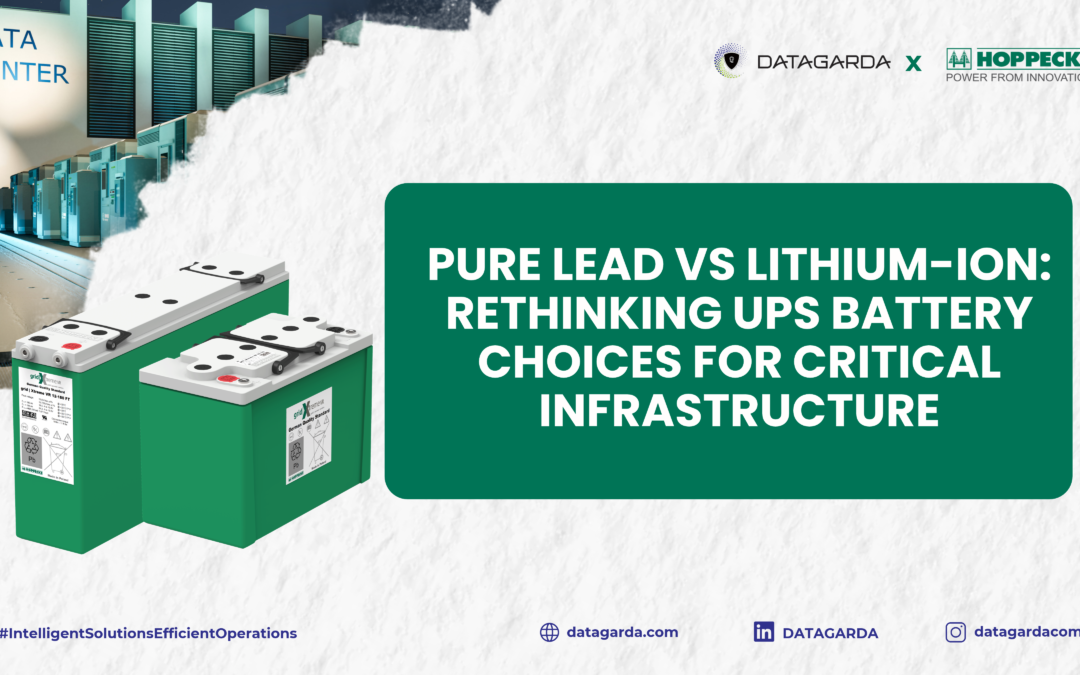
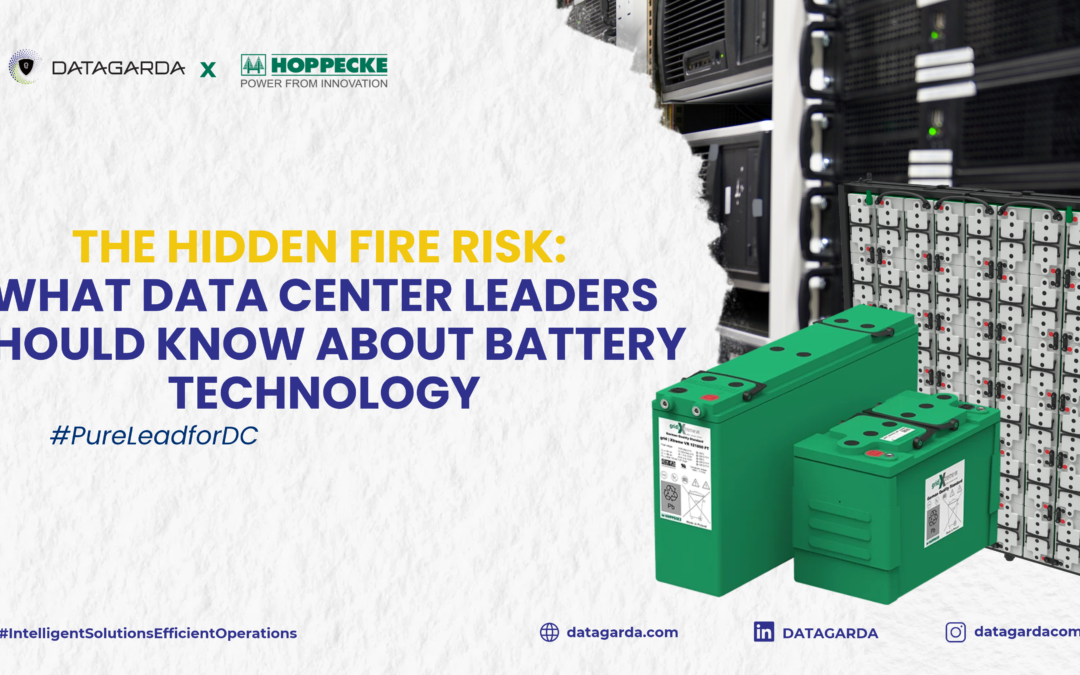
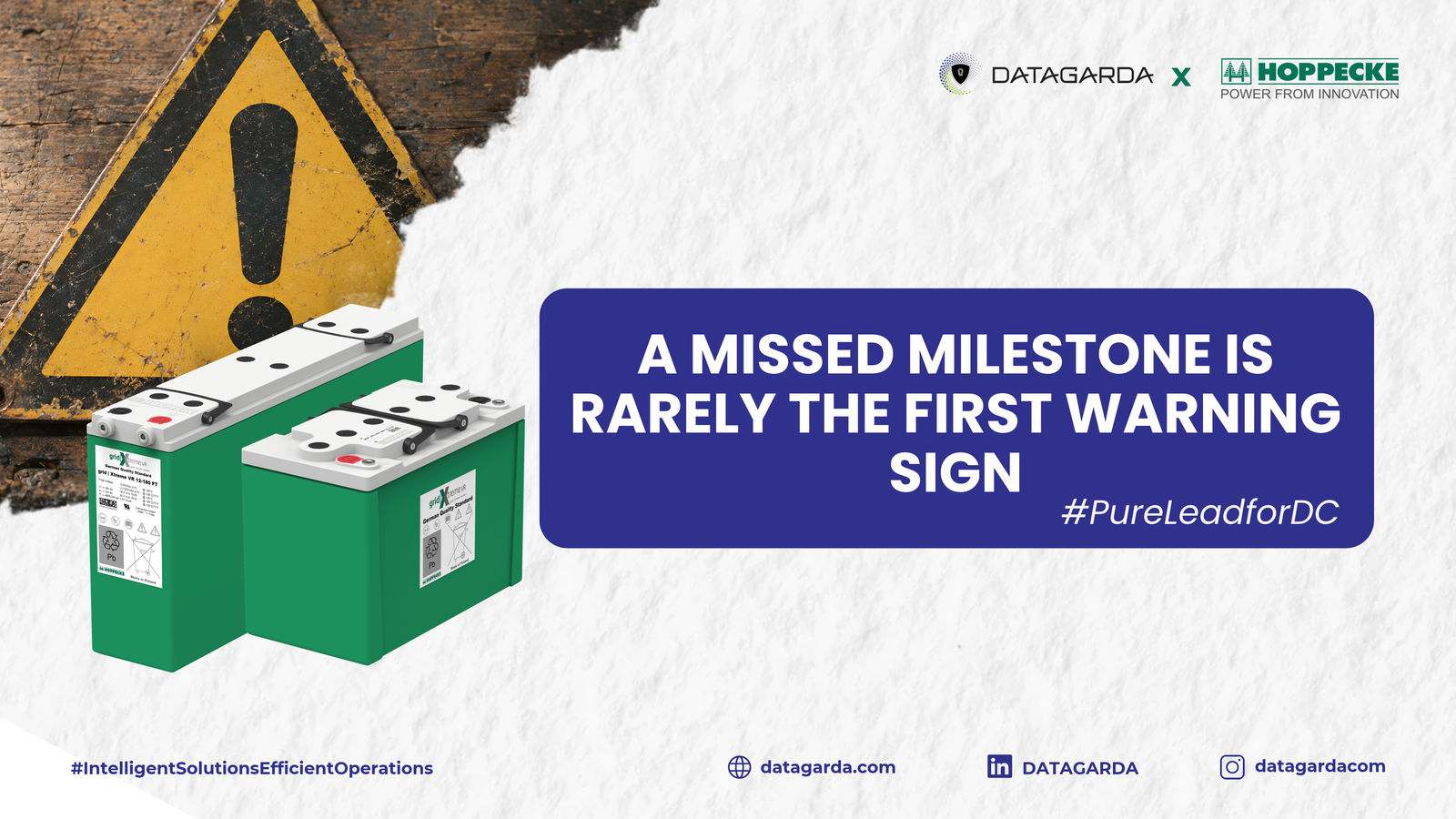
Through its grid | Xtreme VR range, HOPPECKE applies High Performance Pure Lead (HPPL) technology in sealed AGM batteries designed for demanding standby applications.
According to HOPPECKE’s product documentation, grid | Xtreme VR incorporates Enhanced Stability Standard (ESS) technology, designed to improve resilience against thermal runaway, charge acceptance, and voltage behavior.
The product documentation also identifies several lifecycle-related characteristics:
- A design life of up to 15 years, subject to specified operating conditions.
- An operating temperature range of -40°C to +55°C for the documented product range.
- Access points for impedance measurement to support maintenance activities.
- Reduced maintenance requirements, including no routine distilled-water refilling.
- Construction features designed to support operational safety.
These engineering characteristics can contribute to battery system performance and lifecycle planning.
But product characteristics should always be considered alongside correct installation, commissioning, operating conditions, inspection, and maintenance practices.
Technology strengthens the infrastructure. Governance determines how responsibly that infrastructure is managed.
5. The Missing Link: Managing the Entire Battery Lifecycle
Battery reliability should not be evaluated only when a UPS system is installed or when a replacement becomes necessary.
It should be managed throughout the battery lifecycle.
This requires coordination between technology selection, system design, installation, commissioning, monitoring, maintenance, replacement planning, and eventual disposal.
A more structured lifecycle approach should consider:
Before installation
- Confirm application requirements and system compatibility.
- Evaluate the operating environment and installation conditions.
- Review manufacturer recommendations and applicable standards.
- Establish responsibilities for installation and commissioning.
During operation
- Monitor relevant battery performance indicators.
- Conduct inspections according to the applicable maintenance program.
- Review abnormal readings and emerging issues.
- Maintain accurate maintenance and operational records.
Before replacement
- Assess battery condition and replacement requirements.
- Verify contractor qualifications and authorization.
- Review the approved work method and electrical safety controls.
- Coordinate operational continuity and work supervision.
After replacement
- Conduct the required inspection and testing.
- Verify installation and commissioning records.
- Complete formal acceptance and handover.
- Update asset registers and lifecycle documentation.
HOPPECKE’s lifecycle approach extends beyond battery products to include consultation, installation, commissioning, monitoring, maintenance, repair, disassembly, and recycling services.
This reinforces an important principle: infrastructure reliability depends on the quality of decisions and controls throughout the entire lifecycle, not simply the specification of the equipment.
6. Five Milestones That Should Never Be Treated as Formalities
For data center operators and project leaders, the following checkpoints deserve particular attention.
Milestone 1: Contractor Verification
Has every organization involved in the work been properly identified, qualified, and authorized?
Milestone 2: Work Authorization
Have the required permits, procedures, risk assessments, and safety controls been approved?
Milestone 3: Operational Readiness
Have the facility team and contractors confirmed the required system conditions and operational coordination before work begins?
Milestone 4: Inspection and Acceptance
Has the work been independently checked and properly documented before it is accepted as complete?
Milestone 5: Emergency Preparedness
Do relevant teams understand their responsibilities, escalation routes, and response procedures if an unexpected event occurs?
These checkpoints should be treated as operational control points rather than administrative requirements.
If one of them is incomplete, the appropriate response is not simply to move the project forward and resolve the issue later.
It is to understand the risk, establish accountability, and determine whether the activity is genuinely ready to proceed.
7. From Missed Milestones to Stronger Operational Resilience: The DataGarda Perspective
The challenges highlighted by the South Korean incident go beyond battery replacement.
They reflect a broader issue facing mission-critical infrastructure: the need to connect engineering activities, project management, safety requirements, and operational accountability.
This is where structured data center management becomes essential.
Through its data center service ecosystem, DataGarda supports organizations in strengthening the operational and project disciplines that contribute to infrastructure reliability.
Data Center Operations & Management (DCOM)
Supporting facility operations, maintenance coordination, power management, and precision cooling to help organizations maintain consistent operational standards.
Data Center Project & Construction (DCPC)
Supporting project and construction activities through structured coordination and execution management, helping ensure that project milestones are connected to delivery requirements.
Data Center Certification & Standardization (DCCS)
Supporting organizations in strengthening infrastructure standards, operational consistency, and readiness through certification and standardization-related services.
Data Center Digital Services (DCDS)
Supporting digital capabilities that can improve operational visibility and provide a stronger foundation for informed infrastructure management.
Learning & Development (L&D)
Supporting the development of data center professionals whose knowledge and competencies are essential to safe, disciplined, and reliable operations.
Together with technology partners such as HOPPECKE, DataGarda recognizes that reliable infrastructure requires more than selecting the right equipment.
It requires the right processes, qualified people, coordinated execution, and continuous operational oversight.
Conclusion: Reliability Begins Before the Incident
A missed milestone may look like a small project management issue.
An unverified contractor may appear to be an administrative oversight.
A postponed inspection may seem like a temporary operational decision.
But in a mission-critical environment, these decisions can become connected warning signs of a much larger governance problem.
The South Korean data center fire demonstrates why organizations must look beyond the final incident and examine the decisions, controls, and responsibilities that came before it.
For data center operators, the objective should not simply be to complete projects on time or maintain equipment according to schedule.
It should be to ensure that every critical activity is properly planned, authorized, executed, verified, and managed throughout its lifecycle.
Because a missed milestone is rarely the first warning sign. It is often the point at which earlier weaknesses become impossible to ignore.
In collaboration with HOPPECKE, DataGarda continues to explore the importance of battery lifecycle management, infrastructure reliability, and disciplined execution in mission-critical environments.
Strengthen the process. Verify every milestone. Protect operational continuity.
DataGarda — Intelligent Solutions for Efficient Operations.
HOPPECKE — Powering Reliability Through Battery Technology and Lifecycle Expertise.
For organizations looking to strengthen their data center operations and infrastructure management, connect with the DataGarda team to explore the right approach for your operational needs.