Power Resilience Is a Business Risk—Not Just an Engineering Concern
Modern businesses increasingly depend on digital infrastructure to operate, serve customers, process transactions, and deliver critical services.
Behind this infrastructure is a critical power ecosystem designed to keep operations running when the primary power supply is disrupted.
UPS systems and their battery infrastructure therefore play a critical role in business continuity.
Yet battery systems are often viewed primarily through technical parameters such as capacity, runtime, energy density, and cost.
For executive leadership, the conversation needs to go further.
How resilient is our critical power infrastructure—and what risks could emerge if it fails?
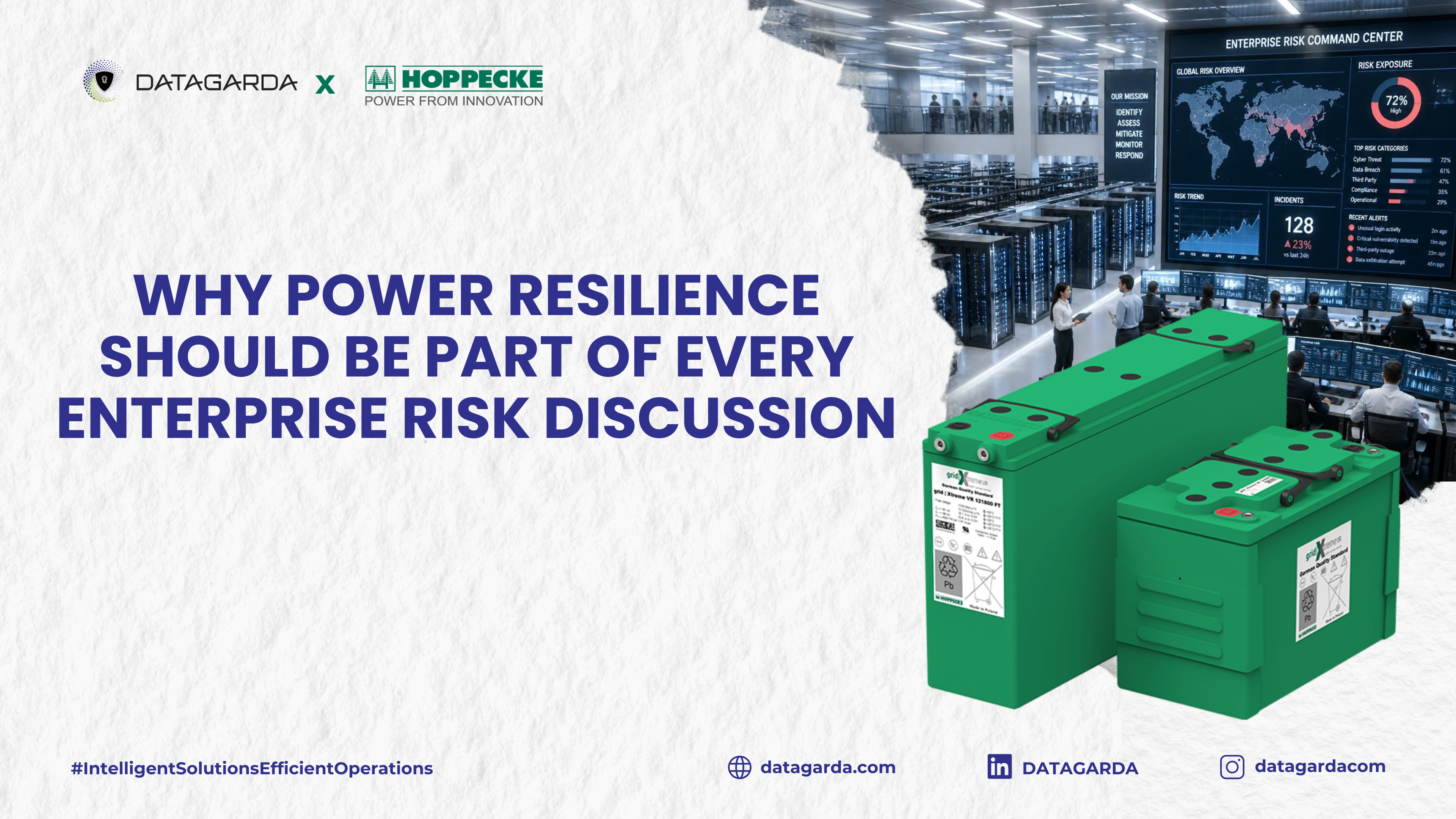
This is why power resilience deserves a place in every enterprise risk discussion.
The Hidden Risk Inside Critical Power Infrastructure
A critical power system is designed to protect business operations from power interruptions.
But the system itself also needs to be assessed as part of the organization’s infrastructure risk framework.
Battery technology, operating conditions, maintenance practices, lifecycle management, and facility design can all influence the overall resilience of a critical power environment.
This becomes particularly important as data centers increase in scale and power density.
A power-related incident can potentially affect:
- IT availability
- Customer services
- Business continuity
- Critical operations
- Infrastructure assets
- Recovery timelines
- Stakeholder confidence
Power resilience should therefore be considered alongside other enterprise risks—not isolated within the engineering function.
Understanding Battery Fire Risk
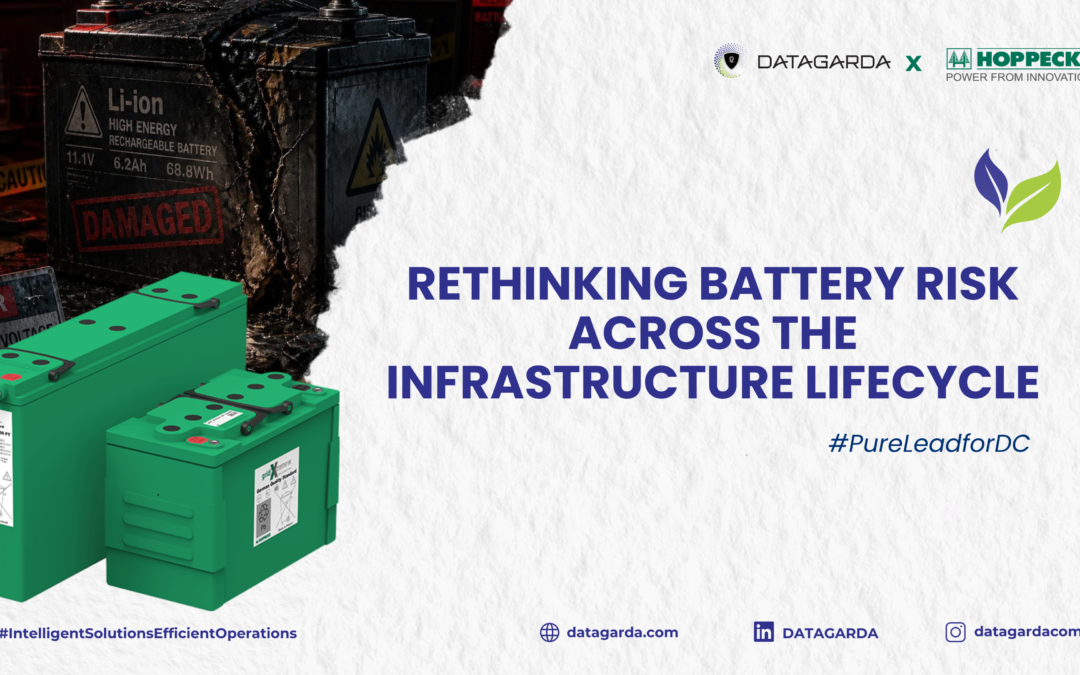
One of the key safety considerations discussed in relation to lithium-ion battery systems is thermal runaway.
Thermal runaway is a chain reaction within a battery cell that can become difficult to stop once initiated. It occurs when the internal temperature reaches a point that triggers chemical reactions, generating additional heat and potentially oxygen.
Potential contributing factors include:
- Overheating
- Physical damage
- Overcharging
Many lithium-ion battery designs also use liquid flammable electrolytes and polymer separators, which means battery fire risk requires appropriate consideration within the overall critical power and facility safety strategy.
The recent industry discussion around lithium battery incidents reinforces an important lesson:
Battery technology should be evaluated as part of infrastructure risk management—not only as a performance specification.
The LinkedIn discussion that prompted this topic specifically highlighted a recent data center fire reported as originating in lithium battery units, while industry professionals emphasized the importance of lifecycle management, early detection, compartmentalization, governance, and emergency preparedness. The post itself also notes that official investigation should precede definitive conclusions about the incident.
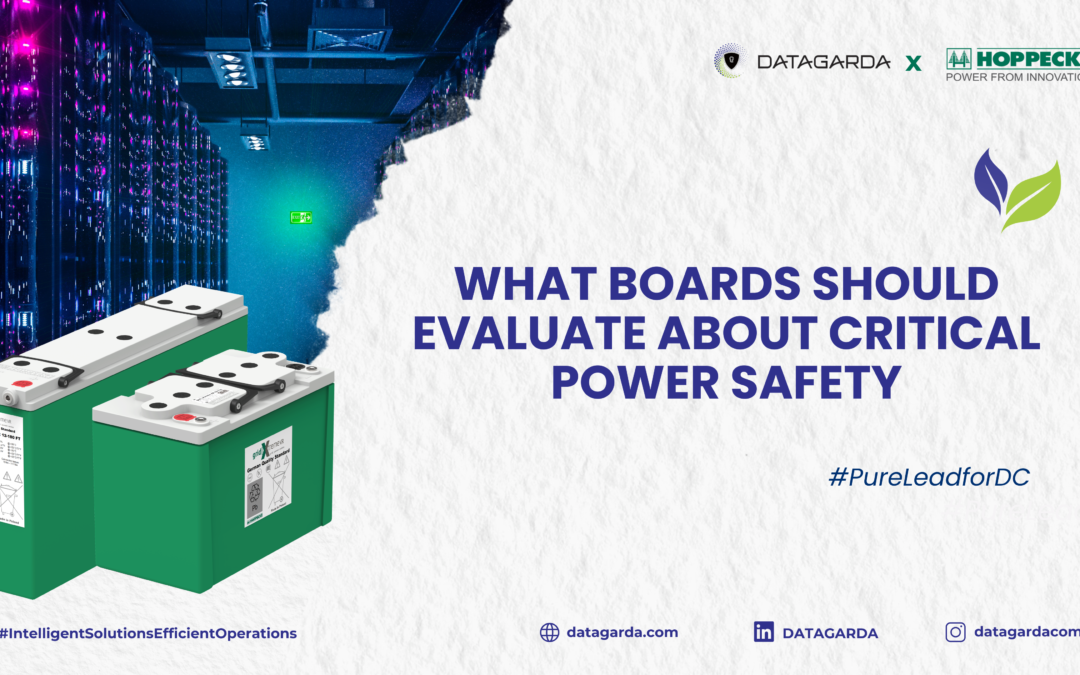
Why Power Resilience Belongs in the Boardroom
For executive teams, critical power decisions have implications beyond technical operations.
1. Business Continuity
How long can critical operations continue if the primary power source is unavailable?
2. Infrastructure Risk
What happens if a failure occurs within the backup power system itself?
3. Safety
Does the selected technology and facility design support an appropriately managed operating environment?
4. Lifecycle Performance
How will battery performance, maintenance, and replacement requirements evolve over time?
5. Investment Protection
Does the critical power strategy protect the value of the broader infrastructure investment?
These questions help executives move from power availability toward power resilience.
Performance Is Only One Part of the Decision
Selecting a battery system should not be based on a single metric.
Executive teams should consider a broader set of criteria:
Performance
Can the system deliver the required power and backup duration?
Safety
What are the technology’s relevant failure modes and risk characteristics?
Lifecycle
How does performance evolve throughout the expected service life?
Maintainability
How effectively can the system be inspected, monitored, and maintained?
Operational Integration
How does the battery system fit into the broader data center operating model?
Total Cost of Ownership
What are the long-term implications of installation, maintenance, replacement, and operational requirements?
A resilient critical power strategy considers the complete lifecycle—not simply the initial purchase.
The HOPPECKE Approach to Critical Power Resilience
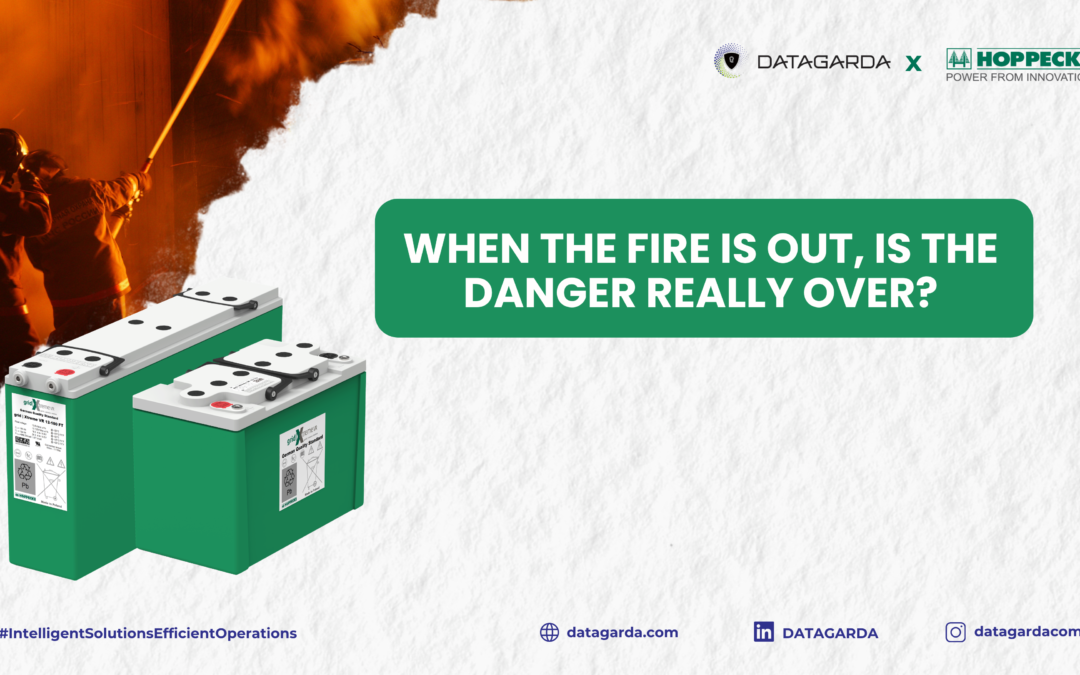
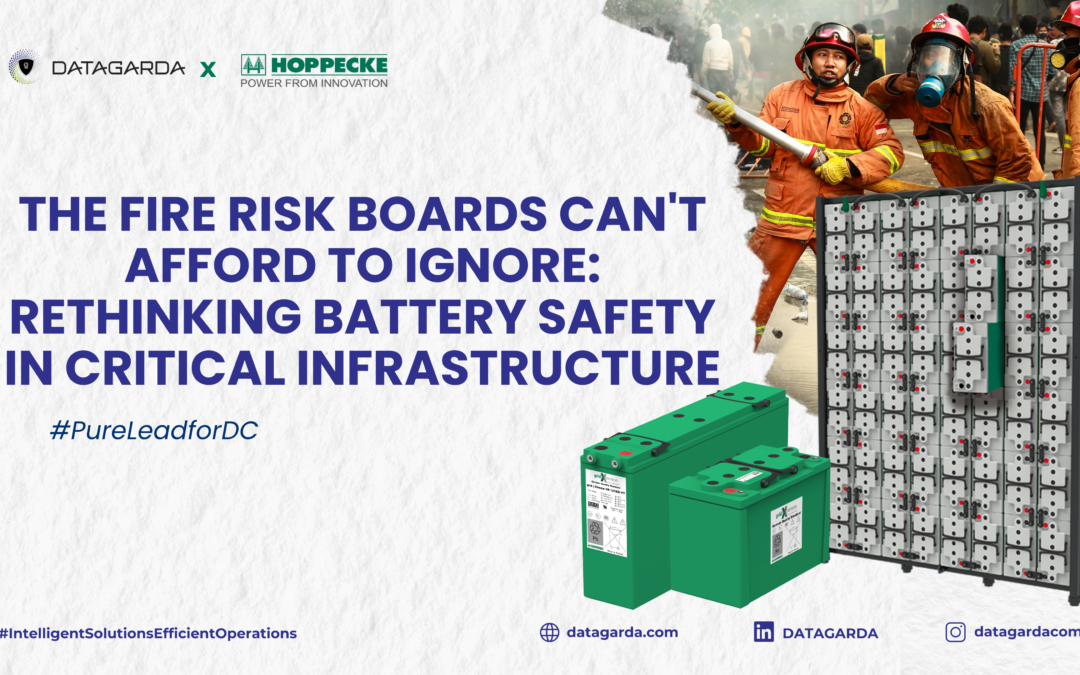
HOPPECKE’s grid | Xtreme VR pure lead battery technology is designed specifically for demanding UPS and data center applications.
HOPPECKE states that its Enhanced Stability Standard (ESS) technology provides improved resistance to thermal runaway, alongside improved charge acceptance and more consistent voltage behavior. The company also highlights high-purity lead technology, lifecycle performance, and serviceability as characteristics of the solution.
For data center environments, HOPPECKE positions its pure lead technology as a solution designed around high power density, durability, and critical UPS requirements.
The strategic point for enterprise leaders is not simply choosing one battery technology over another.
It is ensuring that critical power decisions are aligned with the organization’s broader resilience and risk strategy.
From Battery Selection to Enterprise Risk Management
A mature power resilience strategy should integrate:
Infrastructure Assessment
Understand the current condition and risk profile of critical power assets.
Battery Lifecycle Management
Track asset health, maintenance requirements, performance, and replacement planning.
Safety & Risk Management
Evaluate relevant failure modes and ensure appropriate mitigation measures are incorporated.
Operational Readiness
Ensure people, processes, and technology are prepared to respond to power-related events.
Business Continuity
Connect critical power strategy directly to business recovery objectives.
Executive Governance
Provide leadership with meaningful information about infrastructure health, risk, and investment requirements.
This approach turns critical power from a technical subsystem into an integrated component of enterprise resilience.
The DataGarda × HOPPECKE Perspective
At DataGarda, we believe infrastructure resilience requires more than reliable technology.
It requires operational discipline, lifecycle thinking, governance, and informed decision-making.
Through collaboration with HOPPECKE, DataGarda brings an operational and infrastructure perspective to critical power strategy—helping organizations consider how battery systems fit within the broader data center environment.
The objective is clear:
Build critical infrastructure that businesses can rely on—not only today, but throughout its lifecycle.
Questions Every Executive Should Ask
Before approving a critical power investment, leadership should ask:
- What are the key risks associated with our current battery technology?
- Are our battery systems appropriately monitored and maintained?
- Do we have a clear lifecycle and replacement strategy?
- How does our critical power strategy support business continuity?
- Are power-related risks visible at the executive level?
- Does our infrastructure strategy account for future capacity requirements?
- Are technology, operations, safety, and governance being considered together?
These questions help organizations move from reactive power management to strategic power resilience.
Conclusion
Power resilience is no longer simply an engineering requirement.
As businesses become increasingly dependent on digital infrastructure, critical power systems have become part of enterprise risk management.
The right strategy considers more than uptime.
It considers safety, lifecycle performance, operational readiness, business continuity, and long-term infrastructure value.
For executive leaders, the objective is not simply to keep the lights on.
It is to ensure that critical infrastructure remains safe, resilient, predictable, and capable of supporting the business when it matters most.
Build a More Resilient Critical Power Strategy
DataGarda and HOPPECKE help organizations approach critical power from a broader perspective—combining infrastructure operations, lifecycle thinking, resilience, and advanced battery technology.
Assess the risk. Strengthen resilience. Protect the business.