Uptime Is No Longer Enough
For decades, uptime has been the gold standard of data center performance.
Whether measured through availability percentages, redundancy levels, or service-level agreements, organizations have traditionally viewed uptime as the ultimate indicator of operational success.
But today’s digital environment is different.
As enterprises accelerate cloud adoption, AI initiatives, digital transformation programs, and critical business applications, simply keeping systems online is no longer sufficient.
The question modern organizations should be asking is not:
“Are our systems running?”
Instead, it is:
“How intelligently are our operations being managed?”
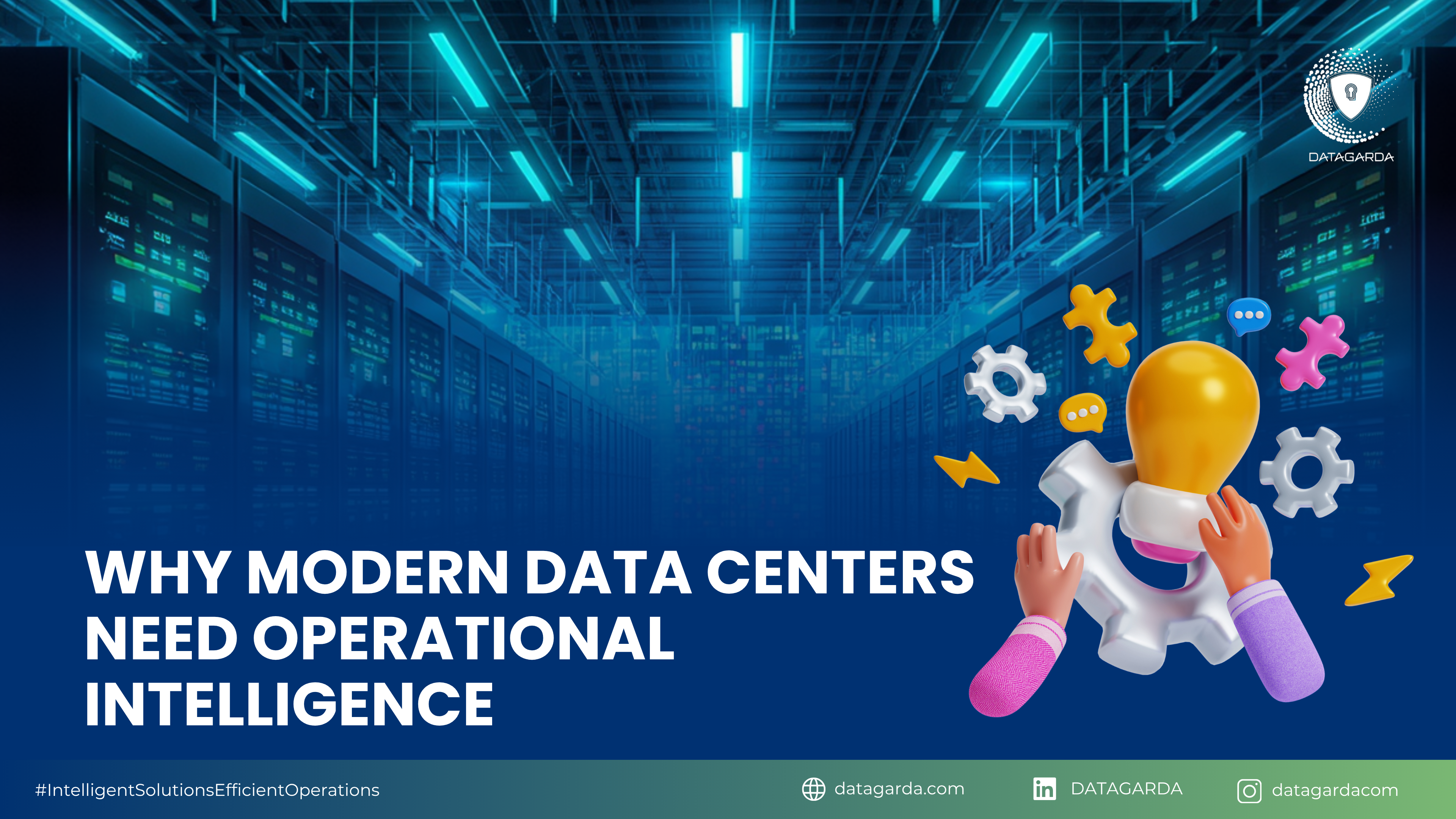
This shift is driving a new priority for enterprise infrastructure leaders: Operational Intelligence.
The Growing Complexity of Modern Data Centers
Today’s data centers are significantly more complex than those built a decade ago.
Operators must manage:
- Hybrid infrastructure environments
- AI and high-density workloads
- Increasing power demands
- Cooling efficiency requirements
- Cybersecurity risks
- Sustainability targets
- Regulatory and compliance obligations
Each component generates vast amounts of operational data.
Without the ability to analyze and act on that information effectively, organizations risk operating reactively rather than proactively.
And reactive operations often result in higher costs, greater risk exposure, and reduced operational efficiency.
What Is Operational Intelligence?
Operational Intelligence is the ability to collect, analyze, and act on real-time operational data to improve performance, reduce risk, and support informed decision-making.
In a data center environment, operational intelligence combines:
- Infrastructure monitoring
- Environmental monitoring
- Asset performance analytics
- Predictive maintenance
- Capacity planning
- Risk management
- Operational reporting
The objective is not simply to identify issues after they occur.
The objective is to identify risks before they impact operations.
Why Visibility Alone Is No Longer Enough
Many organizations already have monitoring systems in place. They can see temperatures, power consumption, alarms, and equipment status. However, visibility without actionable insight has limited value.
Modern operational intelligence platforms help organizations answer critical questions such as:
- Which assets are most likely to fail?
- Where are capacity bottlenecks developing?
- Which operational processes introduce the highest risk?
- How can energy efficiency be improved?
- What infrastructure investments should be prioritized?
The difference is moving from data collection to decision support.
The Four Pillars of Operational Intelligence
1. Predictive Maintenance
Traditional maintenance models rely on fixed schedules or reactive repairs. Operational intelligence enables teams to monitor equipment health continuously and identify early warning signs before failures occur.
Benefits include:
✔ Reduced downtime risk
✔ Longer asset lifespan
✔ Lower maintenance costs
✔ Improved reliability
2. Capacity and Growth Planning
Infrastructure demand continues to evolve rapidly.
AI applications, digital services, and business expansion can quickly create capacity constraints.
Operational intelligence provides visibility into:
- Power utilization
- Cooling performance
- Rack capacity
- Future infrastructure requirements
This allows organizations to make more strategic expansion decisions while avoiding unnecessary capital expenditures.
3. Risk Management and Resilience
Resilience is no longer measured only by redundancy. It is measured by an organization’s ability to anticipate and mitigate operational risks. Through continuous monitoring and analytics, operational intelligence helps identify:
- Environmental anomalies
- Equipment degradation
- Power quality issues
- Operational vulnerabilities
This supports stronger business continuity and disaster recovery strategies.
4. Operational Efficiency and Sustainability
As energy costs rise and ESG expectations increase, operational efficiency has become a boardroom priority.
Operational intelligence enables organizations to:
- Optimize cooling systems
- Reduce energy waste
- Improve facility performance
- Track sustainability metrics
The result is a more efficient, cost-effective, and environmentally responsible operation.
The Role of AI in Operational Intelligence
Artificial Intelligence is accelerating the evolution of data center operations. Modern platforms can analyze operational data at a scale that human teams cannot achieve alone.
AI-powered analytics can help organizations:
- Detect anomalies faster
- Forecast infrastructure demand
- Predict equipment failures
- Improve operational decision-making
As data centers become increasingly complex, AI will play a central role in transforming infrastructure management from reactive operations to predictive operations.
How Datagarda Supports Operational Intelligence
At Datagarda, we believe operational excellence starts with visibility, insight, and proactive decision-making.
Through our Data Center Operations & Management, Facility Management, Digital Services, Assessment & Audit, and Infrastructure Consulting capabilities, we help organizations build smarter and more resilient operational environments.
Our approach focuses on:
- Real-time operational visibility
- Infrastructure performance optimization
- Risk assessment and mitigation
- Capacity planning
- Operational resilience
- Continuous improvement initiatives
Because the most reliable operations are not the fastest to react.
They are the ones that see risks coming before they happen.
Conclusion
Uptime remains important.
But in today’s digital economy, uptime alone is no longer enough.
Organizations that embrace operational intelligence gain greater visibility, stronger resilience, improved efficiency, and better decision-making capabilities.
As data centers continue to support increasingly critical business functions, the future belongs to organizations that move beyond uptime and toward intelligent operations.
Ready to transform your data center operations?
Contact Datagarda to learn how operational intelligence can help improve reliability, optimize performance, and strengthen long-term infrastructure resilience.
Talk to our experts today.