The Greatest Infrastructure Risks Are Often the Ones You Cannot See
Modern data centers generate thousands of operational data points every second.
Power utilization, cooling efficiency, network availability, server performance, and environmental conditions are continuously monitored through sophisticated dashboards.
Yet despite this abundance of data, many organizations remain vulnerable to risks that are not immediately visible.
Infrastructure failures rarely occur without warning.
More often, they are the result of small operational weaknesses that accumulate over time—aging assets, deferred maintenance, governance gaps, capacity constraints, or ineffective operational processes.
These invisible risks can eventually lead to service disruption, financial loss, reputational damage, and missed business opportunities.
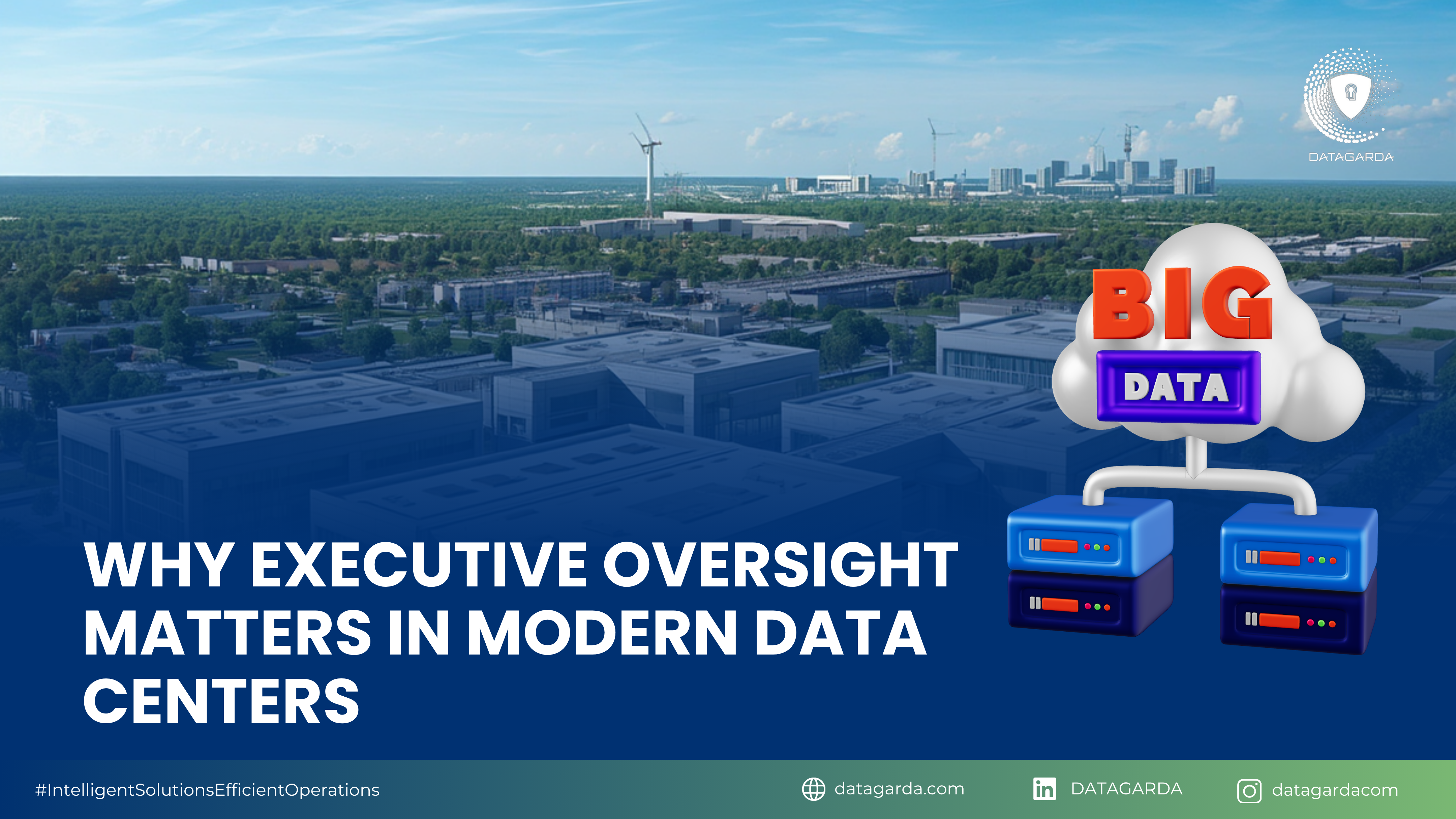
This is why executive oversight has become a strategic necessity in today’s digital infrastructure environment.
Why Data Center Risk Has Become a Boardroom Issue
Data centers no longer support only IT operations.
They support the entire business.
Digital platforms, AI workloads, cloud services, financial systems, customer applications, and operational technology all rely on infrastructure that must remain available and resilient.
As organizations become increasingly dependent on digital services, infrastructure risk becomes enterprise risk.
This shifts the conversation from:
“Is the data center operating?”
to
“Do we fully understand the risks that could impact business performance?”
That question belongs in the boardroom.
The Hidden Risks Behind Healthy Dashboards
Operational dashboards often provide valuable real-time insights.
However, they primarily report what is happening today.
They do not always reveal what may happen tomorrow.
Examples of invisible risks include:
Aging Infrastructure
Equipment can continue functioning while its reliability gradually declines.
Without lifecycle visibility, failures often occur unexpectedly.
Maintenance Backlogs
Deferred maintenance rarely appears as a critical alert but steadily increases operational exposure.
Capacity Pressure
Infrastructure may meet today’s demand while lacking sufficient headroom for future business growth or AI-driven workloads.
Process and Governance Gaps
Operational inconsistency, unclear accountability, or outdated procedures can introduce risk without triggering technical alarms.
Hidden Dependencies
Redundancy diagrams may look complete, but operational dependencies can still create single points of failure.
These are the risks that traditional monitoring often overlooks.
Visibility Is Not the Same as Oversight
Collecting operational data is only the first step.
Executive oversight requires translating technical information into business intelligence.
Leadership teams need answers to questions such as:
- What are our highest infrastructure risks?
- Which operational issues could affect business continuity?
- Where should investment priorities be focused?
- How prepared are we for future growth?
- Are our governance practices supporting long-term resilience?
These insights allow executives to make informed decisions rather than reacting to unexpected disruptions.
Executive Oversight Creates Better Business Outcomes
Organizations that strengthen executive visibility into infrastructure operations gain several advantages:
✔ Improved strategic decision-making
✔ Better alignment between technology and business goals
✔ Stronger enterprise risk management
✔ More effective capital planning
✔ Increased operational accountability
✔ Greater resilience during disruption
Infrastructure governance becomes a source of competitive strength rather than simply a compliance requirement.
Moving from Reactive Operations to Predictive Leadership
Traditional infrastructure management often focuses on responding to issues after they occur.
Leading organizations take a different approach.
They invest in:
- Infrastructure assessments
- Operational intelligence
- Risk-based reporting
- Lifecycle planning
- Predictive maintenance
- Governance frameworks
These capabilities help identify vulnerabilities before they affect operations, enabling executives to make proactive decisions that protect business performance.
Infrastructure Governance Is a Business Strategy
As AI adoption accelerates and digital services become increasingly critical, infrastructure investments must be guided by governance, transparency, and long-term planning.
Executive oversight ensures that technology investments are aligned with organizational objectives, operational readiness, and future business requirements.
Infrastructure is no longer simply an operational asset.
It is a strategic capability that influences growth, resilience, and competitive advantage.
How Datagarda Helps Organizations Strengthen Executive Oversight
At Datagarda, we help organizations transform operational data into executive insight.
Through infrastructure assessments, operational audits, governance reviews, and operational intelligence, we provide leaders with the visibility needed to make informed strategic decisions.
Our services include:
- Data Center Operations & Management
- Infrastructure Audit & Assessment
- Operational Readiness Reviews
- Governance & Compliance Support
- Business Continuity Planning
- Executive Infrastructure Reporting
Our goal is to help organizations identify hidden risks before they become business disruptions.
Conclusion
The most expensive infrastructure risks are often the ones that remain invisible until they impact the business.
Modern organizations cannot rely solely on operational dashboards or uptime metrics.
They need executive oversight supported by meaningful operational intelligence, governance, and continuous assessment.
Organizations that improve visibility today will be better equipped to manage uncertainty, strengthen resilience, and support long-term business growth.
Because resilient businesses are built on informed decisions.
And informed decisions begin with visibility.
Ready to gain greater visibility into your infrastructure risks?
Contact Datagarda today to discuss infrastructure assessments, operational intelligence, and governance strategies that help transform hidden risks into informed executive decisions.
See beyond the dashboard. Build resilience with Datagarda.