Battery Technology Is No Longer Just an Engineering Decision
For decades, UPS batteries were viewed as a technical component buried deep within data center infrastructure.
They were rarely discussed in boardrooms, strategic planning meetings, or risk management reviews.
Today, that has changed.
As organizations become increasingly dependent on digital services, cloud platforms, AI workloads, and real-time operations, the reliability of critical power infrastructure has become a business issue—not just a technical one.
A single infrastructure failure can lead to operational disruption, financial losses, regulatory scrutiny, reputational damage, and customer dissatisfaction.
As a result, executive teams are beginning to ask a new question:
Is our backup power strategy aligned with our business continuity strategy?
Why Business Leaders Are Paying Attention
Data centers have evolved into mission-critical assets that support nearly every aspect of modern business.
When power disruptions occur, UPS systems become the last line of defense between normal operations and service interruption.
While much attention is given to generators, redundancy, and disaster recovery planning, battery technology often receives less strategic consideration.
However, the performance, reliability, and safety characteristics of a battery system directly impact:
- Business continuity
- Operational resilience
- Risk management
- Sustainability objectives
- Infrastructure lifecycle costs
- Regulatory compliance
These are all board-level concerns.
The Growing Cost of Infrastructure Risk
Organizations today operate in an environment where downtime costs continue to rise.
A power-related incident can result in:
- Service interruptions
- Data loss
- Customer impact
- Regulatory consequences
- Reputational damage
The objective is no longer simply to recover from incidents.
The objective is to reduce the likelihood of incidents occurring in the first place.
This is why infrastructure leaders are increasingly evaluating not only battery performance, but also the operational risks associated with different battery technologies.
Reliability Is More Than Runtime
Traditional battery evaluations often focus on runtime and capacity.
While these factors remain important, modern decision-making requires a broader perspective.
Executives should also consider:
Safety
How resilient is the technology under demanding operational conditions?
Lifecycle Costs
What are the long-term maintenance, replacement, and operational costs?
Infrastructure Efficiency
How does battery technology affect cooling requirements and facility design?
Sustainability
How does the solution align with ESG objectives and environmental responsibilities?
Long-Term Resilience
Can the technology support future infrastructure demands while reducing operational risk?
These considerations elevate battery technology from an engineering specification to a strategic investment decision.
Why Pure Lead Technology Is Gaining Attention
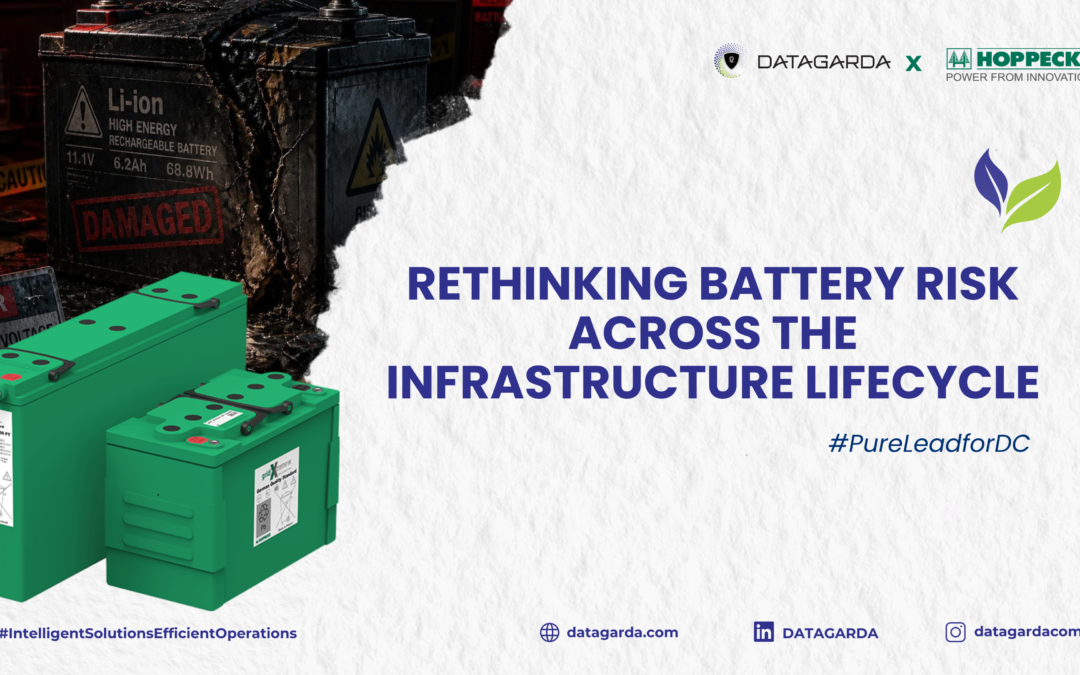
As organizations reassess critical power infrastructure, Pure Lead battery technology has emerged as a compelling option for mission-critical environments.
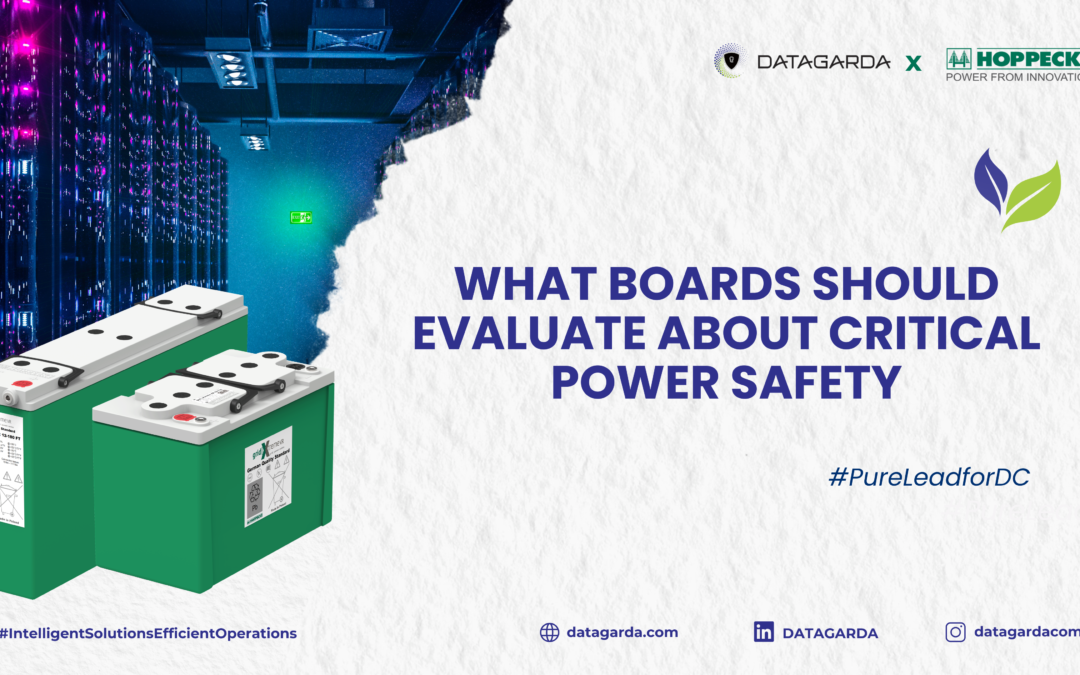
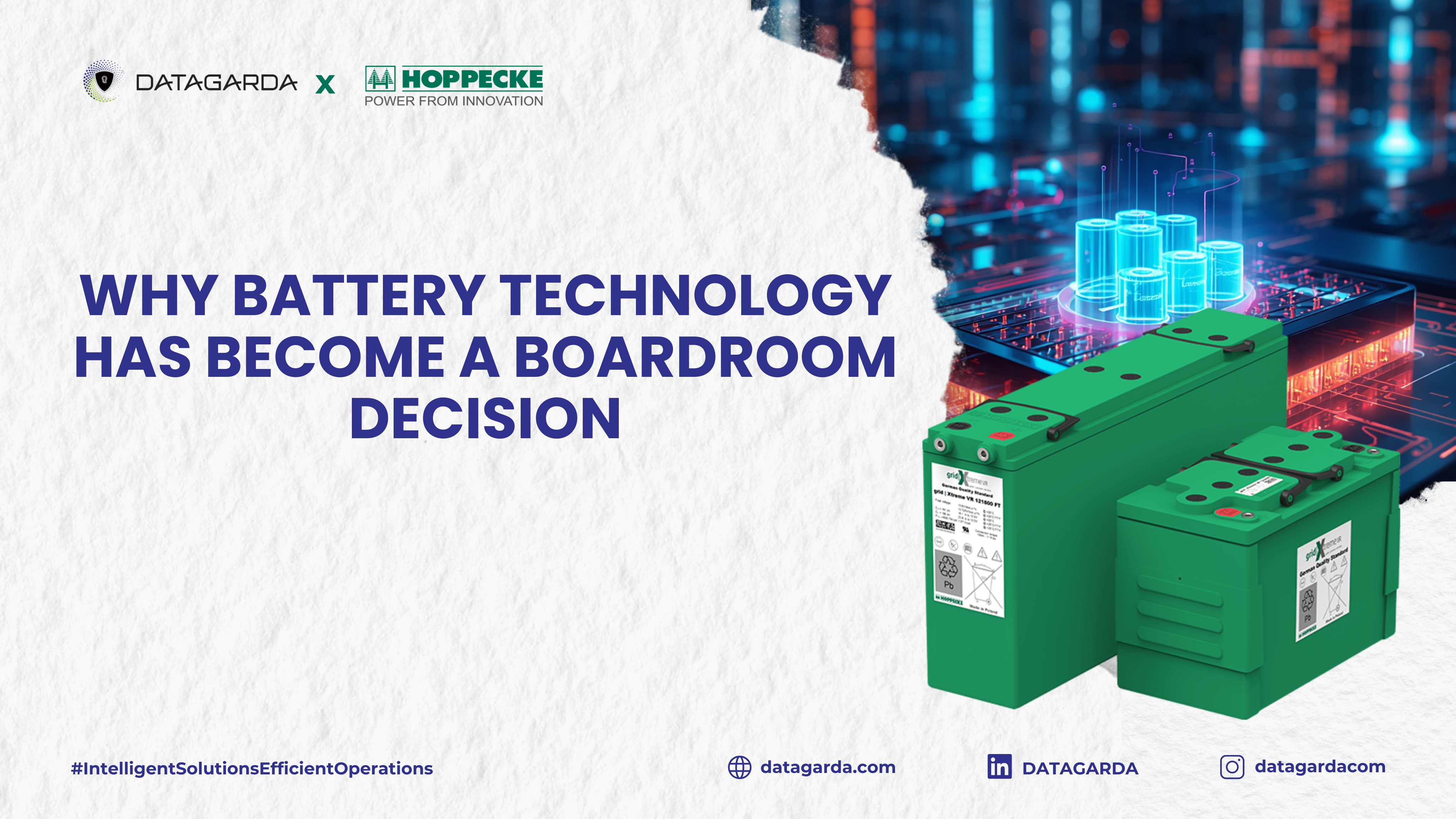
The HOPPECKE grid | Xtreme VR platform was developed specifically for applications requiring exceptional reliability, long service life, and operational resilience.
Key benefits include:
Enhanced Resilience
The platform incorporates Enhanced Stability Standard (ESS) technology designed to improve resilience against thermal instability while supporting more stable long-term battery performance.
Long Service Life
Pure Lead technology provides excellent corrosion resistance and a design life of up to 15 years, reducing replacement frequency and lifecycle costs.
High-Temperature Performance
The ability to operate effectively under elevated temperatures can reduce cooling requirements and improve infrastructure efficiency.
Reduced Maintenance
Maintenance-free operation helps simplify infrastructure management while reducing operational burden.
Sustainability Is Now Part of the Decision
Boardrooms today are increasingly focused on Environmental, Social, and Governance (ESG) performance.
Infrastructure investments are expected to support both business objectives and sustainability goals.
This is where battery technology can play an important role.
Lead batteries remain among the world’s most recycled products, with recycling rates approaching 99%, supported by mature recycling ecosystems and circular economy models.
For organizations seeking to reduce environmental impact while maintaining operational reliability, sustainability can no longer be separated from infrastructure planning.
From Technical Asset to Strategic Asset
The role of battery systems has fundamentally changed.
They are no longer simply backup components waiting for an outage.
They are critical assets that influence:
- Risk exposure
- Operational resilience
- Customer trust
- Sustainability performance
- Business continuity readiness
The organizations that recognize this shift are moving battery strategy discussions from the server room to the boardroom.
How Datagarda and HOPPECKE Support Modern Infrastructure Leaders
At Datagarda, we help organizations evaluate critical power infrastructure through the lens of operational excellence, business continuity, and long-term resilience.
Through our partnership with HOPPECKE, we provide access to advanced Pure Lead battery solutions designed for mission-critical environments where safety, reliability, and sustainability cannot be compromised.
Our approach includes:
- Critical power infrastructure assessment
- UPS modernization planning
- Risk and resilience evaluation
- Pure Lead battery deployment
- Operational and lifecycle optimization
Because reliable infrastructure starts with informed decisions.
Conclusion
In today’s digital economy, battery technology is no longer a technical procurement decision.
It is a strategic business decision.
Organizations that align their power infrastructure with broader business objectives will be better positioned to reduce risk, improve resilience, support sustainability goals, and strengthen business continuity.
The future of infrastructure leadership requires looking beyond backup power.
It requires understanding the business impact of every component that supports operational continuity.
Ready to evaluate your critical power strategy?
Contact Datagarda today to discover how HOPPECKE Pure Lead battery solutions can help strengthen resilience, improve operational performance, and support your long-term infrastructure goals.
Talk to our experts and schedule a critical power assessment today.