The Hidden Cost of Battery Fire Risk: Why Pure Lead Matters for Critical Infrastructure
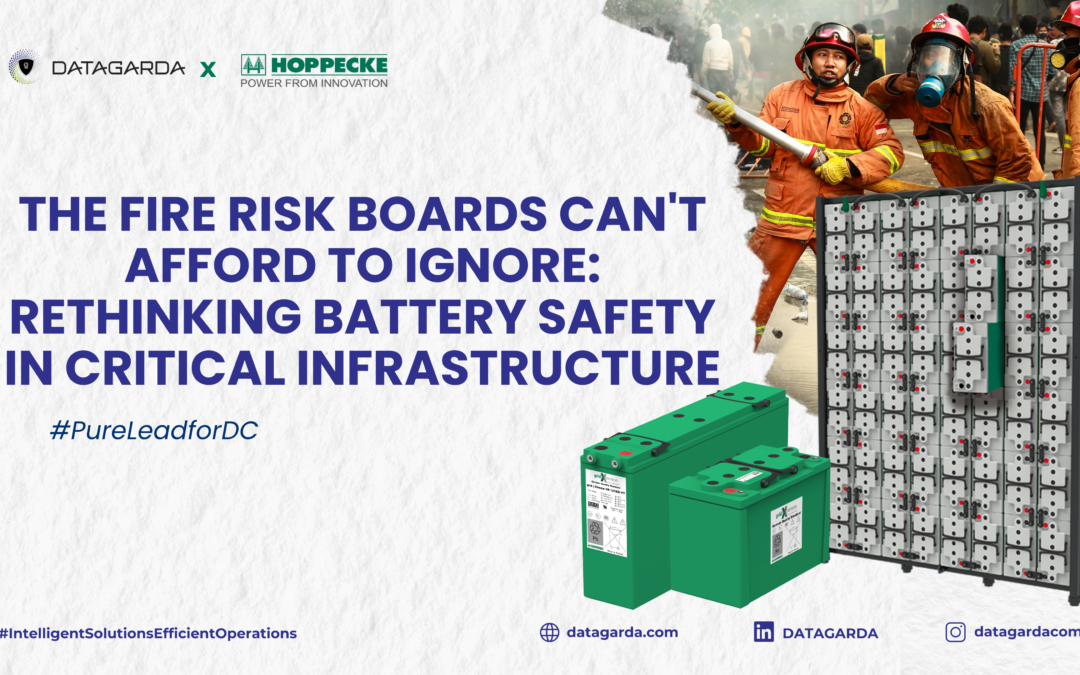
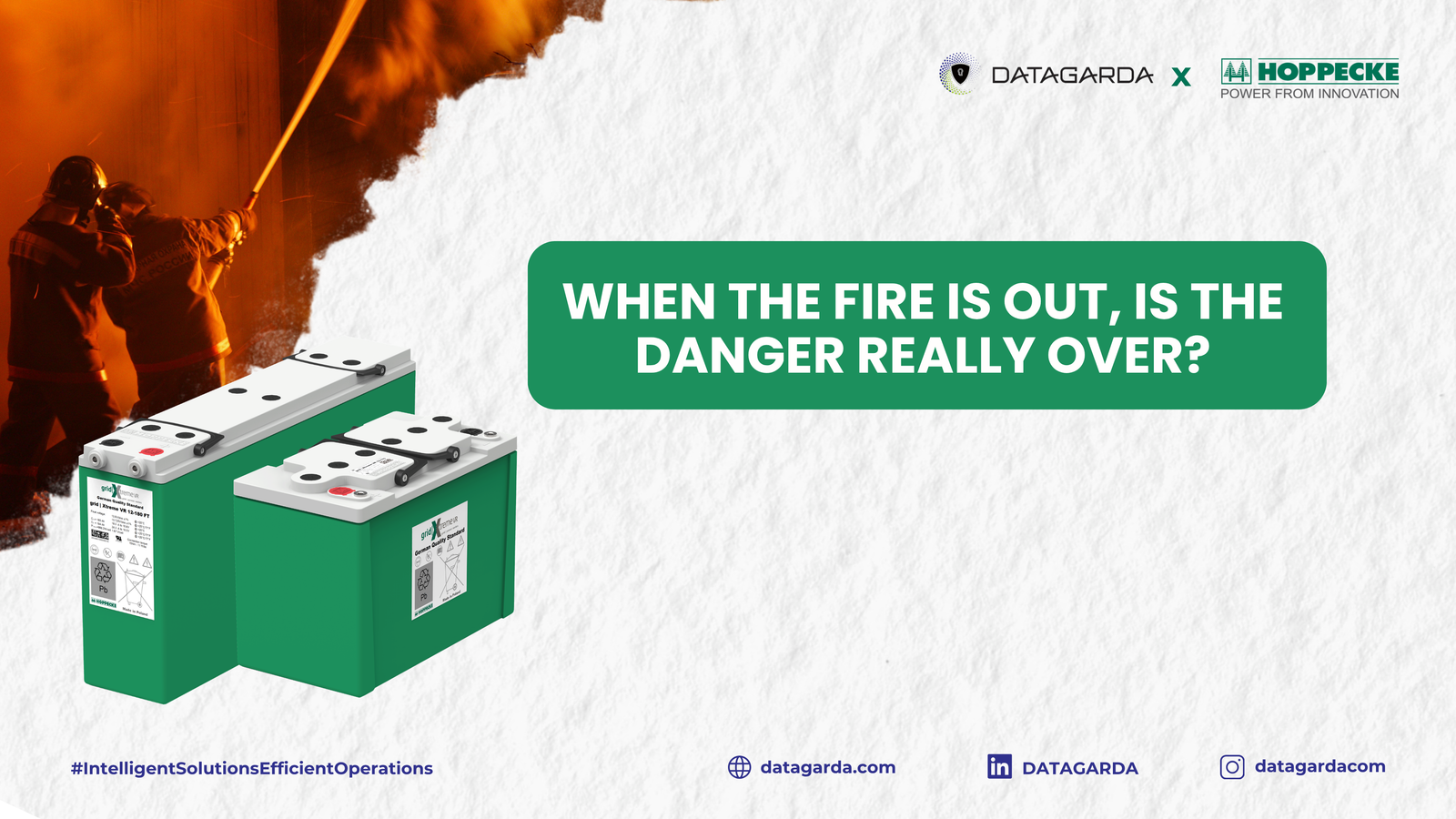
In critical infrastructure, extinguishing a fire does not always mean the danger has passed. Battery-related incidents can present ongoing safety challenges even after visible flames have disappeared, making post-incident monitoring, cooling, and emergency response essential parts of a facility’s risk management strategy.
For data centers and other mission-critical facilities, the implications extend far beyond the battery system itself. Equipment damage, service interruptions, unplanned downtime, and prolonged recovery can affect business continuity, operational resilience, and financial performance.
As organizations reassess their critical power strategies, battery selection deserves closer attention—not only for backup capacity and performance, but also for safety, lifecycle cost, and the potential consequences of failure.
Understanding the Risk of Battery Thermal Runaway
Lithium-ion batteries are widely used in modern infrastructure because of their high energy density and compact design. However, their operating characteristics also introduce specific safety considerations, including the risk of thermal runaway.
Thermal runaway occurs when a battery cell experiences an uncontrolled rise in temperature. Under certain conditions, the resulting heat can trigger a chain reaction involving neighboring cells. The incident may release hazardous gases, generate intense heat, and lead to fire.
One of the most important considerations is what happens after the visible flames have been extinguished. A battery system affected by thermal runaway may remain vulnerable to reignition. Residual heat, damaged cells, and the possibility of further reactions can make the incident difficult to manage.
This means emergency response cannot always end when the flames disappear. Depending on the incident, continued cooling, temperature monitoring, isolation, and specialist assessment may be required.
For critical facilities, this creates an important operational question: How well does the battery strategy account for both the initial incident and the risks that may remain afterward?
The Hidden Business Cost of Battery Fire Risk
Battery safety is often discussed in terms of technical specifications, protection systems, and equipment compliance. However, for data center operators and infrastructure decision-makers, the consequences of a battery incident can reach much further.
1. Equipment damage and replacement
Fire, intense heat, smoke, and associated suppression activities can damage more than the affected battery. Nearby electrical equipment, UPS components, cabling, and supporting infrastructure may also require inspection, repair, or replacement.
2. Operational downtime and service disruption
Critical power systems support the continuity of essential workloads. An incident that affects the UPS environment or requires an extended shutdown can disrupt operations and potentially affect customer-facing services.
3. Extended recovery periods
Even after the immediate emergency has been addressed, facilities may need to complete safety assessments, inspect equipment, restore affected systems, and validate operational readiness before returning to normal service.
4. Financial and reputational consequences
Unplanned maintenance, equipment replacement, incident response, and service interruptions can increase the total cost of ownership. Depending on the facility and the incident, the consequences may also include contractual exposure, customer concerns, and reputational damage.
These potential costs highlight why battery fire risk should be evaluated as part of enterprise risk management and business continuity planning—not simply as an equipment-level safety issue.
A Different Approach to Critical Power Safety
Battery technologies have different operating characteristics and risk profiles. Selecting the right solution requires an assessment of the application, the facility’s safety requirements, and the consequences of potential failure.
This is where Pure Lead Absorbent Glass Mat (AGM) battery technology merits consideration.
Unlike lithium-ion batteries, lead-acid batteries do not undergo the same thermal runaway mechanism. This difference can be relevant when organizations evaluate battery options for critical UPS applications and consider how battery-related risks may affect facility operations.
HOPPECKE’s grid | Xtreme VR, based on High Performance Pure Lead (HPPL) technology, is one option designed for critical power applications. It offers a design life of up to 15 years under specified operating conditions.
Actual service life and suitability depend on factors such as operating temperature, maintenance practices, required power profile, and system configuration. As with any battery technology, installation requirements and operating conditions must be evaluated carefully.
Pure Lead AGM batteries are not entirely risk-free. Appropriate ventilation, electrical protection, battery monitoring, inspection, and maintenance remain essential. The objective is not to assume that one technology eliminates every risk, but to understand how different technologies align with a facility’s safety requirements and resilience objectives.
For infrastructure operators, this technology assessment should form part of a broader critical power safety strategy.
Beyond Battery Capacity: Evaluating Total Cost of Ownership
Battery selection is often influenced by upfront cost, energy density, installation footprint, and performance requirements. While these factors are important, they do not tell the whole story.
A more comprehensive assessment considers Total Cost of Ownership (TCO) across the battery lifecycle, including:
- Initial investment: Purchase price, installation, and integration with the existing UPS architecture.
- Maintenance requirements: Inspection, monitoring, testing, and ongoing service needs.
- Replacement cycles: Expected service life under the facility’s actual operating conditions.
- Infrastructure requirements: Space, ventilation, electrical protection, cooling considerations, and installation constraints.
- Incident exposure: Potential costs associated with equipment damage, emergency response, operational disruption, and recovery.
- Business continuity: The consequences of losing critical power support and the measures needed to restore operations.
The lowest initial purchase price does not necessarily represent the lowest lifecycle cost. Equally, a battery with a particular technical advantage is not automatically the best choice for every application.
The right decision requires balancing technical suitability, safety requirements, lifecycle economics, and the organization’s tolerance for operational risk.
Building a More Resilient Critical Power Strategy
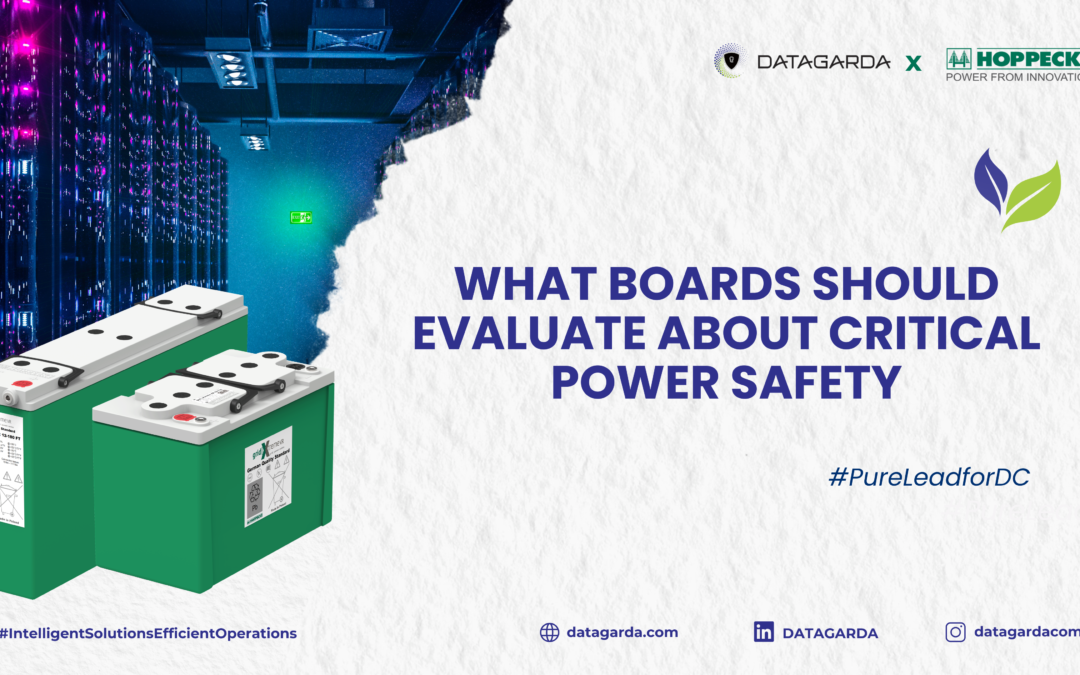
For data centers and other mission-critical environments, battery selection should be connected to the facility’s broader resilience framework.
Decision-makers should evaluate several questions:
- Does the battery technology align with the facility’s power requirements and risk profile?
- Are ventilation, electrical protection, monitoring, and maintenance arrangements appropriate for the selected system?
- Does the emergency response plan account for potential residual heat and reignition following a battery incident?
- Have the potential costs of downtime, equipment damage, and extended recovery been considered?
- Does the lifecycle assessment reflect actual operating conditions rather than design specifications alone?
These questions help shift the discussion from battery capacity alone toward a more complete view of critical power safety, operational continuity, and long-term infrastructure value.
Technology selection should ultimately be based on a structured assessment of the application—not a one-size-fits-all assumption about battery chemistry.
Conclusion: When the Fire Is Out, Risk Management Must Continue
When a battery fire is extinguished, the immediate emergency may be under control, but the wider operational consequences can continue. Residual hazards, equipment inspection, system restoration, and business recovery may all remain necessary.
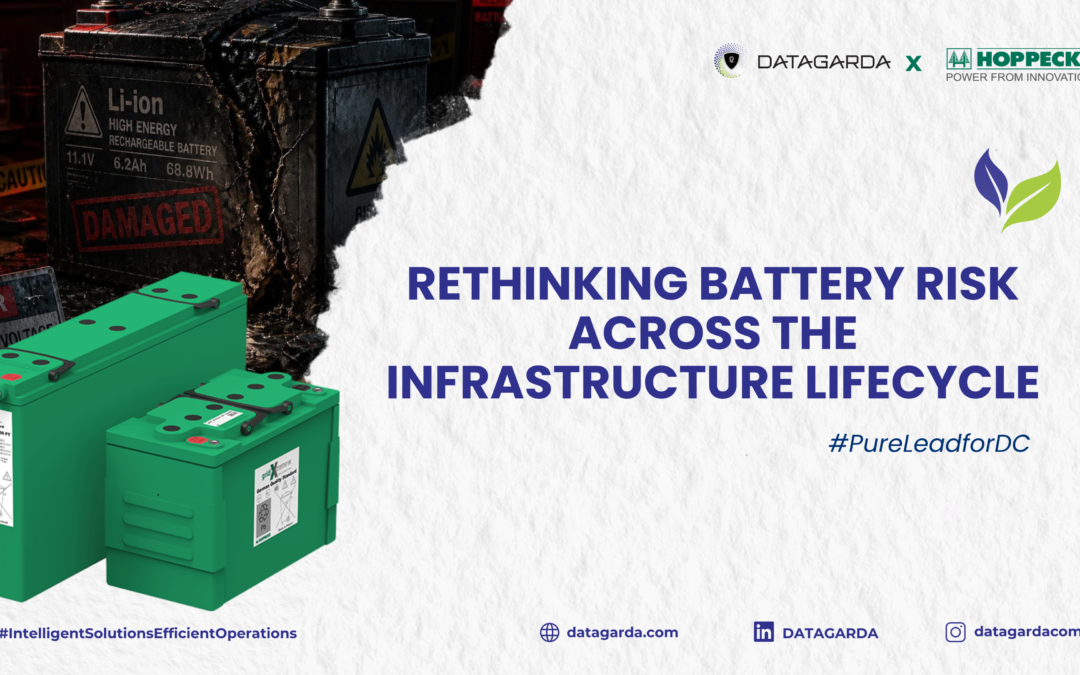
For critical infrastructure, this reinforces an essential principle: battery safety must be considered throughout the system lifecycle, from technology selection and installation to monitoring, maintenance, emergency response, and replacement planning.
Pure Lead AGM technology, including HOPPECKE’s grid | Xtreme VR, offers an alternative for organizations evaluating battery options for critical UPS applications. Its suitability should be assessed against the facility’s technical requirements, operating environment, safety strategy, and total cost of ownership.
Battery selection is more than a performance decision. It is a decision about safety, business continuity, and long-term operational resilience.
DataGarda × HOPPECKE
Beyond battery capacity. Design for resilience.
Planning your next critical power investment?
Evaluate battery technologies through the lens of safety, lifecycle value, and operational resilience. Contact DataGarda to discuss your critical infrastructure requirements and explore a battery strategy aligned with your facility’s needs.