Why battery selection in mission-critical infrastructure should be evaluated as a business continuity and risk decision—not simply a capacity decision
When boards and executive teams evaluate critical power systems, battery capacity is often one of the first specifications discussed.
How many batteries are required?
What is the total capacity?
How long can the system provide backup power?
What is the footprint?
What is the lifecycle cost?
These are important questions.
But for mission-critical infrastructure, they are not enough.
A battery system does more than provide backup capacity. It becomes part of the infrastructure responsible for maintaining continuity when the primary power supply is interrupted.
That means the technology behind the battery can also influence safety, resilience, operational risk, maintenance requirements, and long-term infrastructure performance.
For boards, the question should therefore go beyond:
“How much backup capacity do we have?”
It should also ask:
“What risks come with the technology providing that capacity?”
Capacity Is Only One Dimension of Critical Power
Battery capacity is measurable.
Safety risk is more complex.
A battery system may meet a required capacity specification while still introducing considerations that deserve deeper evaluation.
For executive decision-makers, the assessment should include:
- Fire and explosion risk
- Thermal runaway resilience
- Operating temperature
- Physical protection
- Charging behavior
- Maintenance requirements
- Service life
- Lifecycle cost
- Operational environment
- Impact on business continuity
This is particularly important when evaluating lithium-ion battery systems.
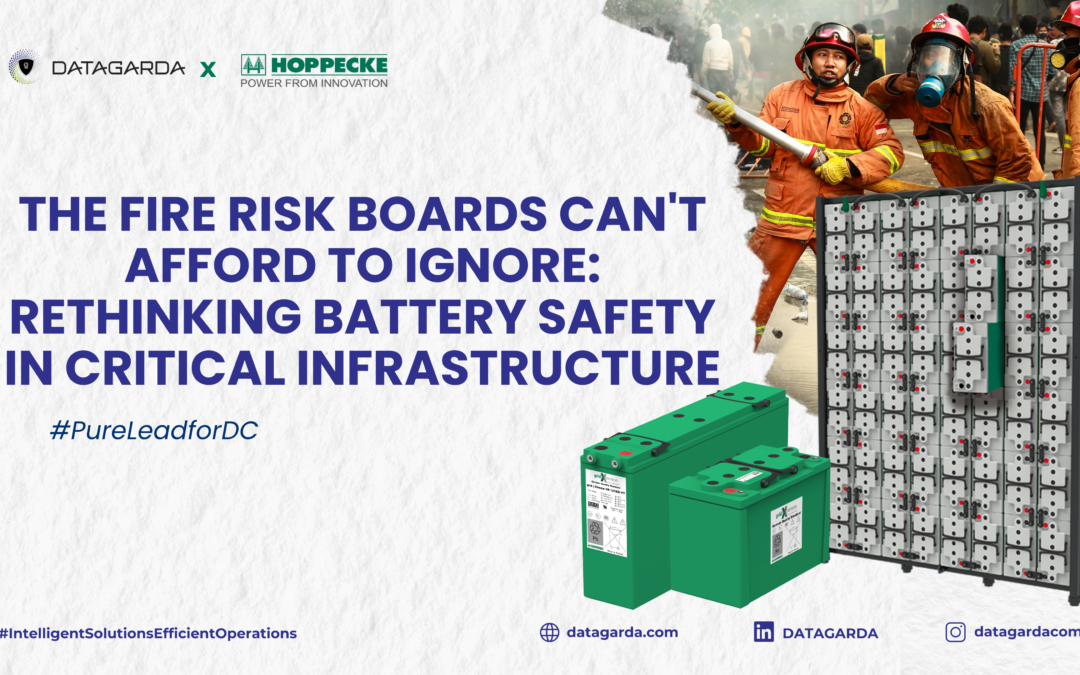
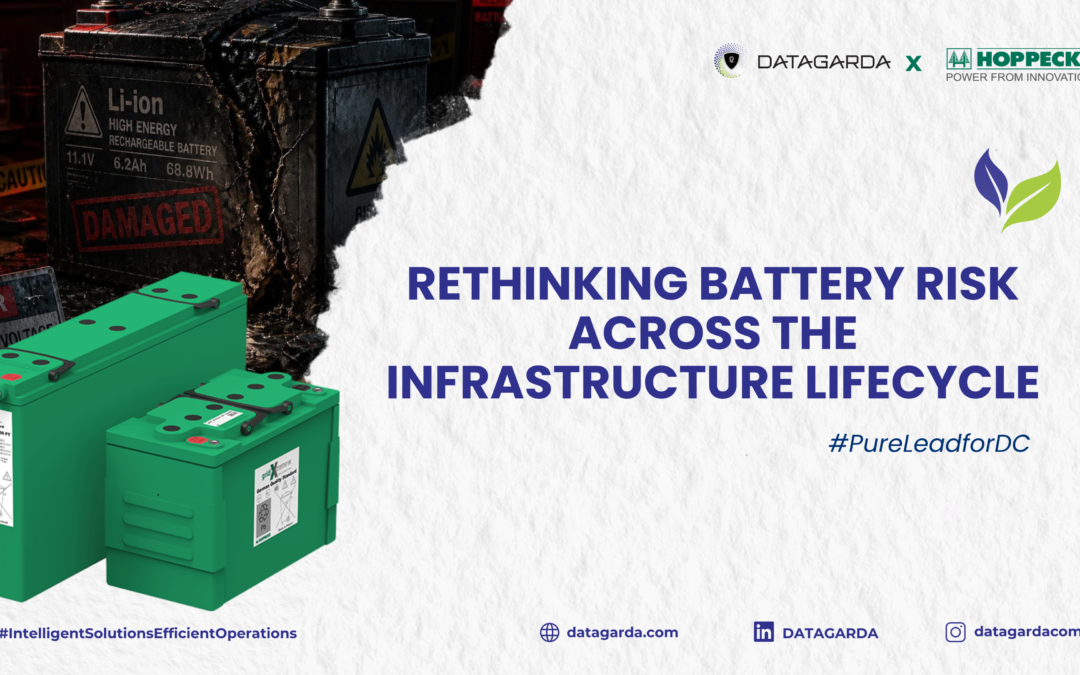
One of the significant concerns associated with lithium-ion batteries is the potential for thermal runaway, fire, and explosion. The DataGarda × HOPPECKE campaign identifies these risks as a critical consideration for data center decision-makers.
For boards, this changes the conversation.
Battery technology is not simply an engineering specification.
It can become a business risk decision.
Understanding the Thermal Runaway Risk
Today’s lithium-ion battery technology uses materials that can contribute to fire risk, including a flammable liquid electrolyte and a flammable plastic separator.
Under certain failure conditions, a battery cell can enter a process known as thermal runaway.
Thermal runaway is a chain reaction within a battery cell that can become extremely difficult to stop once it begins.
As temperature rises, chemical reactions can accelerate, creating additional heat and potentially driving the cell toward failure.
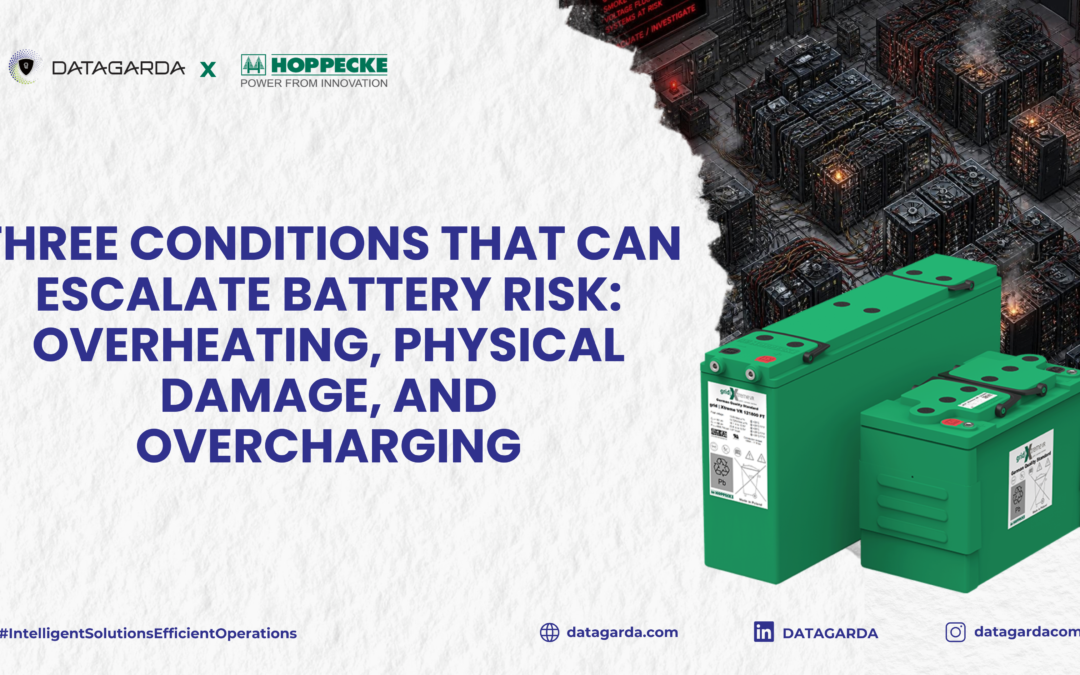
The campaign identifies three conditions that can contribute to this risk:
01 — Overheating
Excessive temperature can accelerate internal reactions and increase the likelihood of battery failure.
In a data center environment, where equipment operates continuously and energy density continues to increase, thermal management becomes an important consideration.
02 — Physical Damage
Physical damage to a battery cell can compromise internal components and potentially create conditions that lead to thermal events.
This means battery safety is not only about normal operation.
It is also about how the system responds to abnormal conditions.
03 — Overcharging
Charging conditions also matter.
Improper or excessive charging can increase stress within a battery cell and contribute to conditions associated with thermal runaway.
For critical infrastructure, charging behavior therefore needs to be considered alongside capacity and performance.
Why Thermal Runaway Becomes a Board-Level Issue
A battery failure does not necessarily remain a battery problem.
In a critical infrastructure environment, an incident can potentially affect:
Battery System
↓
Critical Power Infrastructure
↓
Facility Operations
↓
IT Infrastructure
↓
Service Availability
↓
Business Continuity
This is why the discussion should extend beyond the battery room.
The real executive question is:
What happens to the business if the critical power system becomes the source of an operational incident?
For organizations running mission-critical infrastructure, the answer can involve more than equipment replacement.
It can involve operational disruption, recovery requirements, safety exposure, and potential downtime.
The DataGarda × HOPPECKE campaign therefore positions battery safety as part of the broader conversation around data center resilience and infrastructure continuity.
The Boardroom Evaluation: What Should Leaders Ask?
When evaluating a critical power battery system, boards and executives should consider questions beyond capacity.
1. What is the technology’s safety profile?
Understand the chemistry, construction, and failure characteristics of the battery technology.
Capacity should never be evaluated independently from safety.
2. How does the battery respond to thermal stress?
Temperature is an important operating factor for critical power systems.
Executives should understand the expected operating environment and how the selected technology performs under elevated temperatures.
3. What happens when something goes wrong?
No critical infrastructure system should be evaluated only under normal operating conditions.
Decision-makers should also understand how the system is designed to manage abnormal conditions and potential failure scenarios.
4. What does maintenance actually require?
Maintenance affects operational workload, access requirements, risk exposure, and lifecycle cost.
A system that requires less intensive maintenance can potentially simplify operational management—but the specific maintenance requirements and procedures still need to be evaluated against the facility’s operating model.
5. What is the expected lifecycle?
The initial purchase price does not represent the complete economic picture.
Boards should consider:
Acquisition Cost
Installation
Maintenance
Cooling Requirements
Replacement
Downtime Exposure
=
Total Lifecycle Consideration
This is particularly important for infrastructure expected to operate continuously for many years.
Beyond Risk: Evaluating the Alternative
Safety considerations should not simply create concern.
They should lead to better technology evaluation.
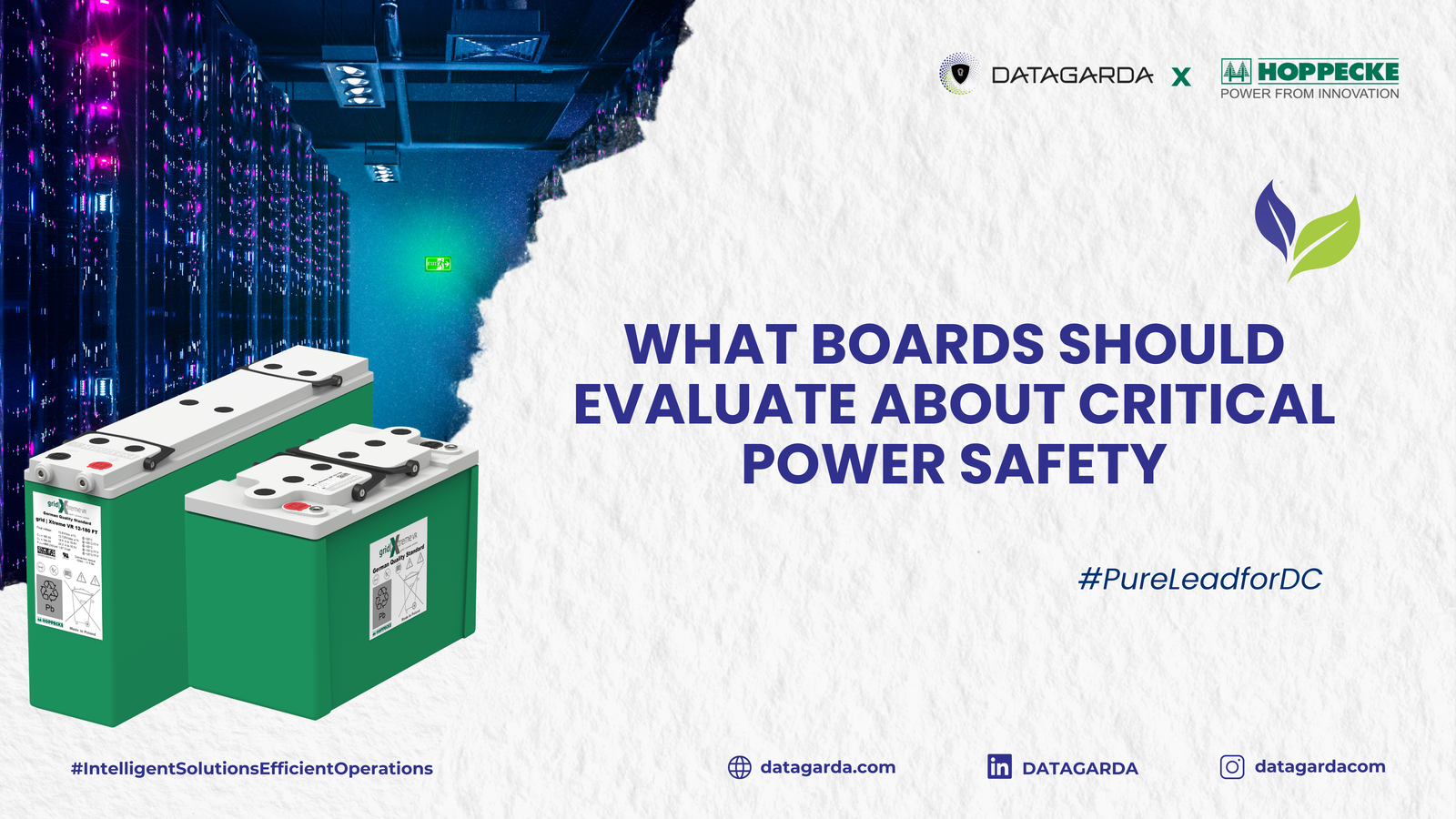
HOPPECKE’s grid | Xtreme VR is a pure-lead AGM battery platform designed for demanding applications.
According to HOPPECKE’s technical documentation, its Enhanced Stability Standard (ESS) technology provides improved resilience against thermal runaway, alongside better charge acceptance and more even voltage behavior.
The technical design also includes features such as:
- High-performance pure-lead electrodes
- Microporous glass-fibre separators combined with ESS technology
- A self-regulating pressure relief valve per cell
- Backfire-inhibiting design
- Flame-retardant housing material
- Impedance measurement access
- A stated 15-year design life
These features are designed to support operational safety, durability, and maintainability.
High-Temperature Environments Deserve Attention
Battery systems do not operate in isolation.
They operate within a physical environment.
Temperature, ventilation, cooling requirements, installation configuration, and maintenance access can all affect the overall infrastructure strategy.
HOPPECKE’s grid | Xtreme VR documentation specifies an operating temperature range extending up to 55°C, depending on the product configuration and conditions. The manufacturer positions the technology for demanding, high-temperature environments and highlights potential reductions in battery-room air-conditioning requirements.
For boards, this illustrates an important principle:
Battery selection should consider the environment in which the technology must perform—not only the capacity it provides.
Safety and Performance Should Be Evaluated Together
A common mistake in infrastructure investment is separating safety from performance.
In reality, they are interconnected.
A battery technology needs to deliver the required power performance while operating within an acceptable risk profile.
This means evaluating:
Performance
Can the system provide the required backup capability?
Safety
How does the technology respond to abnormal conditions?
Environment
Can it operate reliably under the facility’s actual conditions?
Maintenance
Can the operating team maintain and monitor it effectively?
Lifecycle
What does the total cost and service expectation look like over time?
Continuity
What happens to the business if the system fails?
The decision becomes much more comprehensive when these dimensions are evaluated together.
Why Lifecycle Thinking Matters
HOPPECKE’s grid | Xtreme VR brochure describes the technology as a high-performance pure-lead battery designed for high-current applications, demanding environments, and long service life. It also highlights fast charging, partial state-of-charge operation, reduced self-discharge, and maintenance access.
These characteristics matter because critical power investments are not short-term technology decisions.
A battery system becomes part of the facility’s infrastructure lifecycle.
Therefore, the boardroom conversation should consider:
How will this technology perform today?
and:
How will it perform throughout its expected lifecycle?
From Battery Selection to Infrastructure Risk Management
The broader lesson is that critical power decisions should be integrated into infrastructure risk management.
A battery system should be evaluated within the context of:
Power Resilience
→ Fire Safety
→ Operational Readiness
→ Maintenance
→ Business Continuity
→ Lifecycle Management
This approach moves the discussion away from isolated specifications.
Instead of asking only:
“Which battery provides the required capacity?”
executives can ask:
“Which critical power strategy best aligns performance, safety, operational requirements, and long-term infrastructure objectives?”
That is a much more strategic question.
DataGarda × HOPPECKE: A Different Way to Look at Critical Power
The collaboration between DataGarda and HOPPECKE is built around a simple principle:
Critical power decisions should be evaluated from both an engineering and an operational perspective.
HOPPECKE brings battery technology and engineering expertise, while DataGarda brings infrastructure, implementation, and operational context.
Together, the focus is not simply on installing a battery.
It is on understanding how the critical power system fits into the wider infrastructure lifecycle.
The DataGarda × HOPPECKE campaign specifically positions the website as an educational hub for decision-makers, with the objective of moving from awareness of battery risks toward informed consideration, technical consultation, audits, and demonstrations.
The Boardroom Checklist
Before approving a critical power battery investment, boards should ask:
Safety
- What are the technology’s primary failure risks?
- How does it respond to thermal stress?
- What protections are built into the system?
Operational
- What are the maintenance requirements?
- How does the system perform under actual operating conditions?
- How accessible is the system for inspection and maintenance?
Infrastructure
- What temperature range can the system support?
- What additional cooling or facility requirements are involved?
- How does the battery integrate with the existing critical power architecture?
Financial
- What is the expected lifecycle?
- What are the maintenance and replacement requirements?
- What is the total cost of ownership?
Business Continuity
- What is the potential consequence of a battery-related incident?
- How quickly can the organization recover?
- Does the critical power strategy support the organization’s resilience objectives?
Conclusion: The Boardroom Question Is Bigger Than Capacity
Battery capacity tells you how much power a system can provide.
It does not tell you everything about the risk associated with providing that power.
For mission-critical infrastructure, boards should look beyond capacity and evaluate the complete picture:
Safety.
Thermal resilience.
Operating environment.
Maintenance.
Lifecycle.
Reliability.
Business continuity.
Because critical power is not simply about keeping equipment running.
It is about protecting the infrastructure that keeps the business running.
And that makes battery technology a board-level infrastructure decision.