Every Infrastructure Investment Is a Long-Term Decision
Organizations invest millions in data centers, digital infrastructure, and mission-critical facilities to support business growth and digital transformation.
Yet while considerable attention is given to servers, networking, and cooling systems, one essential element often receives less strategic consideration: the lifecycle of the critical power infrastructure.
Power systems are expected to perform reliably every day—and flawlessly when unexpected disruptions occur.
The question is no longer whether backup power is necessary.
The question is whether today’s power decisions will continue protecting the business five, ten, or even fifteen years from now.
That is where lifecycle strategy becomes a competitive advantage.
Looking Beyond Initial Investment Costs
Infrastructure decisions are often influenced by upfront capital expenditure.
However, focusing solely on acquisition cost can overlook factors that have a much greater impact over the life of an asset.
These include:
- Reliability over time
- Maintenance requirements
- Replacement frequency
- Operational efficiency
- Downtime risk
- Total Cost of Ownership (TCO)
The most effective infrastructure strategies evaluate long-term value rather than short-term savings.
Why Lifecycle Planning Matters
Critical power systems operate continuously in environments where reliability is essential.
As digital workloads increase and facilities support AI, cloud services, and real-time applications, the demands on power infrastructure continue to grow.
Without lifecycle planning, organizations may experience:
Increasing Maintenance Costs
Aging components require more frequent inspections, repairs, and replacements.
Reduced Operational Reliability
Equipment performance naturally declines over time, increasing the likelihood of unexpected failures.
Higher Business Risk
Critical power failures can interrupt essential services, impact customer trust, and affect business continuity.
Unplanned Capital Expenditure
Reactive replacement strategies often result in higher costs and operational disruption.
Lifecycle planning helps organizations anticipate these challenges before they become business issues.
Smarter Power Decisions Support Business Resilience
A resilient infrastructure is built on informed decisions made throughout the asset lifecycle.
Organizations should evaluate:
- Expected service life
- Reliability under demanding conditions
- Maintenance complexity
- Scalability for future workloads
- Operational efficiency
- Long-term lifecycle costs
When these considerations are integrated into infrastructure planning, organizations gain greater confidence in the resilience of their operations.
Battery Technology Is More Than Backup Power
Within every critical power system, battery technology plays a central role.
Its performance directly influences:
- Business continuity
- Power availability
- Infrastructure resilience
- Operational confidence
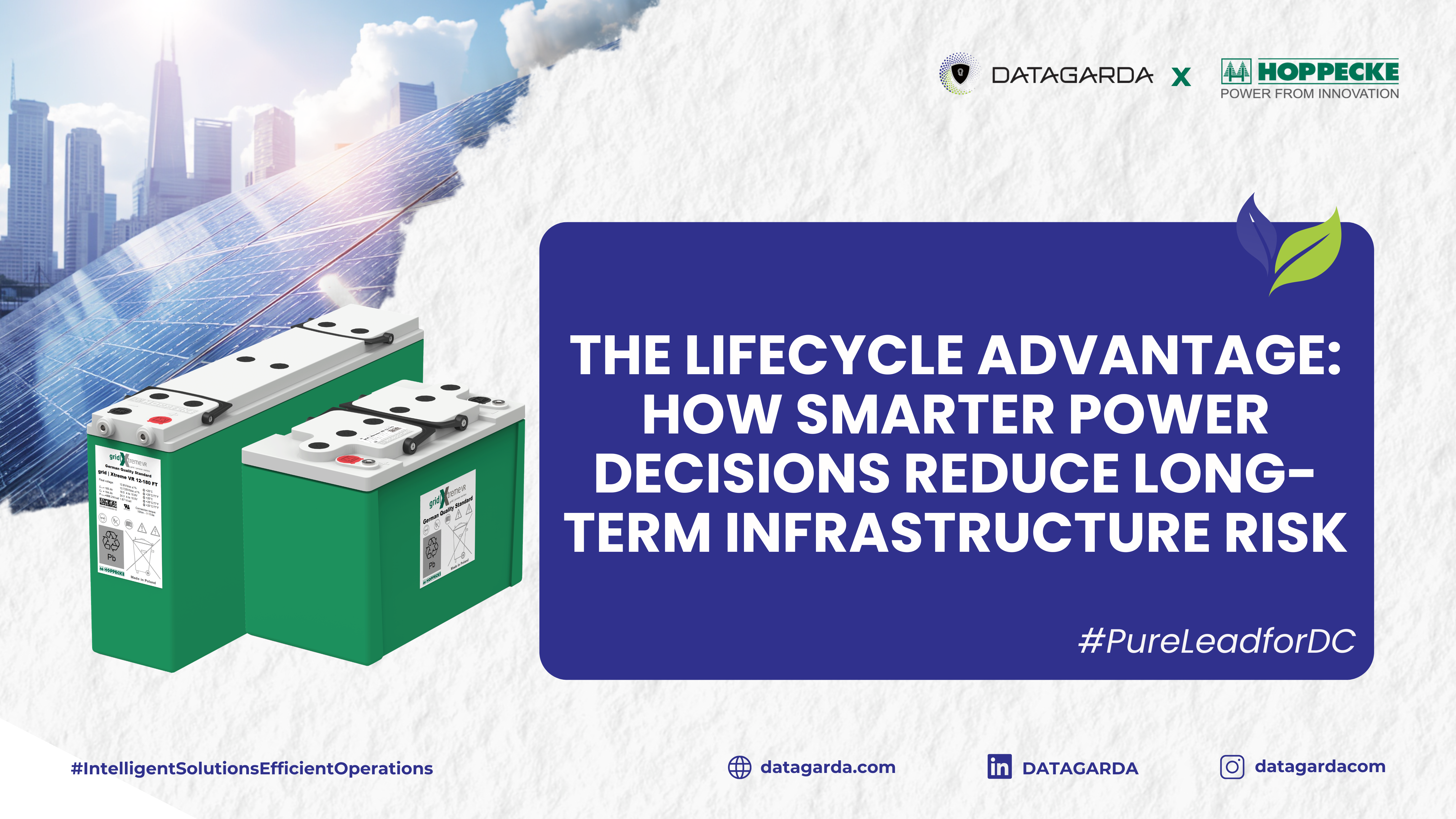
Modern Pure Lead battery technology offers advantages that support long-term lifecycle strategies, including:
- Extended service life
- Lower maintenance requirements
- Reliable performance in mission-critical environments
- Improved lifecycle value
- Reduced operational disruption
Rather than viewing batteries as consumable components, organizations should recognize them as strategic assets that contribute to infrastructure resilience.
Building Infrastructure That Supports Future Growth
Infrastructure investments should prepare organizations not only for today’s operational needs but also for tomorrow’s business ambitions.
As AI adoption accelerates and digital ecosystems expand, critical power systems must be capable of supporting:
- Higher power densities
- Continuous operations
- Greater scalability
- Long-term operational reliability
Lifecycle-focused planning ensures infrastructure evolves alongside business growth.
From Reactive Maintenance to Lifecycle Management
Leading organizations are moving away from reactive replacement strategies.
Instead, they adopt lifecycle management approaches that include:
✔ Asset health assessments
✔ Predictive maintenance
✔ Lifecycle performance reviews
✔ Risk-based investment planning
✔ Long-term infrastructure optimization
This approach reduces uncertainty while improving operational efficiency and investment outcomes.
How DataGarda and HOPPECKE Support Lifecycle Excellence
DataGarda and HOPPECKE work together to help organizations strengthen the resilience of their critical power environments through lifecycle-focused planning and operational excellence.
By combining DataGarda’s expertise in infrastructure operations and governance with HOPPECKE’s advanced battery technologies, organizations can:
- Improve infrastructure reliability
- Reduce long-term operational risk
- Optimize lifecycle costs
- Strengthen business continuity
- Build future-ready critical power systems
Because the best infrastructure investments are measured not only by how they perform today, but by how they continue to perform for years to come.
Conclusion
The future of digital infrastructure depends on decisions that extend beyond initial implementation.
Organizations that embrace lifecycle thinking gain more than reliable equipment.
They gain operational resilience, greater investment confidence, and a stronger foundation for sustainable business growth.
Smart power decisions today create long-term business value tomorrow.
Ready to optimize your critical power lifecycle?
Contact DataGarda to learn how lifecycle assessments, operational expertise, and HOPPECKE’s advanced battery technologies can help reduce long-term infrastructure risk and strengthen business continuity.
Build resilient infrastructure with smarter lifecycle decisions.