For board-level decision makers, data center infrastructure is no longer just a technical asset. It is a business continuity asset.
Every cloud service, digital banking transaction, enterprise platform, AI workload, and customer-facing application depends on infrastructure that must remain available, reliable, and resilient. In this environment, one system plays a critical role behind the scenes: the Uninterruptible Power Supply (UPS).
When the main power source fails or becomes unstable, the UPS battery system becomes the bridge between disruption and continuity. That is why UPS battery infrastructure should not be viewed only as an engineering component. It should be seen as part of the organization’s risk management, operational resilience, and long-term infrastructure strategy.
For modern data centers, the question is no longer only:
“Do we have backup power?”
The more strategic question is:
“Is our backup power infrastructure safe, space-efficient, maintainable, and ready to support long-term business resilience?”
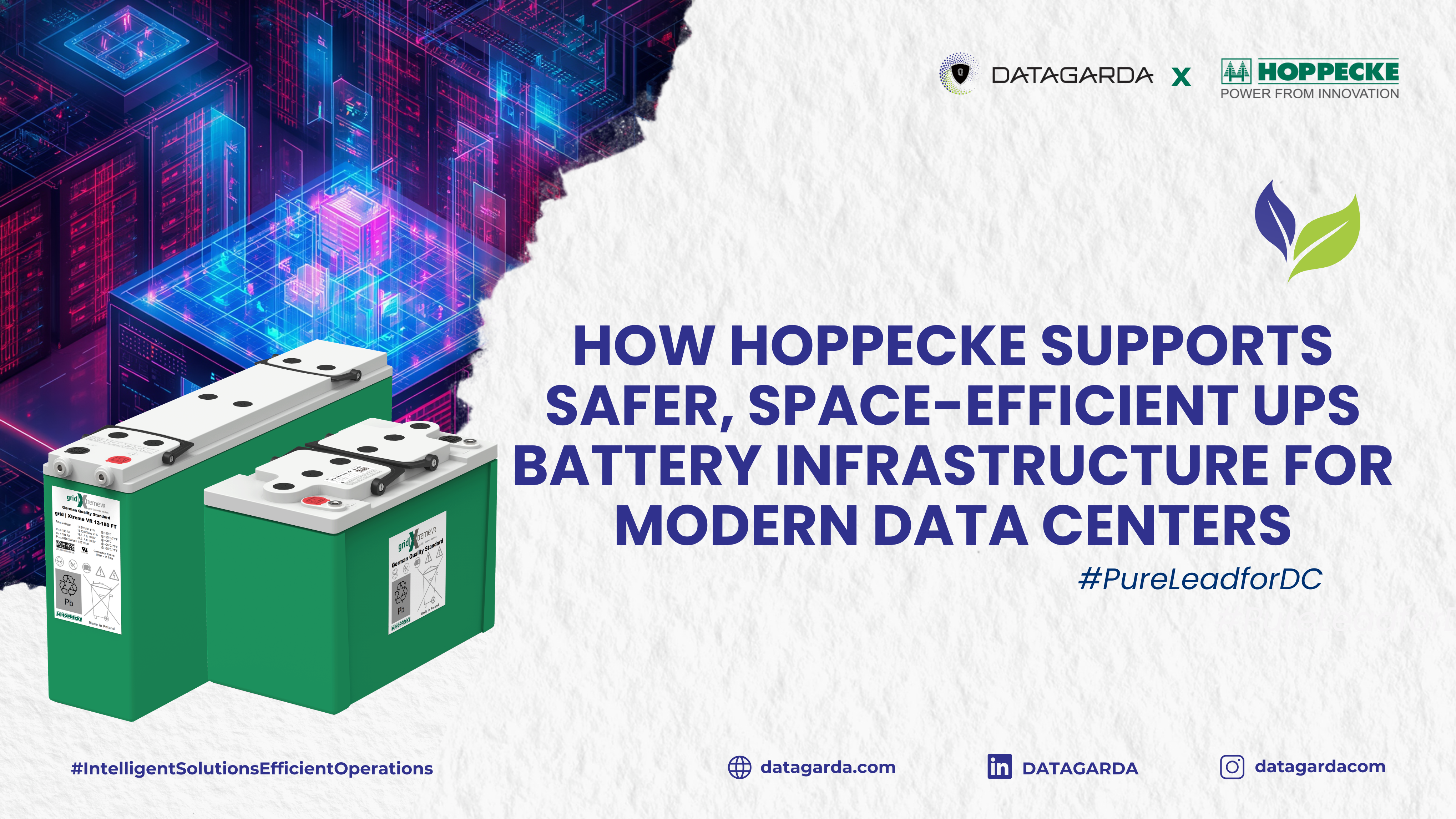
This is where HOPPECKE grid | Xtreme VR and grid | XtremeStack become highly relevant.
Why UPS Battery Infrastructure Matters at the Executive Level
Data center downtime is expensive, disruptive, and reputationally damaging.
According to Uptime Institute’s Annual Outage Analysis 2024, 54% of respondents in its 2023 survey said their most recent significant, serious, or severe outage cost more than USD 100,000, while 16% said it cost more than USD 1 million. The same analysis notes that power issues remain the most common cause of serious and severe data center outages.
For executives, this makes power infrastructure a board-level concern.
A weak backup power strategy can create risk across several areas:
- Business continuity
- Customer trust
- Regulatory confidence
- Operational stability
- Asset value
- Digital service reliability
- Long-term scalability
As data centers support more demanding workloads, including AI and high-density computing, the UPS battery system must be evaluated not only by capacity, but also by safety, footprint, maintenance, lifecycle value, and resilience.
The New Requirement: Safer and More Space-Efficient Backup Power
Modern data centers face a difficult balance.
They need more power resilience, but they also face space limitations. They need high availability, but they must manage operational cost. They need future-ready infrastructure, but they cannot compromise safety.
This is why battery system design matters.
Traditional battery infrastructure can consume significant space inside the facility. For operators planning expansion, retrofit, or high-density environments, battery room footprint becomes a strategic planning issue.
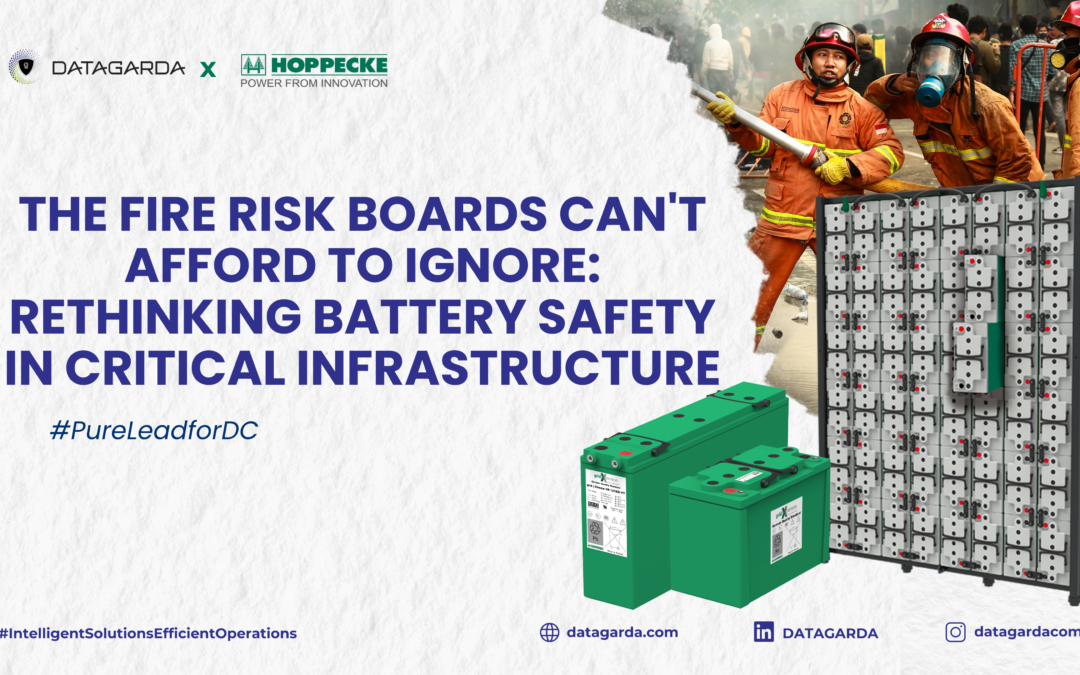
HOPPECKE’s grid | XtremeStack directly addresses this challenge. It is designed as an innovative stacking solution tailored for grid | Xtreme VR top terminal batteries, allowing data centers to use available space more efficiently while supporting scalable UPS battery infrastructure.
In HOPPECKE’s comparison, grid | XtremeStack shows up to 60% reduction in footprint and space requirement, while increasing power density by up to 153% compared with conventional battery rack arrangements.
For board-level clients, this means space efficiency is not just a technical benefit. It can influence capital planning, facility optimization, expansion potential, and long-term infrastructure value.
HOPPECKE grid | Xtreme VR: Pure Lead Technology for Critical Backup Power
At the core of the solution is HOPPECKE grid | Xtreme VR, a next-generation Pure Lead AGM battery designed for demanding standby applications such as data centers and telecommunications.
The product is positioned around several key advantages that matter for critical infrastructure:
Pure Lead technology
grid | Xtreme VR uses high-performance Pure Lead grid electrodes, supporting corrosion resistance, high discharge performance, and long-term stability under demanding operating conditions.
15-year design life
The data sheet highlights a 15-year design life with optimized aging behavior at high temperatures. This supports long-term planning and lifecycle confidence for critical backup power systems.
Wide operating temperature range
grid | Xtreme VR is designed for an extremely wide operating temperature range from -40°C to +55°C, with suitability for permanently high operating temperatures and short peaks up to 60°C.
Reduced maintenance
The battery does not require refilling with distilled water, helping reduce maintenance complexity across large UPS battery installations.
Flexible installation
The battery can be installed vertically or horizontally on racks, in battery cabinets, or in grid | XtremeStack, supporting flexibility across different data center layouts.
For executives, these attributes translate into practical business outcomes: reduced operational complexity, better lifecycle planning, stronger resilience, and greater confidence in critical backup power readiness.
grid | XtremeStack: Designed for Space, Scalability, and Serviceability
The pressure on data center space is increasing.
As compute loads grow, especially with AI and high-density infrastructure, operators must use every square meter more efficiently. Backup power systems must support reliability without consuming unnecessary facility space.
HOPPECKE’s grid | XtremeStack is designed to solve this issue through a modular stacked configuration. The system is both horizontally and vertically expandable, enabling it to adapt to changing UPS requirements.
Its advantages include:
- Small footprint
- High power density
- Maximum flexibility
- Easy system extension
- Efficient use of space
- Quick and easy installation
- Reduced installation costs
- Best serviceability
- Maximum space efficiency
- Support for seismic requirements of UBC 1
For board-level decision makers, this creates a stronger business case: grid | XtremeStack does not only help solve a technical footprint issue. It helps support scalable infrastructure planning, better use of capital assets, and operational readiness over time.
Why Safety and Confidence Matter in UPS Battery Decisions
Executives do not need every technical detail of a UPS battery system, but they do need confidence that the selected infrastructure supports risk reduction.
Battery decisions influence:
- Fire and safety planning
- Maintenance exposure
- Operational procedures
- Insurance and compliance discussions
- Facility space planning
- Availability strategy
- Sustainability goals
- Long-term infrastructure resilience
HOPPECKE’s grid | Xtreme VR is designed with features that support operational safety, including a self-regulating pressure relief valve per cell, flame-retardant PC-ABS material, non-spillable classification, and approval as non-hazardous cargo for land, sea, and air transportation under relevant requirements.
These features are important because data centers operate in high-stakes environments where safety, maintainability, and reliability must be considered together.
Sustainability and Lifecycle Responsibility
Sustainability is becoming a board-level infrastructure consideration.
For data centers, sustainability is not limited to energy efficiency. It also includes lifecycle responsibility, raw material management, recyclability, and long-term environmental impact.
HOPPECKE’s recycling reference highlights that lead batteries have a 99% recycling efficiency, supported by a secured raw material supply chain, sustainable take-back and recycling system, and certifications including ISO 9001, ISO 14001, ISO 50001, and OHSAS 18001.
For organizations with ESG priorities, this matters.
Battery systems should not only support uptime. They should also support responsible infrastructure planning and lifecycle accountability.
Why This Matters for Modern Data Centers
Modern data centers are under growing pressure from multiple directions.
- AI workloads are increasing power density.
- Cloud and enterprise applications require continuous availability.
- Facility space is becoming more valuable.
- Energy efficiency expectations are rising.
- Operational resilience is becoming a board-level priority.
Schneider Electric notes that traditional enterprise and cloud data centers gradually moved from around 3 kW per rack to around 10 kW per rack, while AI deployments are pushing rack densities much higher. In cited AI configurations, rack density increased from around 25 kW per rack in 2022 to around 72 kW per rack in 2024, with projections moving significantly higher.
This shift makes UPS battery infrastructure more important than ever.
Backup power systems must be ready for higher density, more demanding operations, and long-term scalability. For executives, the right decision is not only about selecting a battery. It is about strengthening infrastructure confidence.
From Technical Infrastructure to Executive Confidence
The value of HOPPECKE grid | Xtreme VR and grid | XtremeStack lies in their ability to connect technical performance with executive priorities.
For technical teams, the benefits include high power density, modularity, maintainability, and flexible installation.
For executives, the benefits translate into:
- Greater confidence in backup power readiness
- Better use of facility space
- Improved long-term resilience
- Reduced operational complexity
- Stronger sustainability alignment
- More future-ready infrastructure planning
This is why UPS battery infrastructure should be part of strategic data center planning, not treated as a late-stage procurement decision.
How DataGarda Supports the Local Implementation Context
Technology alone is not enough.
To create value, advanced UPS battery infrastructure must be assessed, planned, installed, maintained, and operated within the realities of local data center environments.
DataGarda’s company profile highlights end-to-end services across data center operations and management, project and construction, digital services, certification and standardization, audit and assessment, training, monitoring, and continuous improvement.
This is where DataGarda’s role becomes relevant: helping data center stakeholders translate global technology into practical infrastructure readiness, operational confidence, and long-term value for Indonesia’s digital ecosystem.
Backup Power Is a Strategic Confidence Layer
In modern data centers, UPS battery infrastructure is more than backup equipment.
It is a strategic confidence layer that supports uptime, safety, space efficiency, operational resilience, and long-term sustainability.
HOPPECKE’s grid | Xtreme VR brings Pure Lead technology, long design life, high reliability, reduced maintenance, and wide operating temperature capability. grid | XtremeStack adds a space-efficient, modular approach that supports high power density and scalable UPS battery infrastructure.
Together, they help modern data centers address one of the most important executive priorities: confidence that critical infrastructure is ready to perform when it matters most.
Is your data center’s UPS battery infrastructure ready for the next stage of growth?
Connect with DataGarda to explore how HOPPECKE grid | Xtreme VR and grid | XtremeStack can support safer, more space-efficient, and more resilient backup power infrastructure for modern data centers.