The AI Revolution is Reshaping Data Center Requirements
Artificial Intelligence (AI) is no longer a future consideration—it is now a business necessity. Across industries, organizations are rapidly adopting AI-powered applications, machine learning platforms, predictive analytics, and large language models to improve efficiency, automate processes, and accelerate innovation.
However, while AI delivers significant business value, it also introduces a new challenge: infrastructure readiness.
Many enterprise data centers were originally designed to support traditional workloads. Today’s AI environments require significantly higher computing power, greater rack densities, enhanced cooling capabilities, and more resilient electrical infrastructure. As a result, data center leaders must evaluate whether their existing facilities can support the next generation of AI workloads.
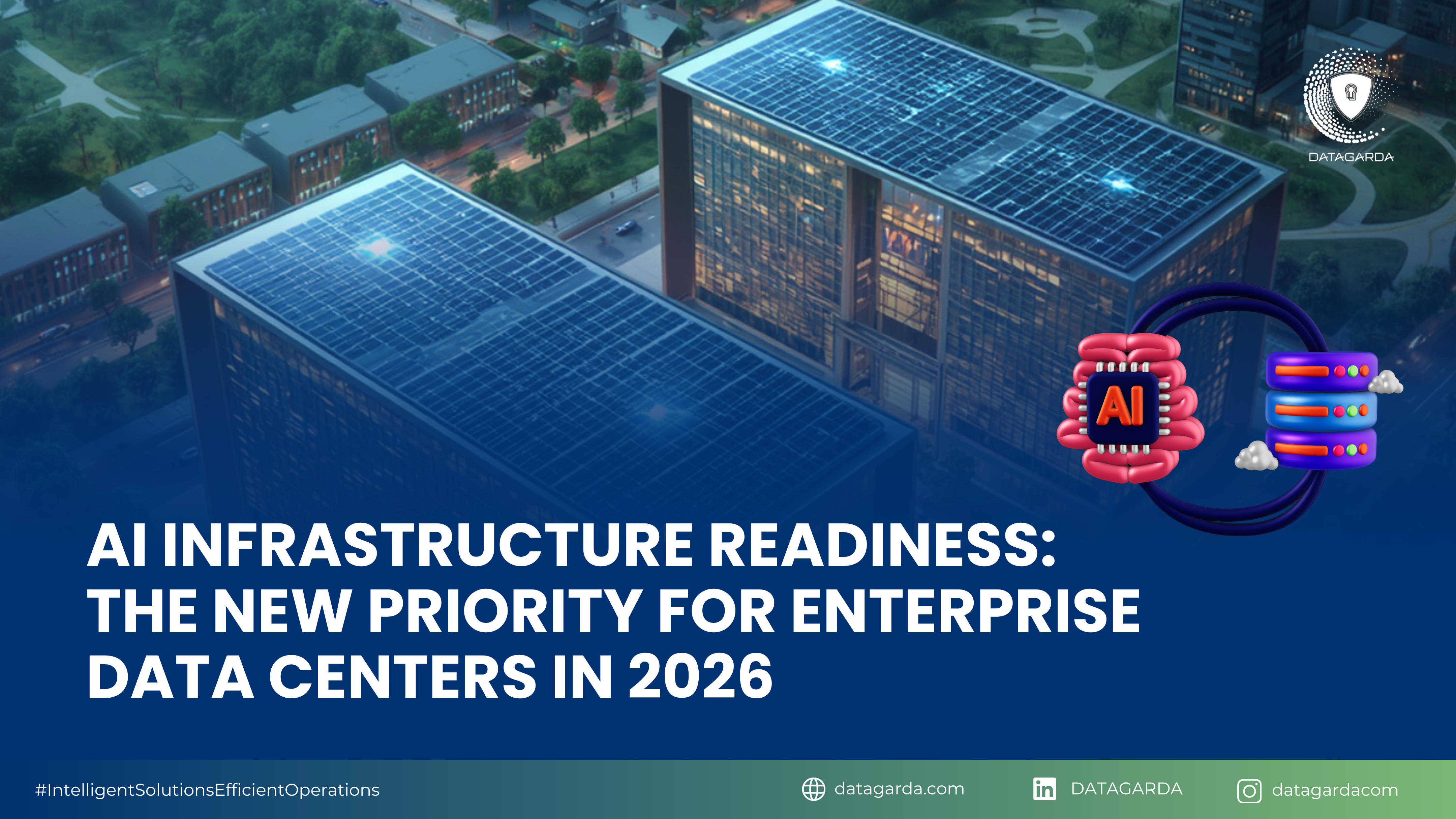
In 2026, AI Infrastructure Readiness has become one of the most important priorities for enterprise data centers.
Why Traditional Data Centers Are Struggling with AI Workloads
AI applications consume substantially more power and generate significantly more heat than conventional IT workloads.
Organizations deploying AI clusters often encounter challenges such as:
- Insufficient power capacity
- Cooling limitations
- Rack density constraints
- Higher operational risks
- Reduced infrastructure efficiency
- Scalability challenges
Without proper preparation, these issues can impact performance, increase operational costs, and expose organizations to downtime risks.
Infrastructure readiness is no longer just an IT concern—it is a business continuity concern.
The Four Pillars of AI Infrastructure Readiness
1. Power Infrastructure Optimization
AI servers and GPU clusters require significantly higher power densities compared to traditional enterprise environments.
Data center operators must ensure:
- Reliable power distribution systems
- Adequate UPS capacity
- Redundant power architecture
- Future scalability for AI expansion
Power infrastructure planning should not only meet current demand but also anticipate future AI growth.
2. Advanced Cooling Strategies
Heat management has become one of the most critical challenges in AI deployments.
Modern AI-ready facilities require:
- Precision cooling systems
- Environmental monitoring
- Airflow optimization
- Thermal efficiency management
Organizations that fail to address cooling challenges may experience performance degradation and increased equipment failure risks.
3. Intelligent Monitoring and Operational Visibility
AI infrastructure requires continuous monitoring to maintain reliability and performance.
Key capabilities include:
- Real-time infrastructure monitoring
- Predictive maintenance
- Environmental analytics
- Asset performance tracking
- Capacity planning insights
Data-driven operations help organizations identify potential issues before they become operational disruptions.
4. Future-Ready Facility Design
Many organizations do not need to build a new data center from scratch.
Instead, existing facilities can often be upgraded through strategic fitout and retrofit initiatives.
A future-ready facility should support:
- High-density AI workloads
- Modular scalability
- Energy efficiency improvements
- Operational resilience
- Sustainability objectives
This approach enables organizations to accelerate AI adoption while optimizing existing investments.
AI Readiness and Sustainability Must Go Together
As AI adoption increases, energy consumption becomes a growing concern.
Forward-thinking organizations are aligning AI infrastructure strategies with sustainability initiatives by focusing on:
- Energy-efficient operations
- Optimized cooling performance
- Infrastructure lifecycle management
- ESG-driven operational improvements
Balancing AI growth with sustainable operations will be a key competitive advantage for enterprise organizations in the coming years.
How Datagarda Supports AI Infrastructure Readiness
At Datagarda, we understand that AI readiness extends beyond servers and software.
Successful AI deployment requires a reliable, scalable, and efficient infrastructure foundation.
Through our Data Center Operations & Management, Data Center Project & Construction, Digital Services, and Certification & Standardization capabilities, Datagarda helps organizations prepare their facilities for evolving AI requirements.
Our AI-Ready Fitout & Retrofit approach focuses on:
- Infrastructure assessment
- Power optimization
- Cooling enhancement
- Environmental monitoring
- Facility modernization
- Operational excellence
By combining engineering expertise, operational experience, and future-focused infrastructure strategies, Datagarda helps organizations confidently prepare for the next generation of digital transformation.
Conclusion
AI is rapidly changing the way enterprises design, operate, and scale their data centers.
Organizations that invest in AI Infrastructure Readiness today will be better positioned to support innovation, improve operational efficiency, and maintain long-term competitiveness.
The question is no longer whether your business will adopt AI.
The real question is:
Is your data center ready for AI?
Ready to assess your AI infrastructure readiness?
Contact Datagarda today to discuss how our AI-Ready Data Center solutions can help your organization build a more resilient, scalable, and future-ready infrastructure.