When a Battery Project Becomes a National Infrastructure Risk
Data centers are designed to support continuity. Yet, even the most critical digital infrastructure can face significant disruption when operational risks are not properly managed.
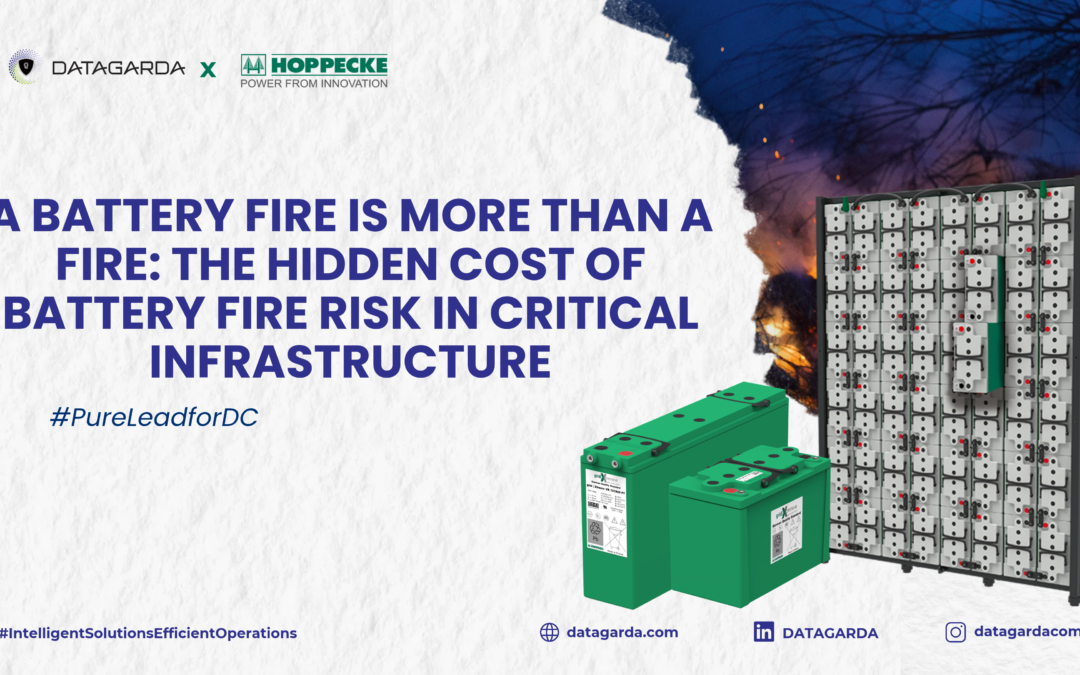
Battery systems are essential components of data center power infrastructure. They support continuity during power interruptions and help maintain the reliability of critical systems. However, battery-related projects—including replacement, maintenance, and installation—also introduce operational risks that extend beyond the technology itself.
A recent incident in South Korea demonstrated how a battery replacement project can become a major infrastructure concern.
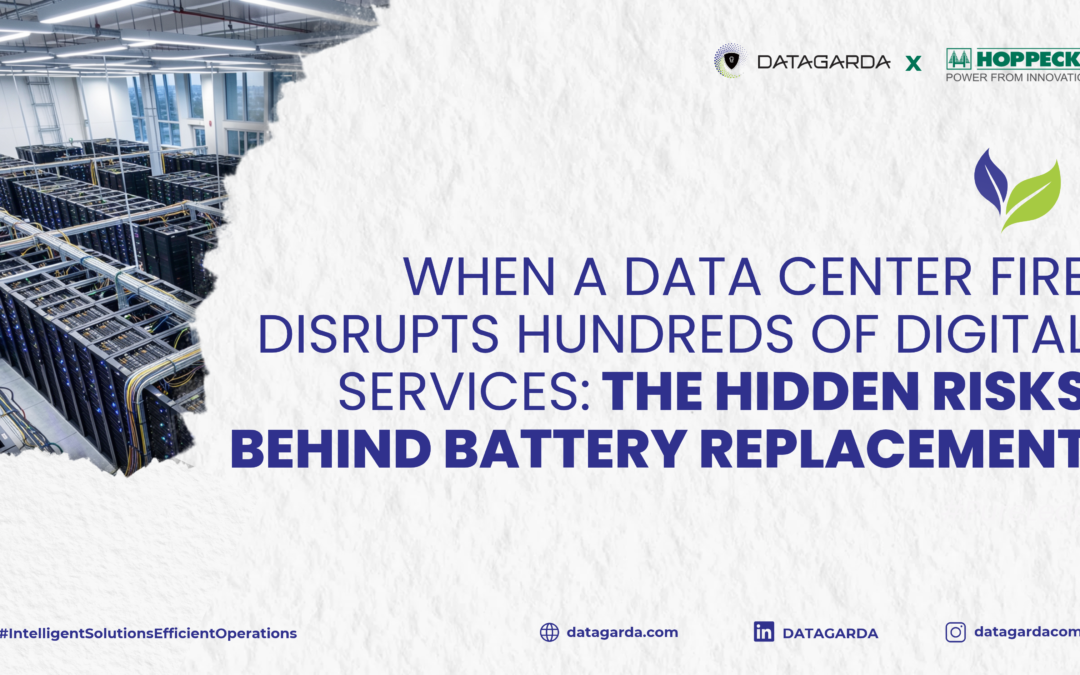
According to Yonhap News Agency’s September 7, 2026 report on findings from the Board of Audit and Inspection (BAI), a fire at the National Information Resources Service on September 26, 2025, disrupted government online administrative services across the country. The incident damaged servers and affected government websites and local community center systems. Full service normalization took 95 days.
The audit identified significant failures involving contractor oversight, safety practices, inspection decisions, and emergency response.
The incident raises an important question for data center leaders:
Are battery risks being managed as a technology issue—or as an operational and governance responsibility?
1. The Hidden Risk Behind Battery Replacement Projects
Battery replacement is often viewed as a routine infrastructure activity. In reality, it involves electrical systems, specialized personnel, operational coordination, safety procedures, and potentially critical dependencies.
The South Korean audit found that the battery replacement project had passed through multiple subcontracting layers before reaching two unlicensed firms.
According to the report:
- The original contractor subcontracted the work to another company.
- The second company further subcontracted the project to two unlicensed firms.
- The firms performed the work without appropriate safety measures, including disconnecting power to the battery rack.
- The data center failed to verify whether the firms held the required licenses and government registrations.
These findings illustrate how project execution can become disconnected from the governance expectations established at the organizational level.
The issue was not simply who supplied the battery or what technology was installed. It was also who performed the work, how the project was controlled, and whether safety requirements were enforced.
A critical infrastructure project is only as reliable as the controls governing its execution.
2. Contractor Governance: The Risk Beyond the Technology
Data center leaders may approve infrastructure projects based on technical requirements, commercial considerations, and operational needs.
However, contractor governance is equally important.
Every additional subcontracting layer can introduce complexity in:
- Responsibility and accountability
- Contractor qualification and licensing
- Safety compliance
- Work authorization and supervision
- Communication and escalation
- Project execution visibility
When these elements are not adequately controlled, organizations may lose visibility into the actual conditions under which critical infrastructure work is being performed.
The South Korean audit highlighted precisely this concern: the data center had received information that external personnel would participate in the project but did not verify the qualifications and registration status of the firms ultimately performing the work.
For executive leadership, this reinforces a broader lesson:
Contractor approval should not be the final governance checkpoint. Execution must remain visible and accountable throughout the project.
3. Battery Safety Is More Than Battery Technology
Battery technology is frequently discussed in terms of performance, capacity, lifecycle, and efficiency.
Yet, in mission-critical environments, battery safety must also be considered within the broader context of infrastructure operations.
Different battery technologies have different characteristics, operational considerations, and risk profiles. Their suitability should be evaluated based on application requirements, facility design, safety considerations, maintenance practices, and lifecycle management.
Technology selection is therefore only one part of the decision.
Even a technically appropriate battery system can be exposed to operational risk if installation, replacement, maintenance, or inspection activities are not properly controlled.
For data center leaders, battery-related decisions should consider three interconnected dimensions:
Technology
- Battery chemistry and application suitability
- System design and integration
- Safety characteristics and operating conditions
- Lifecycle and maintenance requirements
Execution
- Qualified contractors and personnel
- Approved work procedures
- Electrical isolation and safety controls
- Work supervision and coordination
Governance
- Clear accountability
- Contractor qualification verification
- Risk assessment and approval
- Inspection and escalation mechanisms
The objective is not to eliminate risk through technology alone, but to establish a more comprehensive approach to managing it.
4. Emergency Preparedness: What Happens After the Incident Begins?
The South Korean audit also identified concerns involving fire inspection and emergency response.
Five months before the incident, the National Fire Agency had proposed safety inspections. However, a data center official reportedly rejected the request, citing the security classification of the server rooms.
Following the fire, the audit found that appropriate measures to prevent its spread were not taken. Firefighters were also reportedly asked not to spray water on the equipment due to concerns about potential damage to the computer network.
These findings highlight an important operational challenge: emergency preparedness must account for both infrastructure protection and the safety of personnel responding to an incident.
For data center operators, preparedness should include:
- Coordination between facility operators and emergency responders
- Clearly established incident command and escalation procedures
- Fire safety inspection and compliance
- Emergency response protocols appropriate to the facility
- Prioritization of life safety and incident containment
- Recovery planning and business continuity coordination
Emergency response is not a capability that can be established during an incident. It must be planned, reviewed, and operationally understood beforehand.
5. The Business Impact of Infrastructure Risk
The consequences of a data center incident can extend far beyond physical equipment damage.
In the South Korean case, the BAI reported that the actual damage reached 351.1 billion won, including social costs—substantially higher than the facility’s earlier estimate of 59.7 billion won.
The disruption also affected government digital services, demonstrating how infrastructure failures can create consequences across interconnected organizations and public services.
For enterprise leaders, the implication is clear:
Infrastructure risk is ultimately business risk.
A battery replacement project may appear to be a technical activity within a defined scope and budget. However, when critical infrastructure is involved, its execution can influence service continuity, organizational reputation, financial exposure, and stakeholder confidence.
This is why infrastructure governance must extend beyond project completion and equipment acceptance.
It must also account for operational readiness, safety, accountability, and the organization’s ability to respond when unexpected events occur.
6. Building a More Disciplined Approach to Battery Projects
A more resilient approach to battery-related infrastructure projects begins with stronger coordination between technology, project execution, safety, and operational management.
Data center leaders should consider the following governance priorities:
- Verify Contractor Qualifications
Confirm that contractors and subcontractors possess the appropriate qualifications, licenses, registrations, and experience before work begins.
- Maintain Visibility Across the Contractor Chain
Establish clear approval requirements and accountability for subcontracting arrangements. Ensure that the organizations actually performing the work are known and properly authorized.
- Strengthen Work Authorization and Safety Controls
Ensure that critical activities are supported by approved procedures, appropriate electrical safety measures, risk assessments, and qualified supervision.
- Integrate Project and Operational Risk Management
Battery replacement should be coordinated with facility operations, maintenance teams, safety personnel, and relevant stakeholders.
- Establish Inspection and Emergency Readiness
Ensure that inspection requirements are addressed and that emergency response procedures are aligned with the facility’s operational realities.
- Evaluate Battery Technology Through a Lifecycle Perspective
Consider application suitability, safety characteristics, maintenance requirements, replacement planning, and long-term operational implications—not only initial procurement cost or technical performance.
These priorities help organizations move from isolated technical decisions toward a more integrated approach to infrastructure resilience.
7. DataGarda × HOPPECKE: A Shared Perspective on Infrastructure Resilience
The discussion around battery technology is ultimately a discussion about how organizations protect the infrastructure that enables their digital operations.
HOPPECKE brings a battery technology perspective to critical power applications, including considerations around battery selection, lifecycle, and application requirements.
DataGarda focuses on the broader operational environment in which critical infrastructure projects are delivered and managed—where coordination, project discipline, execution visibility, and operational readiness play an important role.
Together, these perspectives reinforce a fundamental principle:
Reliable infrastructure requires more than reliable technology. It requires disciplined execution and operational accountability.
As data centers continue to support increasingly critical digital services, organizations must ensure that infrastructure projects are governed with the same level of attention as the systems they are designed to protect.
The Real Risk Is What Happens Around the Technology
The South Korean data center fire serves as a reminder that infrastructure resilience cannot be evaluated solely through equipment specifications or technology selection.
Contractor governance, safety practices, inspection decisions, emergency preparedness, and project execution all influence the operational risk surrounding critical infrastructure.
Battery technology remains an essential part of data center power systems. The challenge for leadership is to ensure that the projects and processes surrounding that technology are equally reliable.
Because protecting digital continuity is not only about what is installed inside a data center.
It is also about how every critical project is planned, executed, supervised, and managed.
Strengthen Your Infrastructure Perspective with DataGarda
DataGarda supports organizations in strengthening project management, operational coordination, and execution visibility—helping infrastructure initiatives move forward with greater clarity, accountability, and discipline.
Explore how a more structured approach to project execution can support operational resilience.
DataGarda — Intelligent Solutions, Efficient Operations.
This article is based on the Yonhap News Agency report dated September 7, 2026, concerning the Board of Audit and Inspection’s findings on the National Information Resources Service fire. The incident is discussed as a governance and operational case study, not as an assessment of any specific battery manufacturer’s technology or involvement.