Why Power Infrastructure Deserves a Broader Risk Perspective
Uptime is a fundamental requirement for every data center. Yet, operational resilience means more than keeping systems running under normal conditions. It also means understanding how critical infrastructure can respond when an unexpected incident threatens power availability, facility safety, and service continuity.
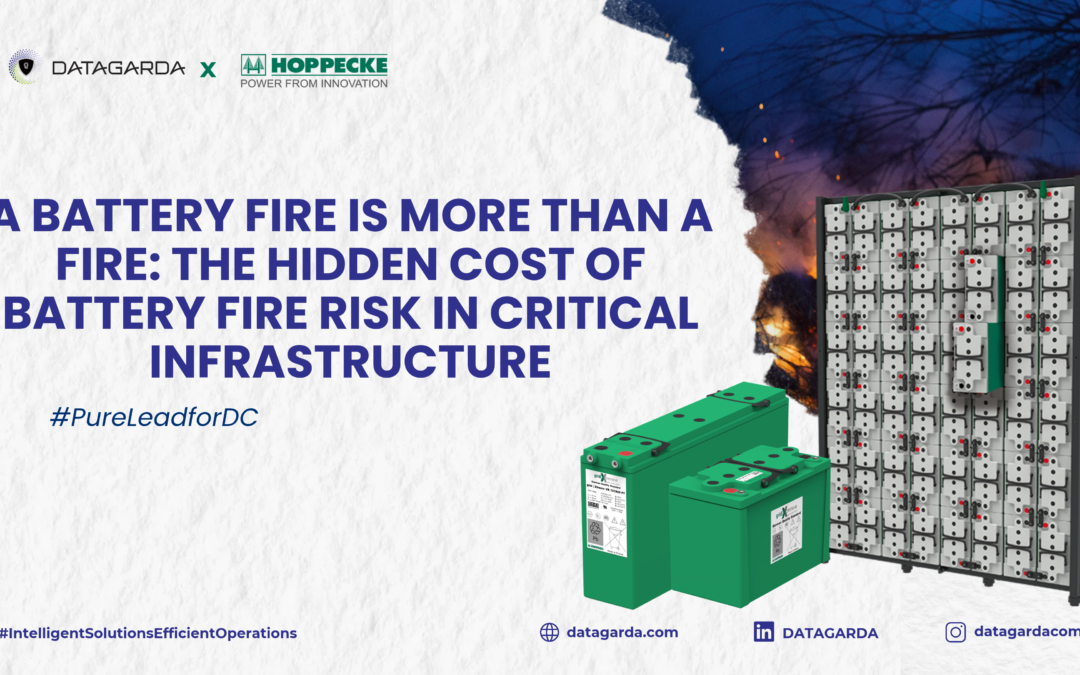
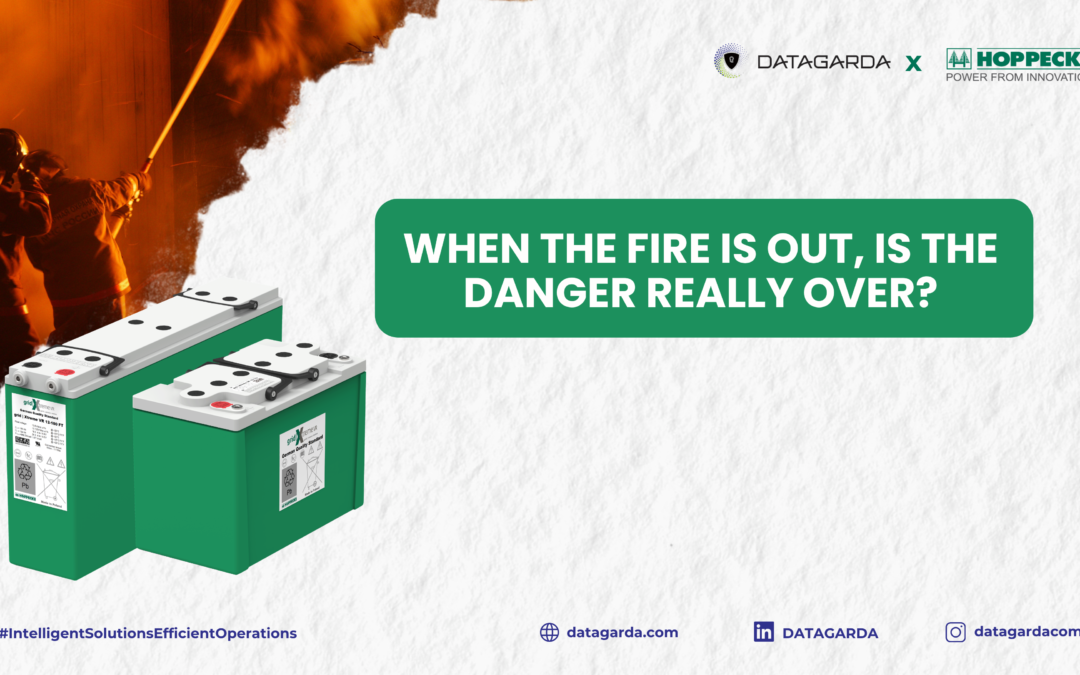
The fire at the STT–Tata data center facility in New Delhi offers a sobering reminder. Reported in June 2026, the incident caused extensive damage to part of the facility, disrupted services, and raised concerns about data recovery. Delhi fire authorities reportedly identified lithium battery units as the area where the fire originated, while the definitive cause remained under investigation.
For data center operators, the broader lesson is clear: power infrastructure decisions are also decisions about operational risk and business continuity.
An incident involving critical power equipment can extend beyond the equipment itself. Depending on the circumstances, it may affect facility access, network availability, service restoration, customer confidence, and the recovery of business-critical systems.
This makes battery technology an important consideration in a comprehensive data center resilience strategy.
Why UPS Battery Selection Matters
Uninterruptible Power Supply (UPS) systems help bridge the gap between a power interruption and the activation of an alternative power source or an orderly shutdown. Their effectiveness depends on more than the UPS unit alone. Battery technology, system design, installation quality, monitoring, maintenance, and the wider electrical protection strategy all contribute to performance.
Battery selection should therefore consider several factors:
- Safety and risk profile: How does the battery technology behave under abnormal operating conditions?
- Power delivery: Can it support the required discharge performance during a critical event?
- Space efficiency: Can the battery system meet power requirements within the facility’s available footprint?
- Lifecycle planning: How do expected service life and maintenance requirements affect long-term operations?
- Recovery and continuity: How does the overall design support safe operation and restoration after an incident?
No battery chemistry eliminates every operational hazard. The objective is to select technology and system controls that align with the facility’s risk assessment, performance requirements, and operating environment.
HOPPECKE Pure Lead AGM: An Alternative for Critical Power Applications
Through the DataGarda × HOPPECKE collaboration, HOPPECKE’s Pure Lead AGM technology provides an alternative for consideration in data center UPS applications.
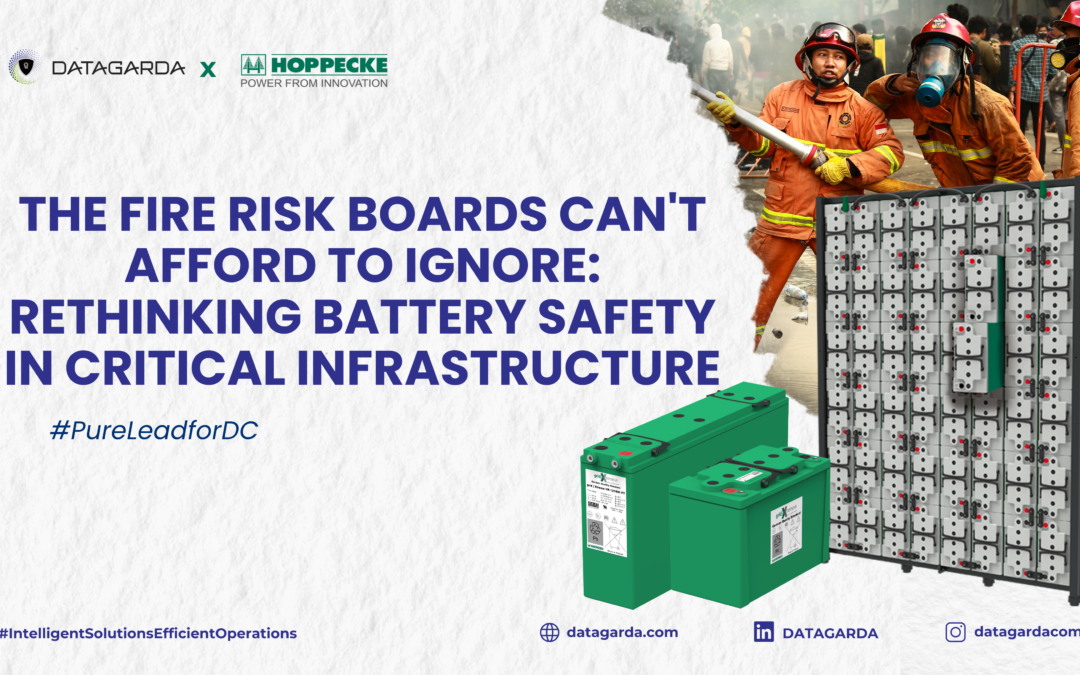
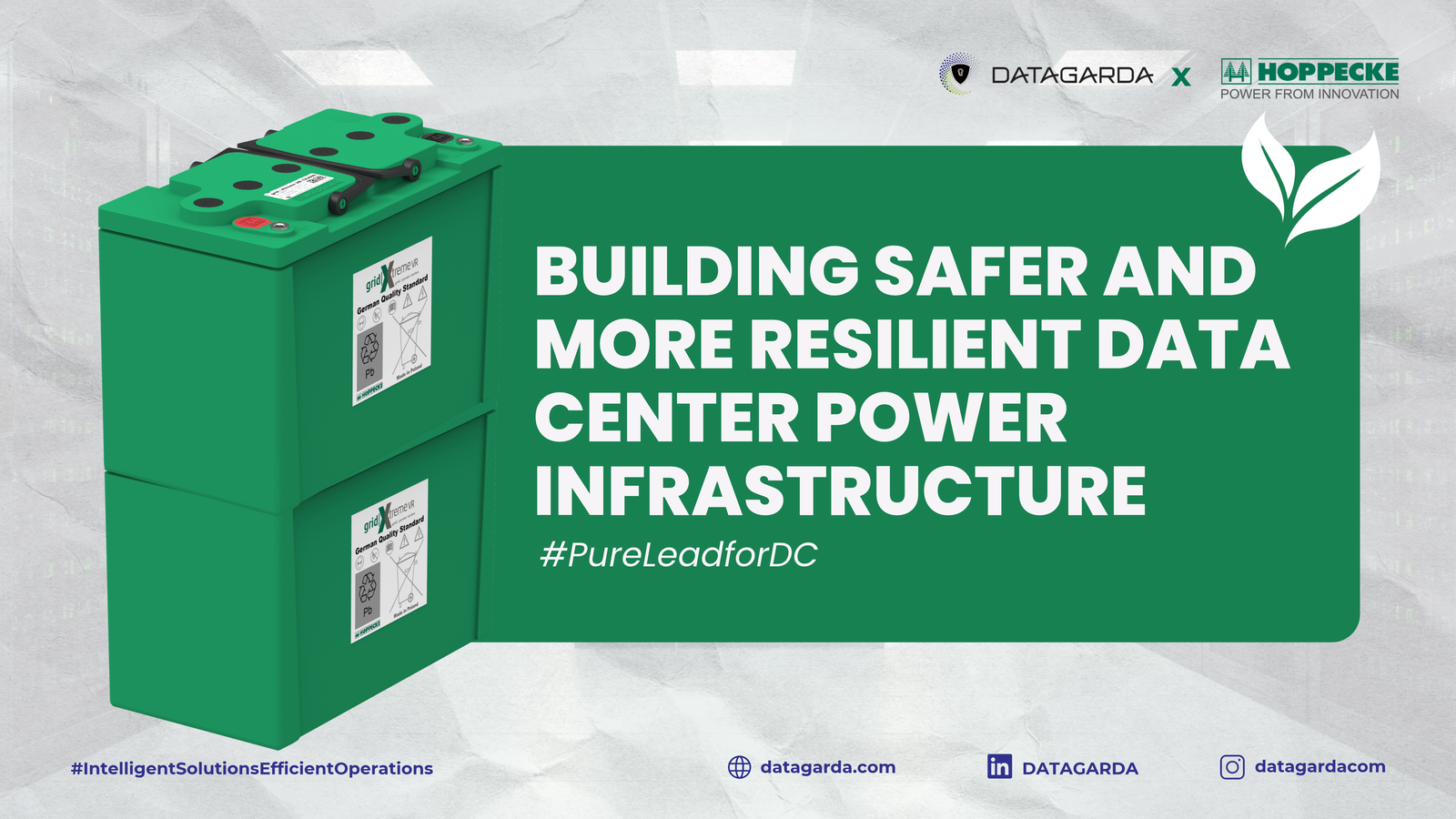
One example is the HOPPECKE grid | Xtreme VR, which uses High Performance Pure Lead (HPPL) technology in a sealed AGM/VRLA battery design. According to the product documentation, the technology is designed to support high-current discharge requirements, extended service life, and operation in demanding environments.
Its key characteristics include:
1. A Different Battery Risk Profile
Lithium-ion batteries can experience thermal runaway under certain failure conditions, potentially leading to intense heat generation and fire propagation. HOPPECKE Pure Lead AGM technology uses a different electrochemical system and does not rely on the same lithium-ion thermal-runaway mechanism.
This distinction can be relevant when evaluating battery-related fire risks. However, Pure Lead AGM batteries are not fireproof or risk-free. Appropriate electrical protection, ventilation, installation, temperature management, monitoring, and maintenance remain essential components of a safe battery system.
Battery chemistry should be considered as one layer within a broader, engineered fire-safety strategy—not as a replacement for it.
2. High Power Performance in a Compact Footprint
HOPPECKE’s HPPL technology uses pure-lead grid electrodes and thin-plate design principles to support high power and energy density within lead-acid battery technology.
The grid | Xtreme VR product documentation highlights its suitability for high-current discharges and comparatively low space requirements. These characteristics can be valuable in data centers where UPS performance and equipment-room space must be considered together.
Actual sizing and configuration should be determined against the UPS design, required autonomy, discharge profile, and site conditions.
3. Design Life of Up to 15 Years
The grid | Xtreme VR documentation specifies a design life of up to 15 years under stated reference conditions, including operation at 20°C in the product brochure.
A longer design-life expectation can support lifecycle planning and help operators assess replacement schedules, maintenance requirements, and long-term infrastructure costs.
Design life is not a guarantee of actual service life. Operating temperature, charging conditions, installation, maintenance, and application profile can influence real-world performance.
4. Reduced Routine Maintenance Requirements
As a sealed AGM/VRLA battery, grid | Xtreme VR does not require routine electrolyte-water refilling. The product documentation also describes design features intended to support easier installation, inspection, and impedance measurement.
Reducing routine maintenance tasks can simplify battery-management activities. It does not remove the need for inspection, performance monitoring, electrical checks, or adherence to manufacturer recommendations.
5. A More Established Recycling Pathway
Lead-acid battery technology benefits from an established recycling ecosystem in many markets. When properly collected and processed through authorized channels, lead and other materials can be recovered for reuse.
For data center operators, end-of-life planning should form part of the battery lifecycle strategy. Recycling arrangements, local regulations, transport requirements, and approved processing facilities should be verified for the project location.
Resilience Requires More Than Choosing a Battery
A more resilient data center power strategy begins with a system-level assessment. Selecting a battery with an appropriate performance and risk profile is one important decision, but it should sit within a wider operational framework.
Data center owners and operators should review:
- Risk assessment: Identify battery-related hazards and the potential impact on critical operations.
- System design: Confirm that battery capacity, UPS configuration, electrical protection, and installation meet operational requirements.
- Fire protection: Coordinate detection, suppression, ventilation, and emergency-response arrangements with the facility’s engineering and safety teams.
- Monitoring and maintenance: Establish procedures for inspection, testing, and early identification of abnormal conditions.
- Business continuity: Review redundancy, backup and recovery arrangements, emergency procedures, and restoration priorities.
- Lifecycle management: Plan for maintenance, replacement, and responsible end-of-life handling.
These measures work together. A battery’s technical characteristics matter, but resilience depends on how the entire power system is designed, operated, and maintained.
The DataGarda × HOPPECKE Perspective
Through its collaboration with HOPPECKE, DataGarda supports a more considered approach to critical power infrastructure—one that looks beyond battery capacity to include safety, operational reliability, lifecycle planning, and business continuity.
HOPPECKE Pure Lead AGM technology, including the grid | Xtreme VR range, offers characteristics that data center operators can evaluate when reviewing UPS battery requirements. The right solution, however, depends on the facility’s power profile, engineering design, risk assessment, and operating conditions.
The objective is not simply to keep the lights on. It is to make informed infrastructure decisions that help organizations manage risk and strengthen operational resilience.
Build Resilience Beyond Uptime
As data centers support increasingly critical digital services, power infrastructure decisions deserve a broader view of risk and long-term performance.
Contact DataGarda to discuss your data center UPS requirements and explore how HOPPECKE Pure Lead AGM battery technology may fit into your critical power strategy.
DataGarda × HOPPECKE — Beyond battery capacity. Design for resilience.