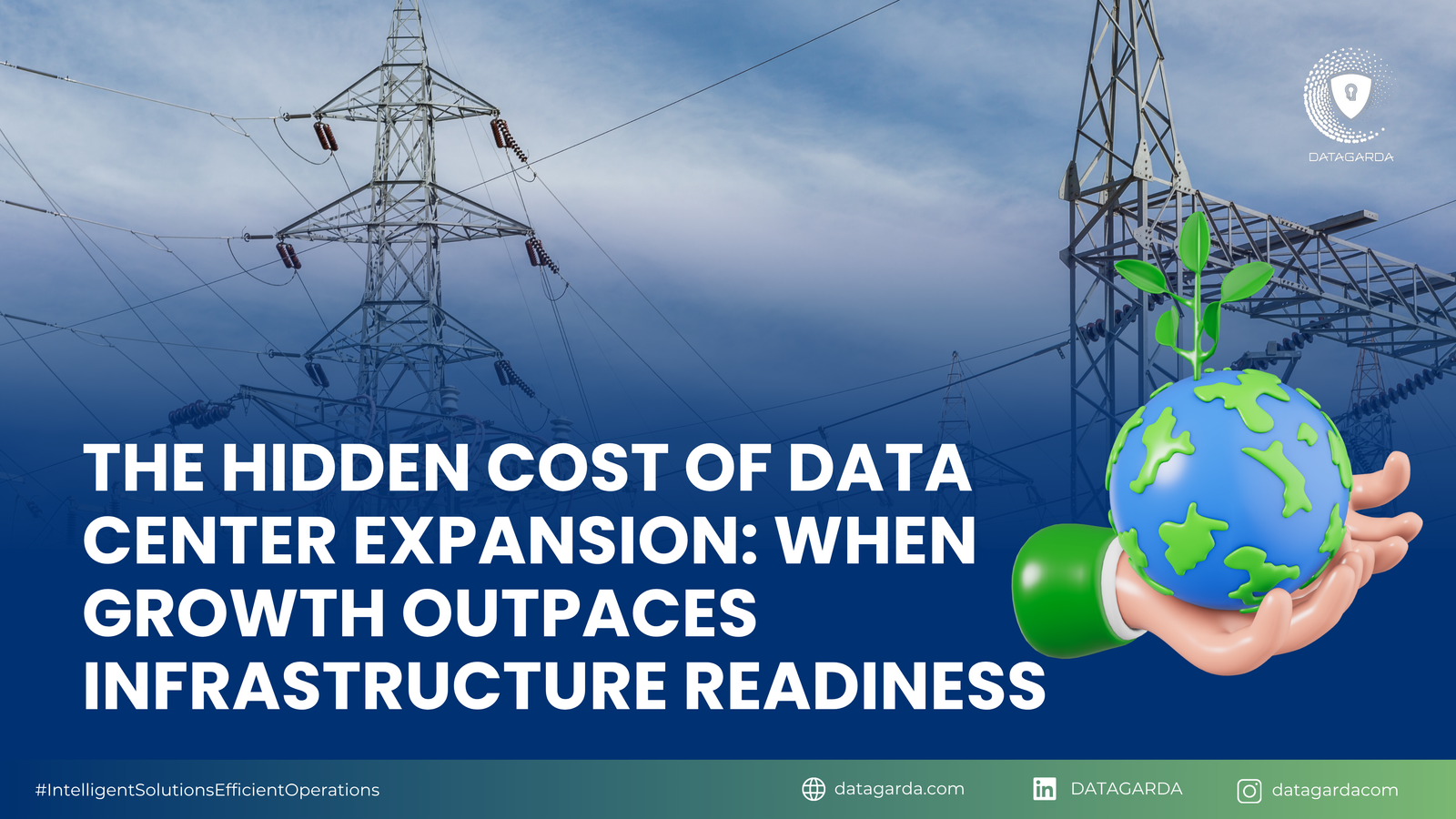
Expanding data center capacity is not just a construction challenge. It is a test of whether power, cooling, operational capability, and long-term planning can keep pace with business demand.
The demand for digital infrastructure continues to grow as organizations adopt cloud services, artificial intelligence, and increasingly data-intensive applications. For data center developers and operators, this creates opportunities to expand capacity, serve new workloads, and strengthen their position in a rapidly evolving digital economy.
Yet growth introduces a critical question: Can the supporting infrastructure scale at the same pace as demand?
A data center expansion may look feasible on paper, supported by investment plans, available land, and projected customer demand. But if power availability, cooling capacity, equipment delivery, commissioning, or operational readiness cannot keep up, the project may face delays, unexpected costs, or performance constraints.
The International Energy Agency has highlighted grid congestion as a material risk to data center development. Its Electricity 2026 report estimates that around one-fifth of the global data center build-out is at risk of delay because of grid congestion. IEA — Electricity 2026. This illustrates why infrastructure readiness must be considered early—not treated as a final checklist before operations begin.
For executive decision-makers, the issue goes beyond completing construction. It is about ensuring that expansion translates into reliable, sustainable, and operationally viable capacity.
1. Growth Can Outpace Infrastructure Readiness
Infrastructure readiness is the ability of a facility and its supporting operating environment to meet current requirements while accommodating future demand.
For a data center, readiness involves more than the physical building. It includes the availability and resilience of power, cooling performance, network connectivity, equipment capacity, commissioning quality, operating procedures, and the people responsible for maintaining the environment.
When these elements develop at different speeds, a facility can encounter a readiness gap.
For example, a building may be ready for installation while its required power connection remains delayed. Electrical infrastructure may be installed, but integrated testing may reveal issues that need to be resolved before handover. A facility may also have sufficient space for additional racks without having the power distribution or thermal-management capacity to support the intended workloads.
These scenarios demonstrate an important distinction: physical expansion does not automatically mean operational readiness.
As demand grows, organizations need to evaluate whether the entire infrastructure ecosystem—not just individual components—is prepared to support the next stage of capacity.
2. The Hidden Costs of Expanding Before Infrastructure Is Ready
When expansion plans move ahead without sufficient alignment between demand, infrastructure, and operational capability, the consequences can extend beyond the original project budget.
Power Constraints and Connection Delays
Power availability is increasingly important in data center site selection and expansion planning. Grid capacity, utility connection timelines, electrical equipment availability, and future load requirements can all influence whether a project can proceed as planned.
If these factors are assessed too late, developers may face schedule changes, additional coordination requirements, or revised investment assumptions.
The lesson is not that every market faces the same constraints. It is that power feasibility must be validated for the specific site, utility environment, and planned workload before expansion commitments are finalized.
Cooling Capacity and Changing Workloads
As IT equipment evolves, power density and heat loads can change. Infrastructure designed around one workload profile may require reassessment before supporting a different generation of servers or higher-density computing.
Cooling capacity should therefore be evaluated alongside power demand, rack density, operating conditions, and future technology requirements.
The ASHRAE AI Data Center Energy Performance Framework emphasizes an integrated approach to planning, design, commissioning, and operation. This reinforces the need to consider power, thermal management, and system performance together rather than as isolated engineering decisions.
Delays in Commissioning and Operational Handover
Installed equipment does not automatically demonstrate that a facility is ready to operate reliably.
Commissioning and integrated systems testing help validate that infrastructure performs as intended and that connected systems operate together under expected conditions and relevant failure scenarios.
When testing, documentation, corrective actions, or operational handover are not adequately planned, readiness gaps can emerge late in the project lifecycle—when changes may be more disruptive and costly.
Underused Capacity and Unplanned Investment
An expansion can create additional nominal capacity without delivering the usable capacity the business expects.
Power limitations, cooling constraints, incomplete commissioning, or operational dependencies may restrict how much of that capacity can be deployed. Organizations may then need additional investment, revised deployment schedules, or changes to their operating plans.
These risks are not inevitable outcomes of expansion. They are reasons to validate the assumptions behind capacity planning before committing to a delivery schedule.
3. Infrastructure Readiness Is a Business Decision
Infrastructure planning is often treated as a technical responsibility. However, the consequences of readiness gaps can affect capital allocation, customer commitments, service reliability, and long-term business performance.
This makes infrastructure readiness an executive concern.
Before approving an expansion, leadership should understand not only the planned capacity but also the conditions required to make that capacity usable.
That means asking questions such as:
- Is the required power capacity available within the intended project timeline?
- Can the cooling architecture support the expected workload and future density requirements?
- Are critical equipment lead times and external dependencies reflected in the delivery plan?
- Have commissioning, integrated testing, and operational handover been incorporated into the schedule?
- Are operational teams, maintenance procedures, monitoring, and escalation processes ready for the expanded environment?
- What assumptions could materially affect project cost, schedule, resilience, or long-term performance?
These questions help leadership connect technical readiness with business objectives.
They also make uncertainty more visible before it becomes a costly operational problem.
4. From Capacity Planning to Lifecycle Readiness
A more resilient expansion strategy considers the full infrastructure lifecycle, from site selection and design through construction, commissioning, operation, maintenance, and future upgrades.
This approach helps organizations avoid optimizing one stage of a project at the expense of another.
Validate Readiness Early
Power availability, site constraints, cooling requirements, connectivity, permitting, and critical equipment lead times should be assessed during early planning. Dependencies that could affect project feasibility or timing need clear ownership and active management.
Align Infrastructure With Workload Demand
Capacity planning should reflect the intended workload, expected growth, rack density, power requirements, and thermal profile. Assumptions should be reviewed as technology and business demand evolve.
Integrate Design, Commissioning, and Operations
Infrastructure systems need to be designed and tested as an interconnected environment. Commissioning plans, performance criteria, documentation, and operational responsibilities should be established early enough to support a controlled transition into service.
Establish Visibility and Accountability
Leaders need a clear view of readiness, outstanding risks, dependencies, and corrective actions. Defined ownership and escalation paths help ensure that critical issues are addressed before they compromise delivery or operations.
Plan for Adaptability
Expansion should account for plausible future requirements without assuming that every forecast will materialize. Phased development, appropriate design flexibility, and lifecycle reviews can help organizations adapt as workloads, technology, and business priorities change.
The objective is not to eliminate every uncertainty. It is to identify the dependencies that matter, manage them deliberately, and preserve the ability to make informed decisions as conditions change.
5. Operational Resilience Is the Measure of Successful Growth
The success of a data center expansion should not be measured solely by construction milestones, installed equipment, or nominal megawatt capacity.
It should also be evaluated by whether the facility can deliver its intended service reliably, operate within its design requirements, and adapt to changing demand without creating disproportionate operational risk.
This requires a broader view of performance—one that connects infrastructure design with commissioning quality, maintenance practices, operational visibility, and business continuity.
It also requires coordination across the teams responsible for development, engineering, procurement, commissioning, operations, and executive oversight.
When these functions work toward a shared understanding of readiness, organizations are better positioned to identify gaps early, prioritize corrective action, and make expansion decisions with greater confidence.
The goal is not simply to build more capacity. It is to build capacity that is ready to perform.
Conclusion: Growth Must Be Matched by Readiness
Data center expansion creates opportunities, but growth alone does not guarantee operational success.
When infrastructure readiness falls behind business demand, hidden costs can emerge through delays, additional investment, underused capacity, and increased operational risk.
A disciplined expansion strategy brings power availability, cooling performance, equipment readiness, commissioning, and operational capability into the same decision-making framework. It gives executives a clearer view of what is ready, what remains uncertain, and what must happen before new capacity can deliver its intended value.
For data center leaders, the critical question is no longer only how quickly capacity can be added. It is whether the infrastructure and operating model are ready to support that capacity reliably over time.
Sustainable growth happens when infrastructure readiness keeps pace with business ambition.
How DataGarda Can Help
Building and expanding critical digital infrastructure requires an integrated understanding of infrastructure design, commissioning, operations, resilience, and lifecycle readiness.
DataGarda supports organizations in strengthening the infrastructure foundation behind critical digital operations—helping decision-makers improve visibility, operational discipline, resilience, and confidence as requirements evolve.
Planning your next data center expansion? Talk to DataGarda about building infrastructure designed not only to scale, but to operate with confidence.
DataGarda — Intelligent Solutions, Efficient Operations.
References
- International Energy Agency (IEA). Electricity 2026. Global electricity demand, grid congestion, and implications for data center development.
- ASHRAE, NEMA, and Pacific Northwest National Laboratory (PNNL). AI Data Center Energy Performance Framework. Guidance covering planning, site selection, integrated design, commissioning, operations, resilience, and modernization.