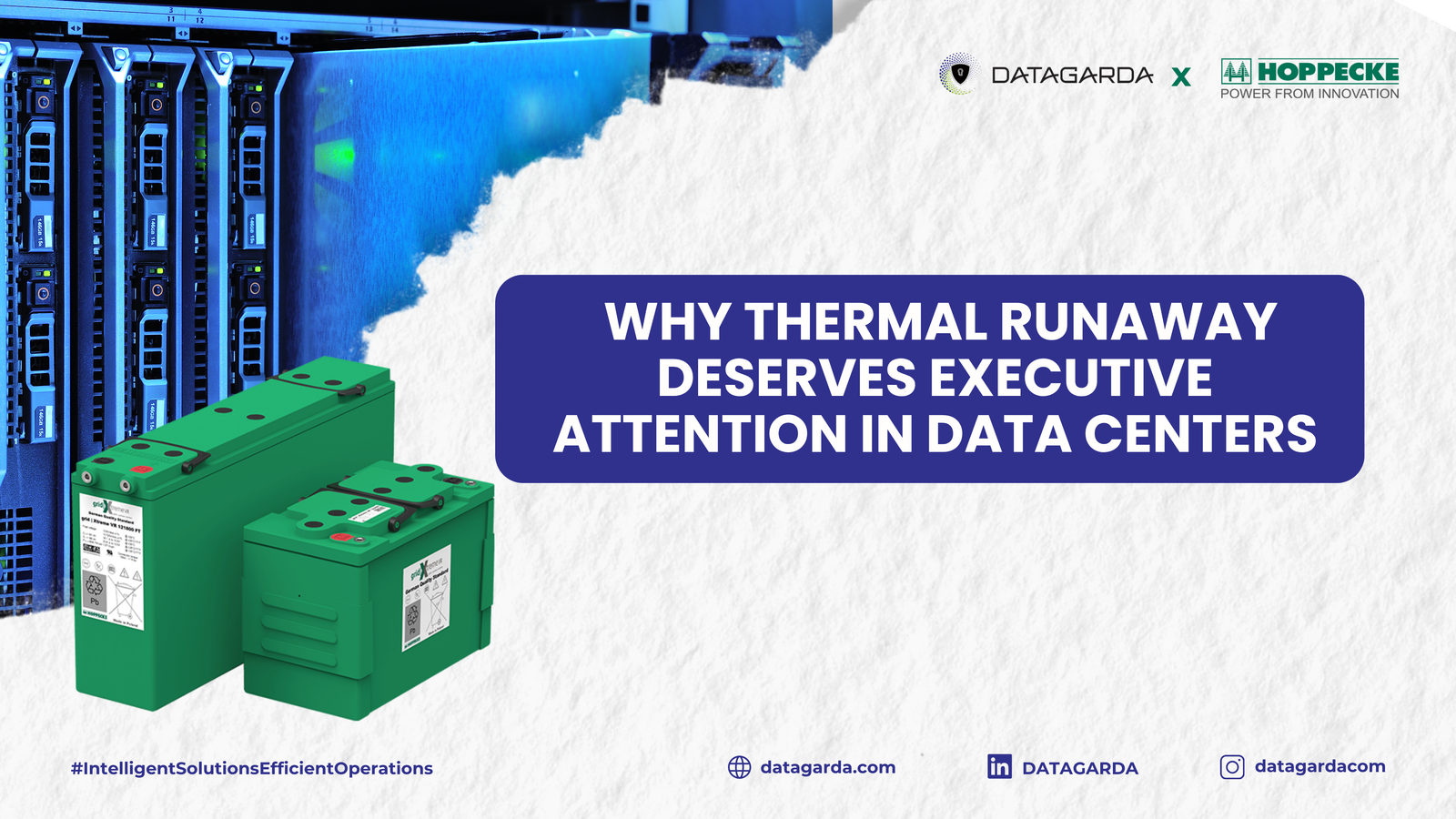
Data centers are designed around one fundamental principle:
Critical systems must continue operating when something goes wrong.
Power infrastructure is at the center of that principle.
UPS systems, batteries, generators, switchgear, cooling systems, and distribution infrastructure work together to protect the availability of critical digital services.
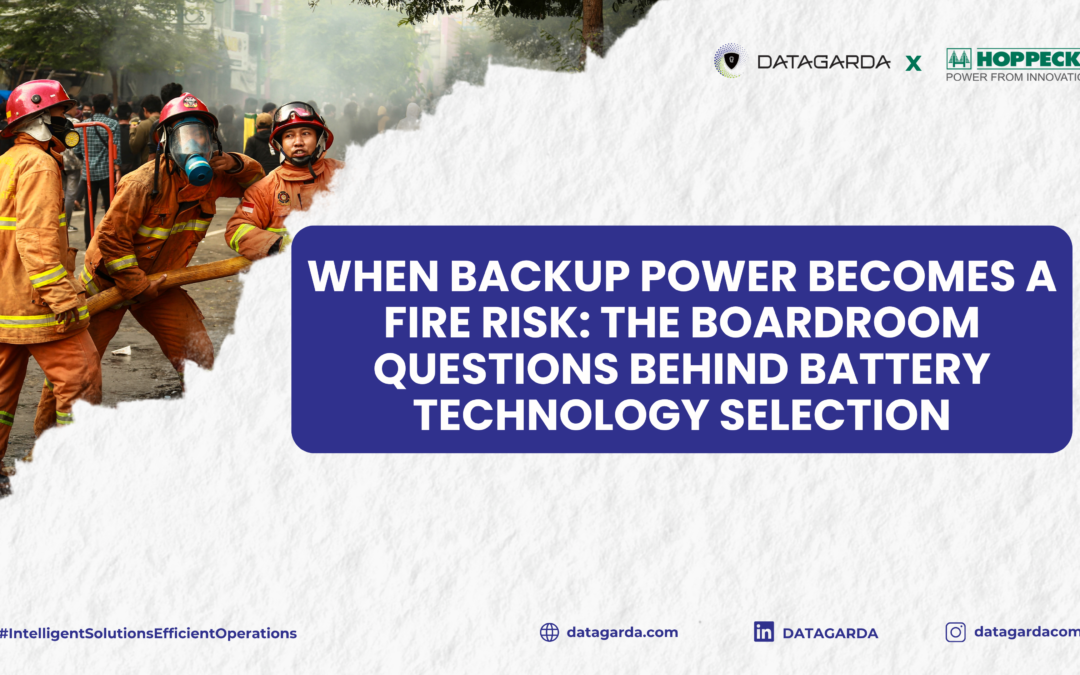
But while backup power is designed to protect a data center from power interruption, the technology selected for that backup system can introduce its own set of risks.
One of the most important examples is thermal runaway.
For data center leaders, thermal runaway should not be treated as simply a battery engineering issue.
It is a potential infrastructure safety, business continuity, and risk management issue.
When Backup Power Becomes Part of the Risk Equation
Battery systems are fundamental to data center resilience.
When utility power is interrupted, UPS batteries provide immediate stored energy while emergency power systems such as generators start or until the facility can be safely shut down. HOPPECKE notes that data center batteries commonly operate in float charge and are typically expected to bridge short interruptions, often in the range of 5–15 minutes.
This makes battery technology a critical component of the facility’s power architecture.
But reliability cannot be evaluated solely through:
- Capacity
- Runtime
- Power density
- Efficiency
- Footprint
- Lifecycle cost
There is another question that deserves equal attention:
What happens when the battery itself experiences an abnormal condition?
That is where thermal runaway becomes relevant.
What Is Thermal Runaway?
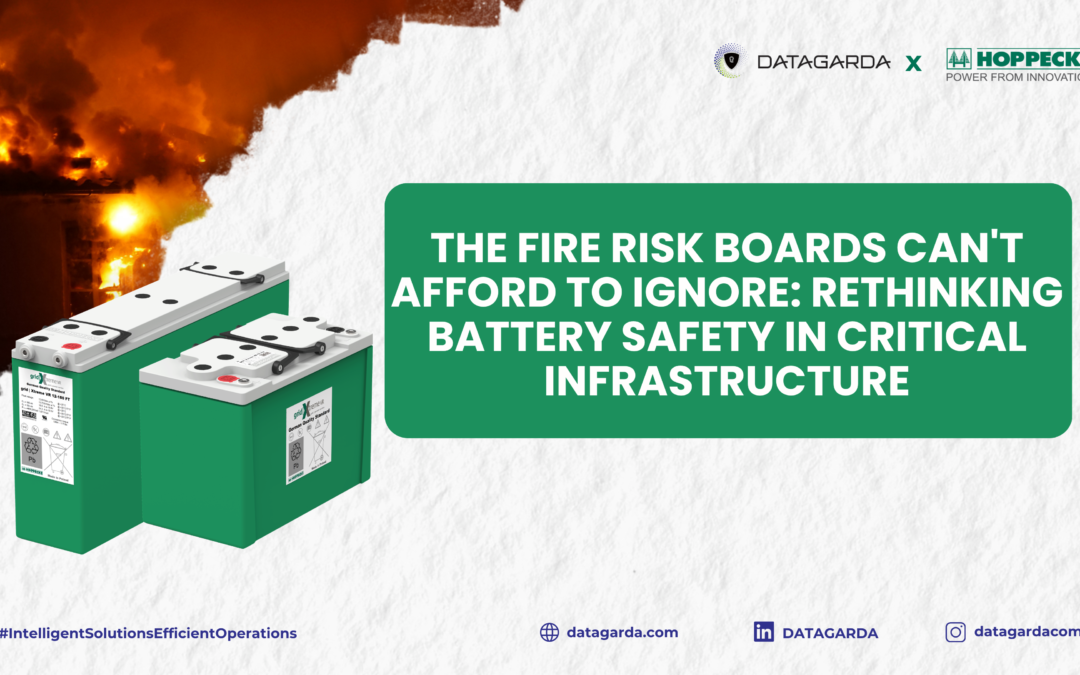
Thermal runaway is an uncontrolled, self-heating condition within a lithium-ion cell.
Under normal operation, heat generated during charging and discharging can be dissipated safely. But under certain failure conditions, heat generation can accelerate faster than heat can be removed.
UL Research Institutes describes thermal runaway as an uncontrollable self-heating state that can result in extremely high temperatures, gas or electrolyte venting, smoke, and fire.
Once the process begins, it can become difficult to stop.
This is why thermal runaway is fundamentally different from an ordinary equipment fault.
It can become a chain reaction.
The Failure Chain: From Heat to Fire
The risk can be understood as a progression:
Overheating / Physical Damage / Overcharging
↓
Cell Failure
↓
Rapid Internal Heat Generation
↓
Thermal Runaway
↓
Gas / Heat / Smoke
↓
Fire & Potential Explosion
The specific mechanisms can vary depending on battery chemistry, cell design, controls, and failure conditions. However, UL identifies conditions such as internal short circuits, overcharge, external short circuits, and abnormal temperature conditions as potential contributors to thermal runaway.
This is why battery safety cannot be separated from how the system is:
Designed → Installed → Monitored → Operated → Maintained
Why Lithium-Ion Battery Characteristics Matter
Modern lithium-ion batteries contain components that are relevant to fire-risk assessments, including a liquid electrolyte and polymer separator materials. The electrolyte in conventional lithium-ion systems can be flammable, while the separator plays a critical role in preventing direct contact between the electrodes.
If the separator is compromised, for example through internal damage, an internal short circuit can occur.
UL Research Institutes identifies separator failure and internal short circuits among mechanisms that can initiate thermal runaway.
This does not mean that every lithium-ion installation will experience thermal runaway.
Nor does it mean that lithium-ion technology should automatically be rejected.
The executive question is more important:
Does the selected battery technology, system design, protection strategy, and operating environment provide an appropriate level of risk for the facility?
That is a much more useful question than simply asking which technology has the highest performance specification.
The Three Conditions Leaders Should Understand
From an executive risk perspective, three contributors deserve particular attention.
1. Overheating
Temperature is one of the most important variables affecting battery performance and safety.
Excessive heat can accelerate degradation and, under abnormal conditions, contribute to thermal runaway.
This means temperature management is not simply an efficiency issue.
It is a safety issue.
Data center battery rooms and systems therefore need to be designed around appropriate thermal conditions, monitoring, ventilation, and operational controls.
2. Physical Damage
Battery systems are exposed to mechanical and environmental risks throughout their lifecycle.
Damage can occur during:
- Transportation
- Installation
- Maintenance
- Equipment handling
- System modifications
- Physical impact
In lithium-ion cells, damage to internal components such as separators can contribute to internal short circuits and thermal runaway.
This makes installation quality and lifecycle maintenance part of the safety equation.
3. Overcharging
Overcharging is another recognized condition that can contribute to thermal runaway.
UL Research Institutes identifies overcharge as an off-nominal condition that can lead to thermal runaway when appropriate controls are not incorporated.
For critical infrastructure, this reinforces the importance of:
Battery management → Monitoring → Protection → Maintenance → Testing
The battery should not be treated as an isolated component.
It is part of a larger critical power system.
Why Thermal Runaway Becomes an Executive Issue
A battery incident does not necessarily remain a battery incident.
In a data center, consequences can propagate across multiple layers of the business.
Physical Infrastructure
Fire, heat, smoke, or equipment damage can affect adjacent infrastructure.
Power Continuity
A battery failure can compromise the very backup system designed to protect the facility.
Operations
Emergency response can disrupt normal operations and require personnel intervention.
Business Continuity
Critical IT loads may be exposed to greater risk if power redundancy is compromised.
Financial Impact
Equipment replacement, downtime, investigation, recovery, and remediation can create significant costs.
Reputation
For organizations operating critical digital infrastructure, a major infrastructure incident can affect customer confidence and stakeholder trust.
This is why battery technology belongs in the broader enterprise risk conversation.
The Boardroom Question Is Not “Lithium or Lead?”
Technology discussions can easily become polarized.
But the better executive question is not:
“Which battery technology is better?”
It is:
“Which battery technology provides the right balance of performance, safety, lifecycle value, serviceability, and resilience for this specific critical environment?”
Every data center has different:
- Power requirements
- Space constraints
- Temperature conditions
- Backup architecture
- Maintenance capabilities
- Fire protection systems
- Operational procedures
- Risk tolerance
- Lifecycle expectations
Technology selection should therefore be connected to the risk profile of the facility.
Where Pure Lead Technology Enters the Conversation
This is where alternative battery technologies deserve consideration.
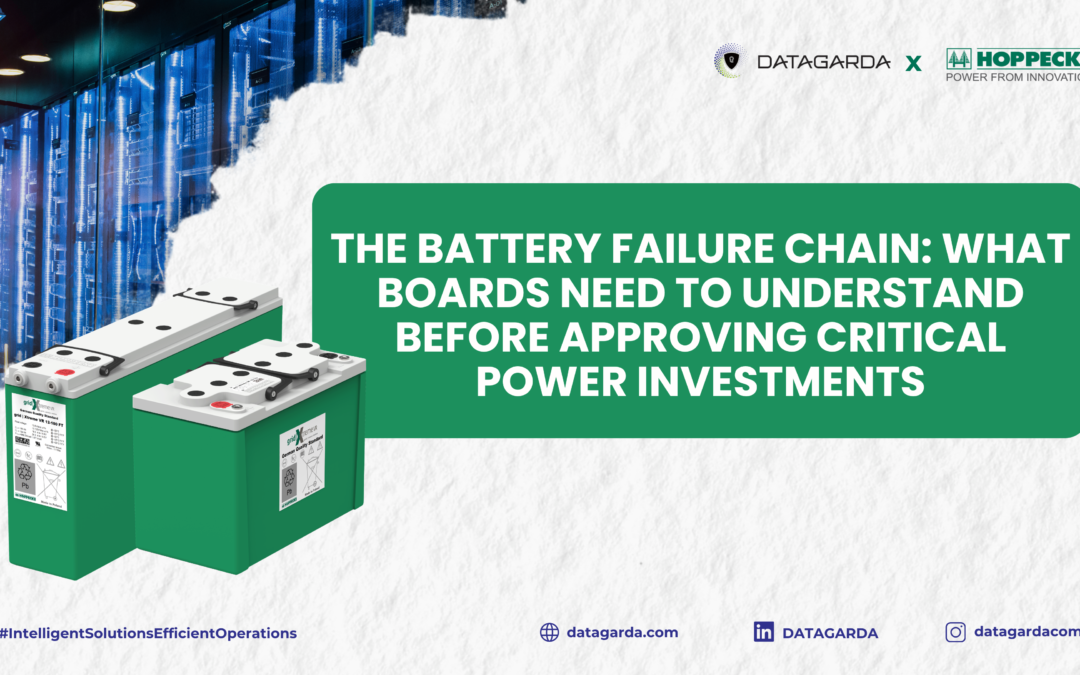
HOPPECKE’s grid | Xtreme VR uses High Performance Pure Lead (HPPL) technology and is specifically developed for demanding applications including data centers and UPS systems. HOPPECKE states that its Enhanced Stability Standard (ESS) technology provides improved resilience against thermal runaway, alongside benefits related to charge acceptance, voltage behavior, service life, and lifecycle cost.
HOPPECKE also positions its pure-lead technology around data center requirements such as high power density, short bridging times, elevated ambient temperatures, and long design life.
The relevance for executives is not simply the battery specification.
It is the broader question of how battery technology influences infrastructure risk.
Safety Should Be Designed Into the Power Architecture
Battery safety cannot be solved by one component.
A resilient critical power strategy considers multiple layers:
01 — Technology Selection
Understand the characteristics and failure modes of the selected battery chemistry.
02 — System Design
Ensure battery systems are appropriately integrated with UPS, electrical distribution, ventilation, monitoring, and fire protection.
03 — Environmental Control
Temperature and environmental conditions can influence battery performance and lifecycle.
04 — Monitoring
Early visibility into abnormal conditions can support proactive intervention.
05 — Maintenance
Battery condition should be regularly assessed rather than assumed.
HOPPECKE highlights regular discharge testing and condition assessment as part of maintaining long-term operational readiness, while its grid | Xtreme VR design includes dedicated measurement contacts intended to facilitate impedance measurements without affecting system availability.
06 — Lifecycle Management
Battery safety does not end when the system is commissioned.
A battery system must remain fit for purpose throughout its operational lifecycle.
From Battery Performance to Infrastructure Resilience
This is the larger strategic lesson.
A battery can have excellent performance characteristics and still create risk if the broader system around it is poorly designed or managed.
Conversely, a resilient battery strategy requires more than selecting a technology with favorable specifications.
It requires alignment between:
Technology
→ Engineering
→ Operations
→ Maintenance
→ Monitoring
→ Risk Management
→ Business Continuity
This is the difference between simply having backup power and having a resilient critical power strategy.
Five Questions Every Data Center Executive Should Ask
Before approving a major battery investment, leadership should consider five questions:
1. What are the principal failure modes of the selected battery technology?
Do we understand what can trigger a critical failure?
2. How does the system detect abnormal conditions?
What happens before the problem becomes a major incident?
3. What happens if one battery fails?
Can the failure be isolated without compromising the broader power architecture?
4. How does the technology perform throughout its lifecycle?
What happens after years of operation, temperature exposure, maintenance, and degradation?
5. Does the battery strategy align with our business continuity requirements?
Because ultimately, the battery is not there simply to store energy.
It is there to protect the continuity of the business.
The Executive Perspective: Heat Is a Technical Issue. Risk Is a Business Issue.
Thermal runaway begins inside a battery cell.
But its potential consequences can extend far beyond the cell.
For data center executives, the responsibility is not to become battery engineers.
It is to ensure that critical infrastructure decisions are made with a complete understanding of:
Performance.
Safety.
Resilience.
Lifecycle.
Operational readiness.
Business impact.
As digital infrastructure becomes increasingly critical to modern businesses, power resilience must evolve beyond simply asking:
“Will the backup system work?”
The more strategic question is:
“How resilient is the backup system when the unexpected happens?”
That is where battery technology becomes a boardroom decision.
DataGarda × HOPPECKE Perspective
At DataGarda, we believe critical infrastructure decisions should connect technical performance with operational resilience and long-term business value.
Together with HOPPECKE, this perspective highlights an important consideration for data center leaders:
The technology designed to protect your infrastructure must also be evaluated for the risks it can introduce.
Thermal runaway is a technical phenomenon.
Understanding and managing its potential business consequences is an executive responsibility.
Build Critical Power With Risk in Mind
As data centers become more power-intensive, resilient backup systems will become increasingly important.
The right battery strategy should therefore be evaluated not only by how much power it can deliver, but by how well it supports:
Safety.
Reliability.
Operational readiness.
Lifecycle performance.
Business continuity.
Want to evaluate the resilience of your critical power strategy?
Talk to DataGarda and HOPPECKE about building a safer, more resilient, and future-ready approach to data center power infrastructure.
→ Explore the right critical power strategy for your facility.