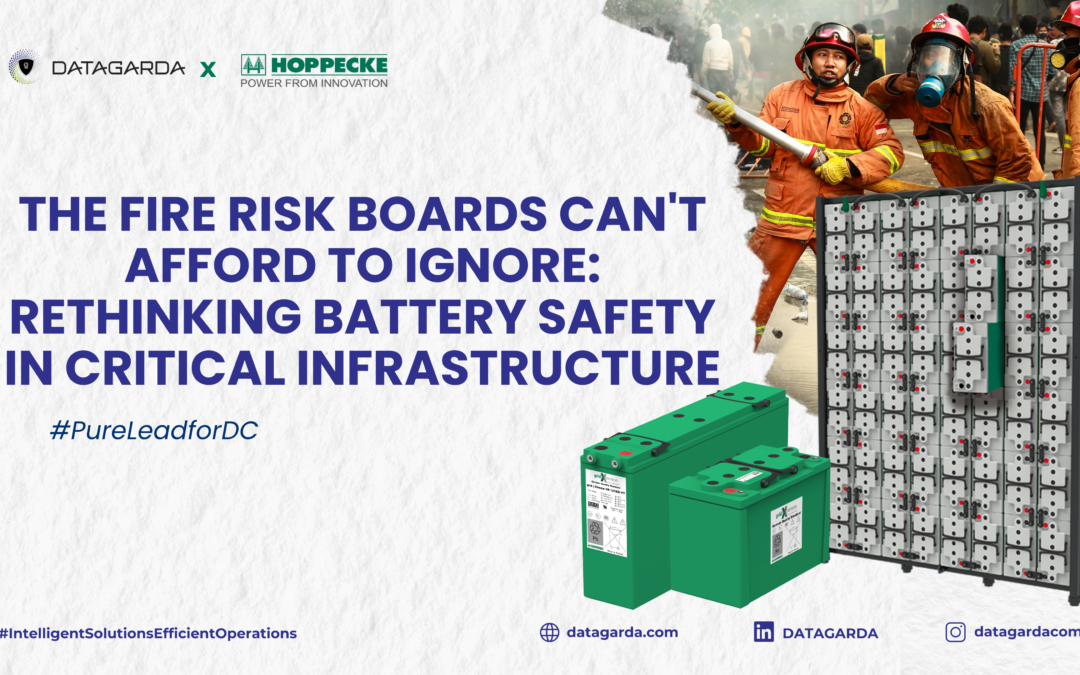
Battery Safety Is Becoming a Board-Level Issue
For organizations operating data centers and other mission-critical facilities, battery systems are essential to maintaining continuity when the primary power supply is disrupted.
Traditionally, battery selection has been treated primarily as an engineering decision—focused on capacity, runtime, efficiency, lifecycle, and cost.
But as digital infrastructure becomes increasingly critical to business operations, the conversation needs to expand.
What happens when the system designed to protect business continuity introduces another operational risk?
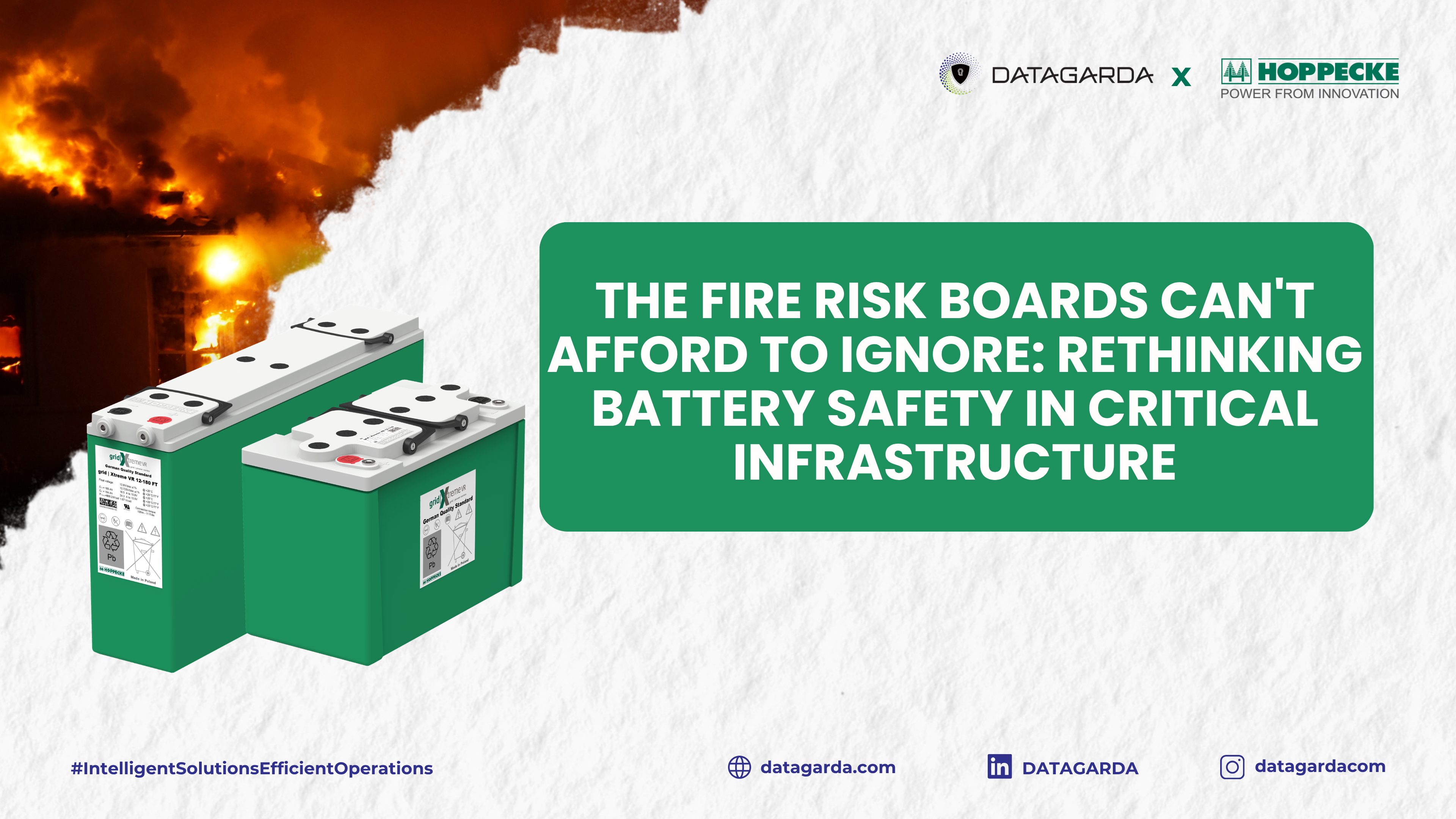
Battery safety, particularly the risk of fire and thermal runaway associated with certain lithium-ion battery systems, deserves greater attention from executive leadership.
This is not about questioning the value of lithium-ion technology across every application.
It is about recognizing that battery technology, safety characteristics, operational controls, and lifecycle management should be part of the infrastructure risk discussion.
Understanding the Fire and Explosion Risk
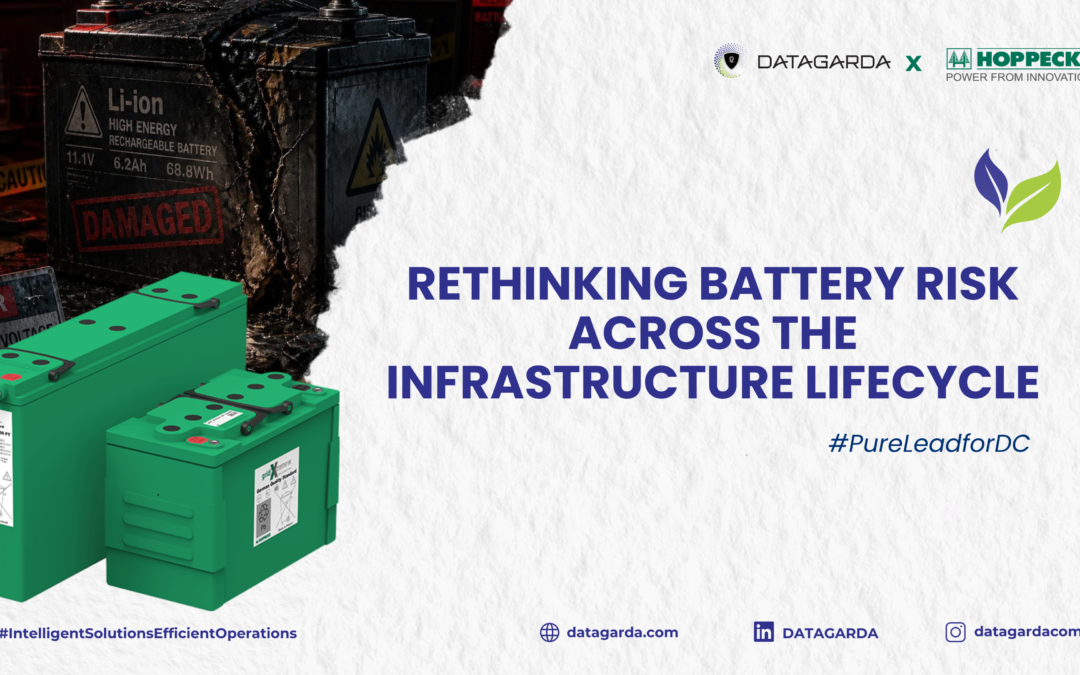
One of the significant safety concerns associated with lithium-ion batteries is the potential for thermal runaway, fire, and explosion.
Modern lithium-ion batteries can contain a liquid flammable electrolyte and a flammable plastic separator.
Thermal runaway is a chain reaction within a battery cell that can become extremely difficult to stop once it begins.
It can occur when the internal temperature of a cell reaches a point that triggers a chemical reaction. The reaction can generate additional heat and oxygen, allowing the process to continue.
Potential contributing factors include:
- Overheating
- Physical damage
- Overcharging
For critical infrastructure operators, these characteristics make battery safety an important consideration when designing, operating, and expanding critical power systems.
Why This Matters Beyond the Battery Room
A battery incident does not necessarily remain a battery issue.
In a mission-critical environment, a serious event can potentially affect the wider infrastructure ecosystem.
The consequences may include:
- Disruption to critical operations
- Damage to surrounding infrastructure
- Business continuity challenges
- Extended recovery requirements
- Increased operational costs
- Reputational exposure
- Stakeholder confidence
This is why battery safety should not be isolated within the facilities or engineering function.
It belongs within the organization’s broader enterprise risk and business continuity framework.
Performance Should Not Be the Only Investment Criterion
When evaluating critical power systems, organizations often focus on:
Capacity → Runtime → Efficiency → Lifecycle → Cost
These remain important.
However, executive decision-makers should also consider:
Safety Profile
What are the relevant risks associated with the selected battery technology?
Failure Characteristics
How could a battery failure develop, and what could its potential impact be?
Operational Controls
What monitoring, maintenance, and preventive measures are required?
Lifecycle Management
How will battery condition and performance be managed throughout its useful life?
Business Continuity
How does the overall critical power strategy protect the organization’s most important operations?
This broader perspective enables organizations to make infrastructure decisions based on total operational risk, rather than technical performance alone.
Thermal Runaway Requires a Lifecycle Perspective
Battery safety cannot be addressed only at the point of installation.
The operating environment matters.
Battery condition can change over time, which makes ongoing monitoring, maintenance, and lifecycle management essential components of a responsible critical power strategy.
Organizations should therefore consider:
- Battery health monitoring
- Preventive maintenance
- Environmental conditions
- Charging practices
- Physical condition
- Asset lifecycle status
- Replacement planning
- Emergency response preparedness
The objective is to identify potential risks early and ensure the organization is prepared to respond appropriately.
Questions Boards Should Ask Before the Next Investment
Before approving a critical power expansion or battery replacement, executive teams should ask:
1. What battery technology are we deploying—and why?
The decision should reflect both operational requirements and risk considerations.
2. What are the technology’s relevant safety characteristics?
Understanding potential failure modes is essential for informed risk management.
3. How are battery assets monitored throughout their lifecycle?
Installation should be the beginning of lifecycle management—not the end.
4. How does our battery strategy integrate with business continuity?
Critical power should support the organization’s broader resilience strategy.
5. Are battery-related risks visible to executive leadership?
If critical power is essential to business continuity, its risks should be visible at the appropriate governance level.
From Battery Management to Infrastructure Governance
A mature infrastructure governance framework should connect battery safety with the wider operating environment.
This means integrating:
Battery Technology
↓
Safety & Risk Management
↓
Operational Monitoring
↓
Lifecycle Management
↓
Business Continuity
↓
Executive Governance
This approach helps organizations move beyond simply asking whether backup power is available.
The more strategic question becomes:
Can our critical power infrastructure remain reliable, safe, and manageable throughout its lifecycle?
The DataGarda × HOPPECKE Perspective
DataGarda and HOPPECKE approach critical power from complementary perspectives.
DataGarda focuses on infrastructure operations, governance, operational excellence, lifecycle management, and resilience.
HOPPECKE brings expertise in industrial battery and critical power solutions.
Together, the collaboration supports a broader conversation around how battery technology fits within the overall critical infrastructure environment.
The objective is not simply to select a battery with strong performance characteristics.
It is to help organizations make better-informed critical power decisions that consider reliability, safety, lifecycle value, and business continuity.
Building a Safer Critical Infrastructure Strategy
For board-level decision-makers, battery safety should be viewed as part of a wider infrastructure investment strategy.
A resilient approach considers:
- Technology selection
- Infrastructure design
- Operational procedures
- Monitoring and maintenance
- Lifecycle planning
- Risk management
- Emergency preparedness
- Business continuity
When these elements are considered together, organizations can build greater confidence in the infrastructure supporting their most critical operations.
Conclusion
Battery technology is becoming increasingly important as digital infrastructure expands.
But performance alone cannot define a successful critical power strategy.
The potential for thermal runaway, fire, and explosion associated with certain lithium-ion battery systems demonstrates why battery safety deserves a place in the boardroom.
The objective is not to create fear around a particular technology.
It is to encourage better questions, stronger governance, and more informed infrastructure investment decisions.
Because when critical infrastructure supports the entire business, battery safety is not just a technical consideration—it is a business resilience consideration.
Build Critical Power With Safety and Resilience in Mind
DataGarda and HOPPECKE help organizations approach critical power through a broader lens—connecting infrastructure performance with operational safety, lifecycle management, and business resilience.
Look beyond performance. Understand the risk. Build infrastructure with confidence.