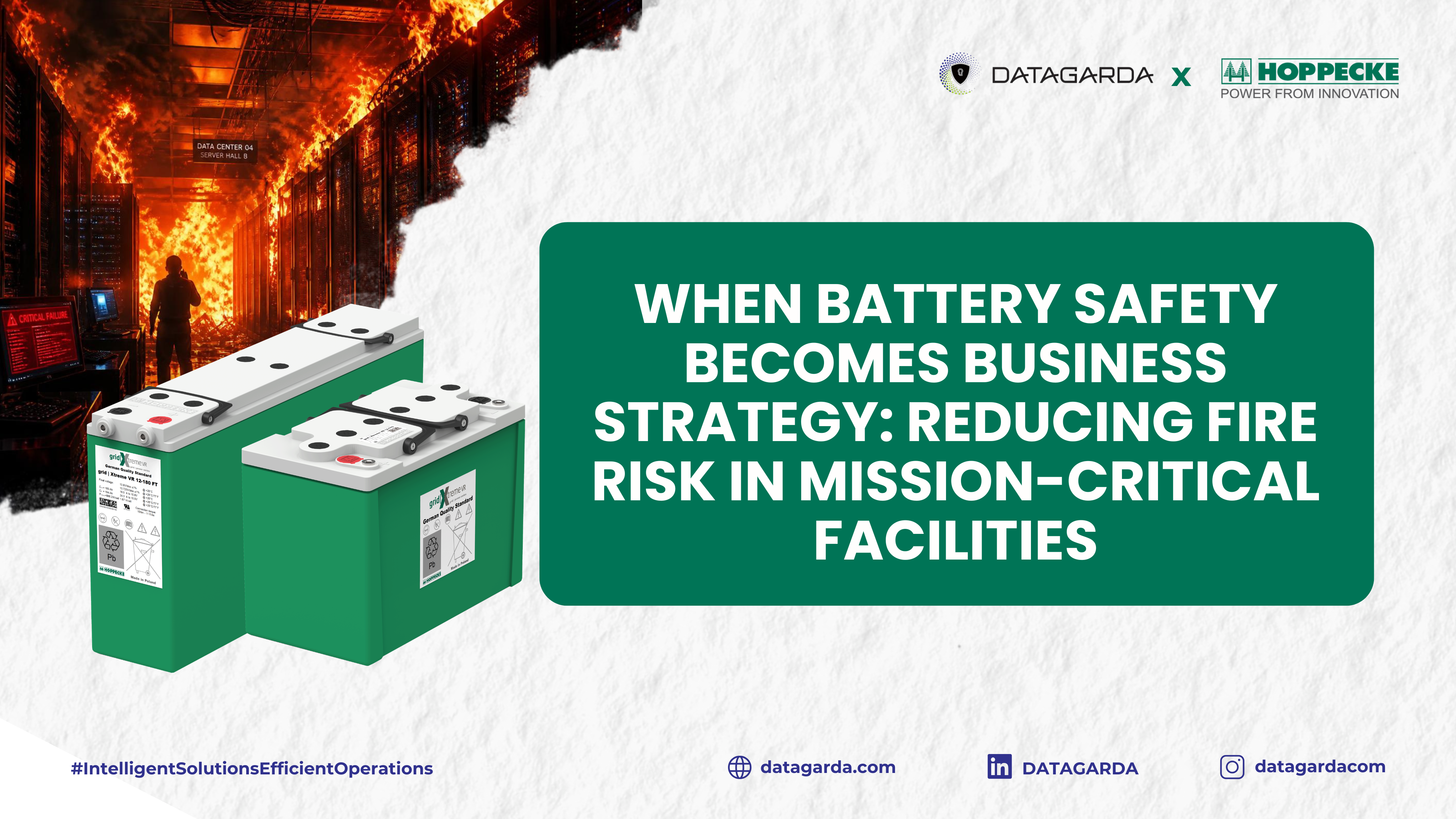
Critical Infrastructure Deserves More Than Reliable Power
As digital transformation accelerates, organizations are investing heavily in data centers, AI infrastructure, cloud platforms, and mission-critical facilities. These environments are expected to operate continuously, supporting essential business services without interruption.
Behind every resilient digital infrastructure lies a critical power system—and at the heart of that system is battery technology.
Traditionally, battery selection has focused on runtime, capacity, and cost. Today, however, another factor has become increasingly important for executive decision-makers: battery safety.
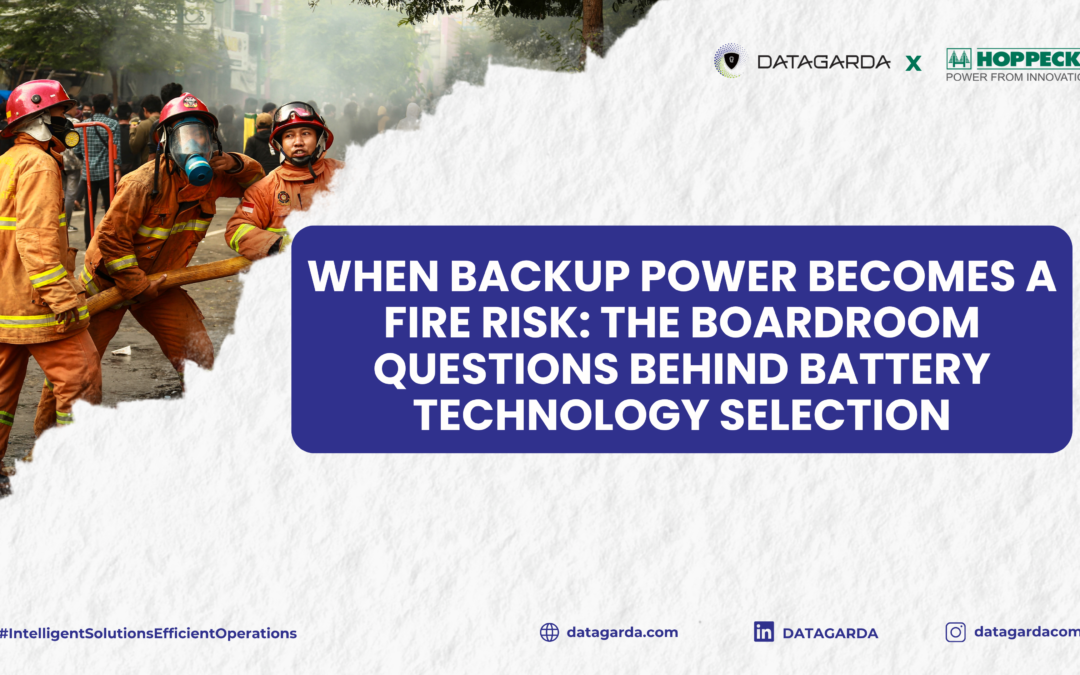
Recent industry discussions surrounding thermal runaway and battery fire incidents have highlighted that critical power decisions can directly influence operational resilience, business continuity, and enterprise risk.
Battery safety is no longer just an engineering concern.
It is a business strategy.
The Growing Importance of Fire Risk in Mission-Critical Facilities
Mission-critical facilities are designed to minimize operational disruption.
However, as power densities increase and digital workloads continue to grow, organizations must also consider the evolving risks associated with energy storage systems.
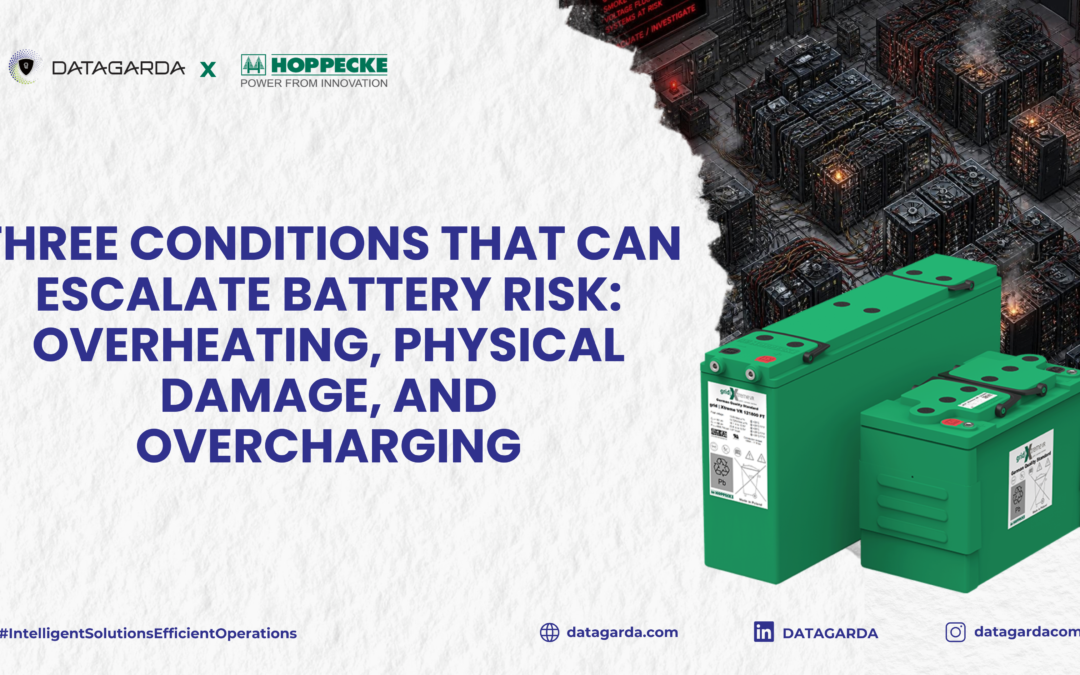
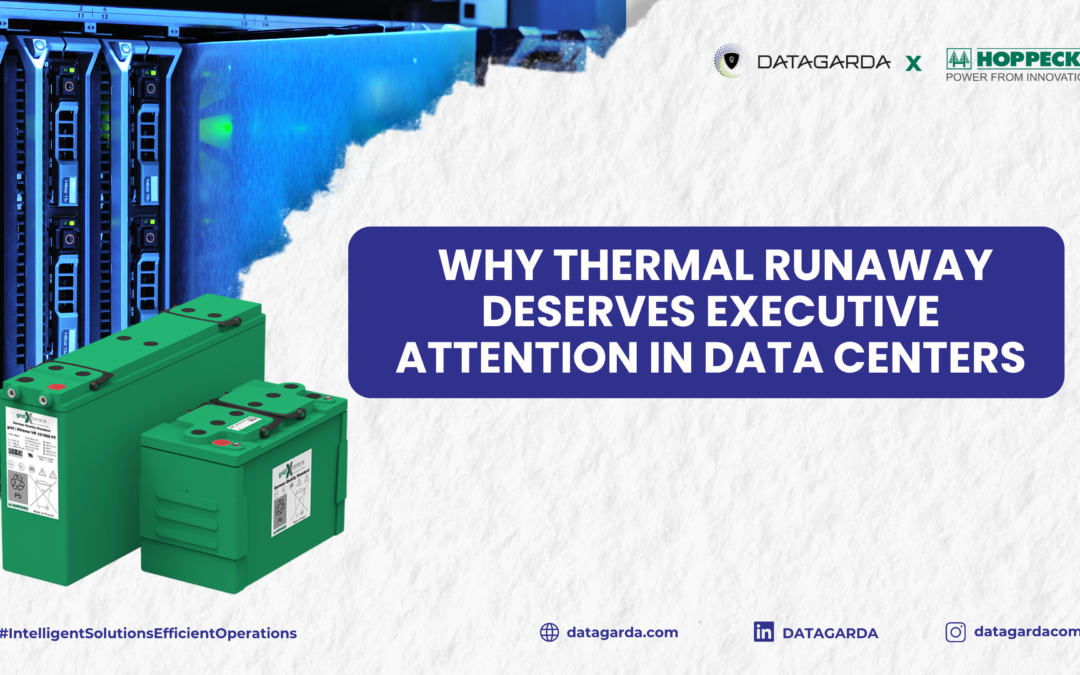
One of the industry’s most discussed challenges is thermal runaway—a chain reaction in which excessive heat can trigger an uncontrolled increase in battery temperature.
Depending on battery chemistry and system conditions, thermal runaway may lead to:
- Fire incidents
- Equipment damage
- Service interruptions
- Safety risks for personnel
- Extended recovery times
For executive leaders, these risks extend far beyond technical operations.
They represent potential business disruption.
Why Battery Safety Belongs in the Boardroom
Infrastructure investments should be evaluated through a business lens.
A battery-related incident can affect:
Business Continuity
Unexpected outages disrupt operations and customer services.
Enterprise Risk
Fire incidents may impact regulatory compliance, insurance exposure, and corporate reputation.
Operational Resilience
Critical facilities must continue operating safely under demanding conditions.
Long-Term Investment Performance
Infrastructure decisions should balance reliability, lifecycle value, and safety—not simply acquisition cost.
As organizations strengthen their digital infrastructure, battery technology should become part of broader enterprise risk discussions.
Looking Beyond Performance Specifications
Performance remains an important consideration.
However, executive teams should also evaluate:
- Safety characteristics
- Lifecycle reliability
- Maintenance requirements
- Operational stability
- Environmental conditions
- Fire risk mitigation
- Total cost of ownership
The objective is not simply to select a battery.
It is to build a resilient critical power strategy.
Building Safer Critical Power Environments
Reducing fire risk requires more than selecting the right battery technology.
Organizations should adopt a comprehensive approach that includes:
Infrastructure Risk Assessment
Understanding potential operational and environmental risks before incidents occur.
Appropriate Technology Selection
Evaluating battery solutions based on reliability, lifecycle performance, and application requirements.
Operational Excellence
Ensuring maintenance, monitoring, and governance processes remain consistent throughout the asset lifecycle.
Continuous Monitoring
Using operational intelligence to identify early warning signs before they develop into larger issues.
Business Continuity Planning
Integrating critical power resilience into enterprise continuity strategies.
Together, these elements create a safer and more resilient infrastructure environment.
Safety Creates Business Value
Organizations that prioritize battery safety often experience benefits beyond risk reduction.
They improve:
✔ Infrastructure reliability
✔ Operational confidence
✔ Executive visibility
✔ Long-term asset performance
✔ Business continuity
✔ Investment protection
Safety is no longer simply about compliance.
It is a driver of sustainable business performance.
How DataGarda and HOPPECKE Help Organizations Strengthen Critical Power Resilience
DataGarda and HOPPECKE collaborate to help organizations build safer, more resilient critical power environments.
By combining DataGarda’s expertise in:
- Data Center Operations & Management
- Infrastructure Assessment
- Operational Readiness
- Governance & Compliance
- Business Continuity Planning
- Operational Excellence
with HOPPECKE’s advanced Pure Lead battery technology, organizations can strengthen:
- Critical power reliability
- Fire risk mitigation strategies
- Infrastructure lifecycle performance
- Operational resilience
- Long-term business continuity
Together, we help organizations make infrastructure decisions that prioritize performance, safety, and sustainable business value.
Conclusion
As digital infrastructure becomes increasingly important to business success, battery technology should no longer be evaluated solely by performance specifications.
Safety, resilience, lifecycle reliability, and operational governance are now essential considerations.
Organizations that integrate battery safety into their infrastructure strategy are better prepared to reduce risk, protect business continuity, and support sustainable growth.
Because the safest infrastructure is not simply the one that performs well.
It is the one that is designed to remain resilient under every condition.
Build a Safer Critical Power Strategy
Partner with DataGarda and HOPPECKE to strengthen your critical power infrastructure through operational excellence, infrastructure assessments, and resilient battery solutions.
Protect your operations. Reduce risk. Build resilient infrastructure with confidence.