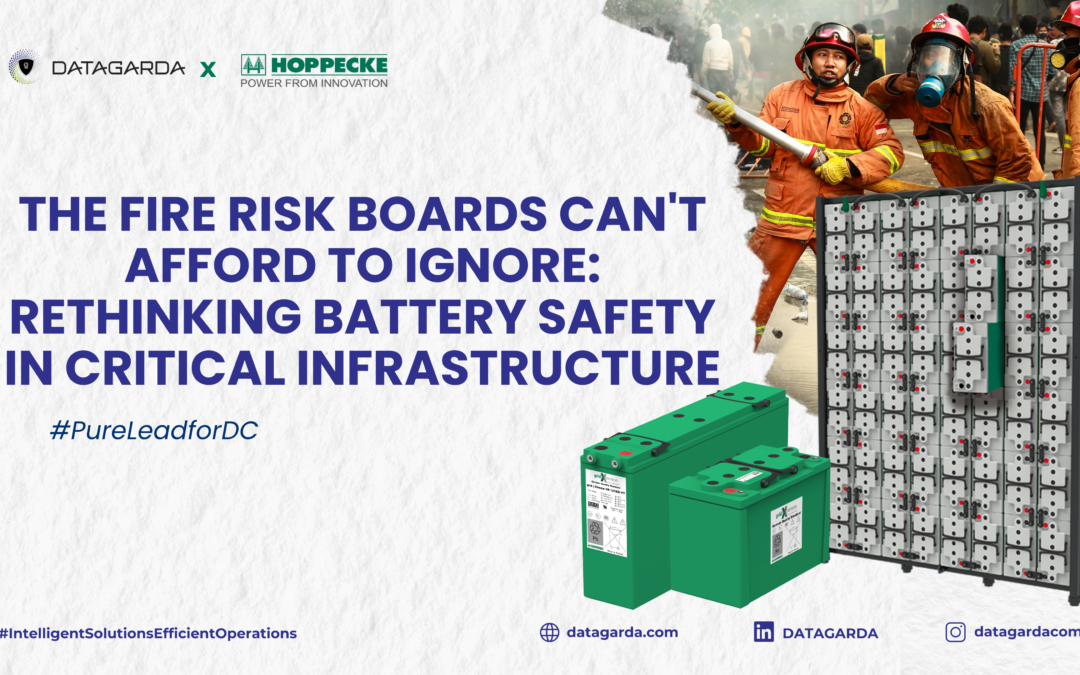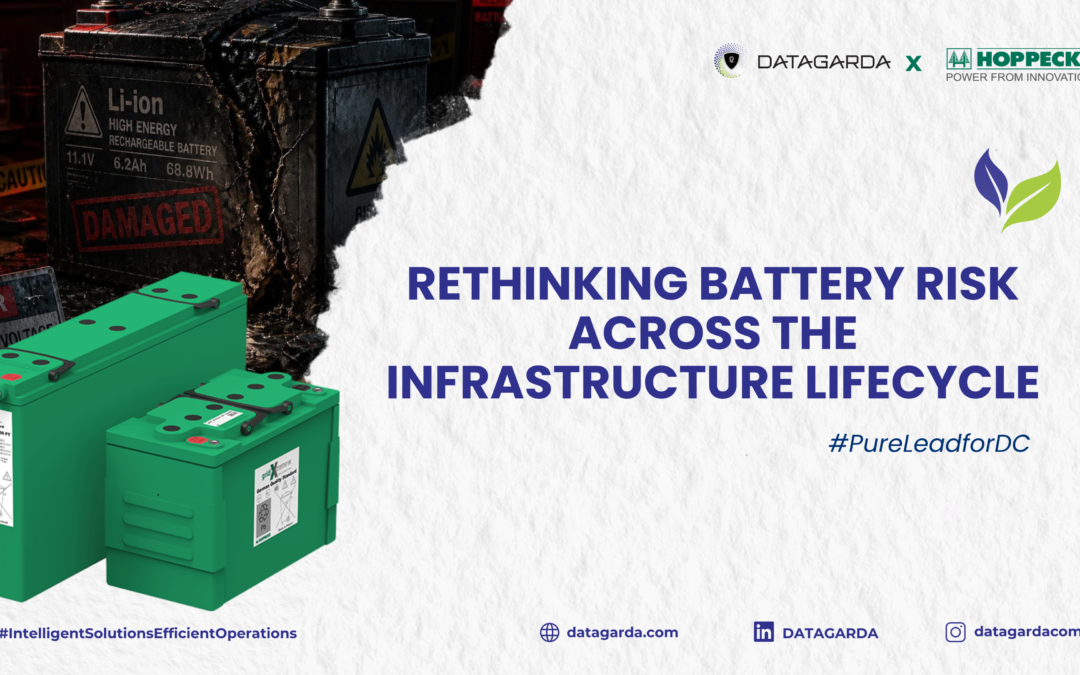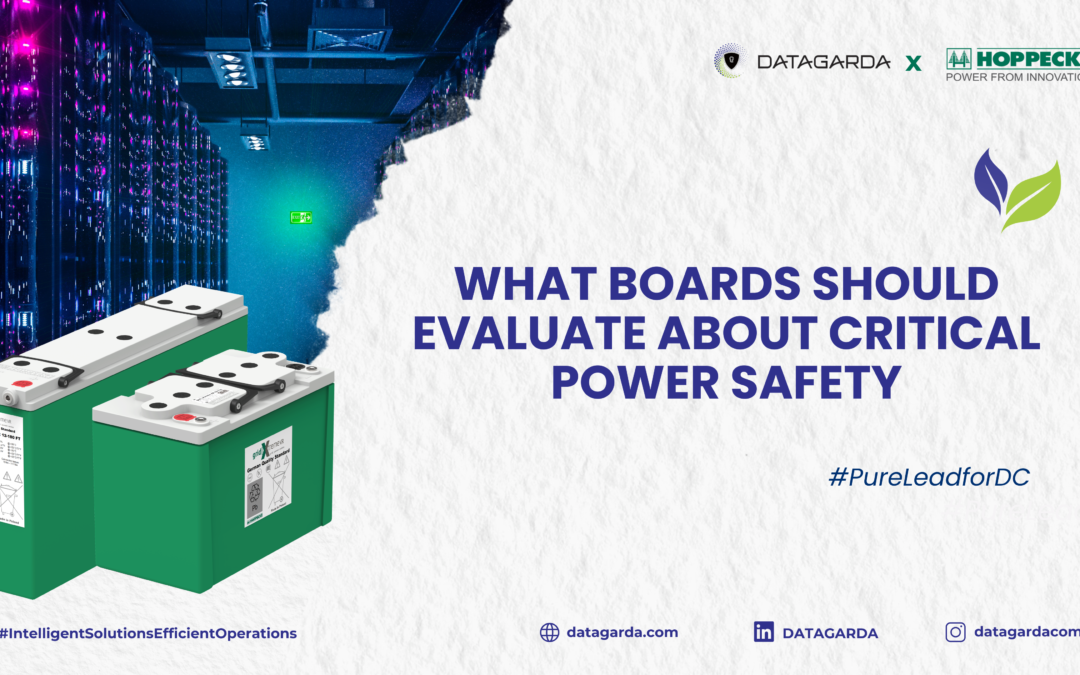
The Most Critical Risk in Your Data Center May Not Be What You Think
When organizations discuss data center resilience, conversations often focus on cybersecurity, redundancy, disaster recovery, and uptime.
Yet one critical component frequently receives far less attention:
The UPS battery system.
Most battery systems operate silently in the background, receiving little attention until the moment they are needed most. Unfortunately, that is often when hidden weaknesses become visible.
By then, the consequences can be significant.
A battery failure during a power event can impact business continuity, disrupt operations, damage customer trust, and create substantial financial losses.
The challenge is simple:
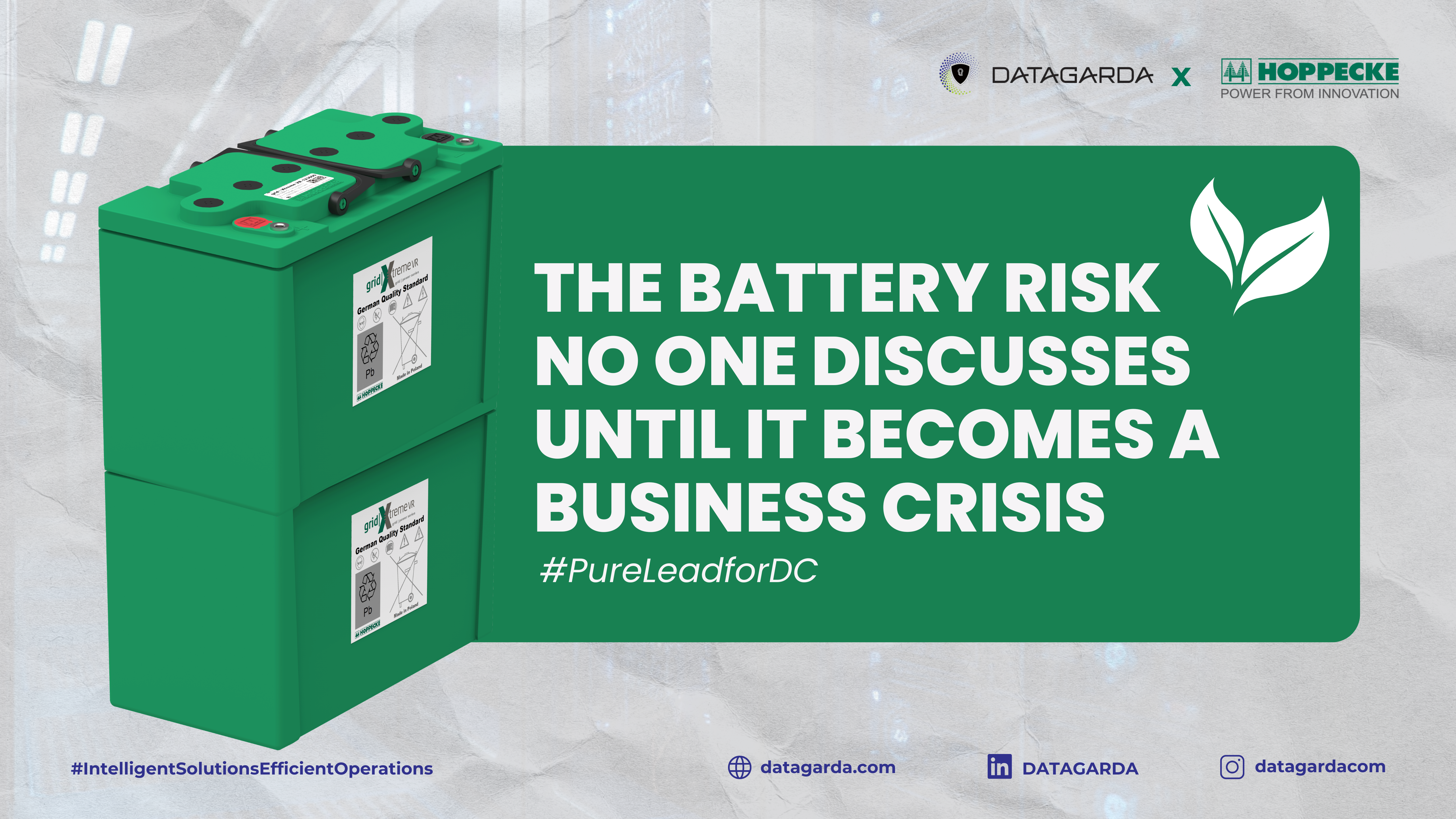
Battery risks are rarely discussed until they become a business crisis.
Why Battery Systems Matter More Than Ever
Modern enterprises depend on uninterrupted digital operations.
Data centers support:
- Financial transactions
- Cloud services
- Manufacturing systems
- Healthcare applications
- Government services
- AI and data analytics platforms
When utility power fails, the UPS battery system becomes the first line of defense.
Its performance directly affects:
- Service availability
- Infrastructure reliability
- Operational resilience
- Business continuity
This is why battery technology should no longer be viewed solely as an engineering decision.
It is a business risk decision.
The Hidden Risks Organizations Often Overlook
Many organizations focus on battery capacity and runtime.
However, several operational risks are often underestimated.
Thermal Instability
Heat remains one of the primary causes of battery degradation and performance issues.
As data center power densities increase, battery systems are exposed to more demanding operating environments.
Accelerated Aging
Battery performance can decline gradually over time, reducing reliability without obvious warning signs.
This can create a false sense of confidence in backup power systems.
Maintenance Complexity
Frequent inspections, replacement cycles, and maintenance requirements can increase operational costs while introducing additional risk.
Unexpected Failure During Critical Events
The greatest risk is not daily operation.
The greatest risk is discovering battery limitations during an actual outage.
At that point, organizations may face service interruptions, revenue loss, and reputational damage.
Why HOPPECKE Was Designed for Mission-Critical Environments
As organizations seek more reliable and resilient backup power solutions, HOPPECKE developed the Pure Lead platform specifically for critical infrastructure applications.
The objective was not simply to provide backup power.
The objective was to improve long-term resilience, operational reliability, and business continuity.
The Hoppecke Advantage
Enhanced Stability Under Demanding Conditions
Hoppecke utilizes advanced Pure Lead technology engineered to support stable battery performance and improved resilience in demanding operational environments.
This helps organizations reduce risks associated with battery degradation and unexpected performance loss.
Longer Service Life
A longer operational lifespan reduces replacement frequency and lowers total cost of ownership.
For data center operators, this means:
✔ Fewer replacement projects
✔ Reduced operational disruption
✔ Improved lifecycle economics
Reduced Operational Burden
Maintenance-free operation helps simplify infrastructure management while allowing teams to focus on strategic priorities rather than battery maintenance activities.
From Technical Component to Business Risk Management
Executive leaders increasingly recognize that infrastructure resilience is not solely an IT concern.
It is a business concern.
Every infrastructure component contributes to:
- Risk exposure
- Customer experience
- Service availability
- Financial performance
- Corporate reputation
UPS battery technology is no exception.
Organizations that proactively evaluate battery risk are better positioned to avoid costly disruptions and strengthen long-term resilience.
How Datagarda and HOPPECKE Help Organizations Build Resilience
At Datagarda, we help organizations evaluate critical infrastructure through the lens of operational excellence, business continuity, and risk management.
Together with HOPPECKE, we provide solutions designed to improve:
- Critical power reliability
- Infrastructure resilience
- Lifecycle efficiency
- Risk reduction
- Business continuity readiness
Because resilience is not built during a crisis.
It is built through decisions made long before one occurs.
Conclusion
Battery systems rarely attract attention when everything is operating normally.
But when power disturbances occur, they become one of the most important components in the entire infrastructure ecosystem.
The organizations that succeed in protecting operations understand that battery technology is not merely about backup power.
It is about managing risk, protecting continuity, and ensuring business resilience.
Ready to evaluate your backup power strategy?
Contact Datagarda today to learn how HOPPECKE Pure Lead Battery solutions can help strengthen reliability, reduce operational risk, and support long-term business continuity.
Talk to our experts and schedule a critical power assessment today.