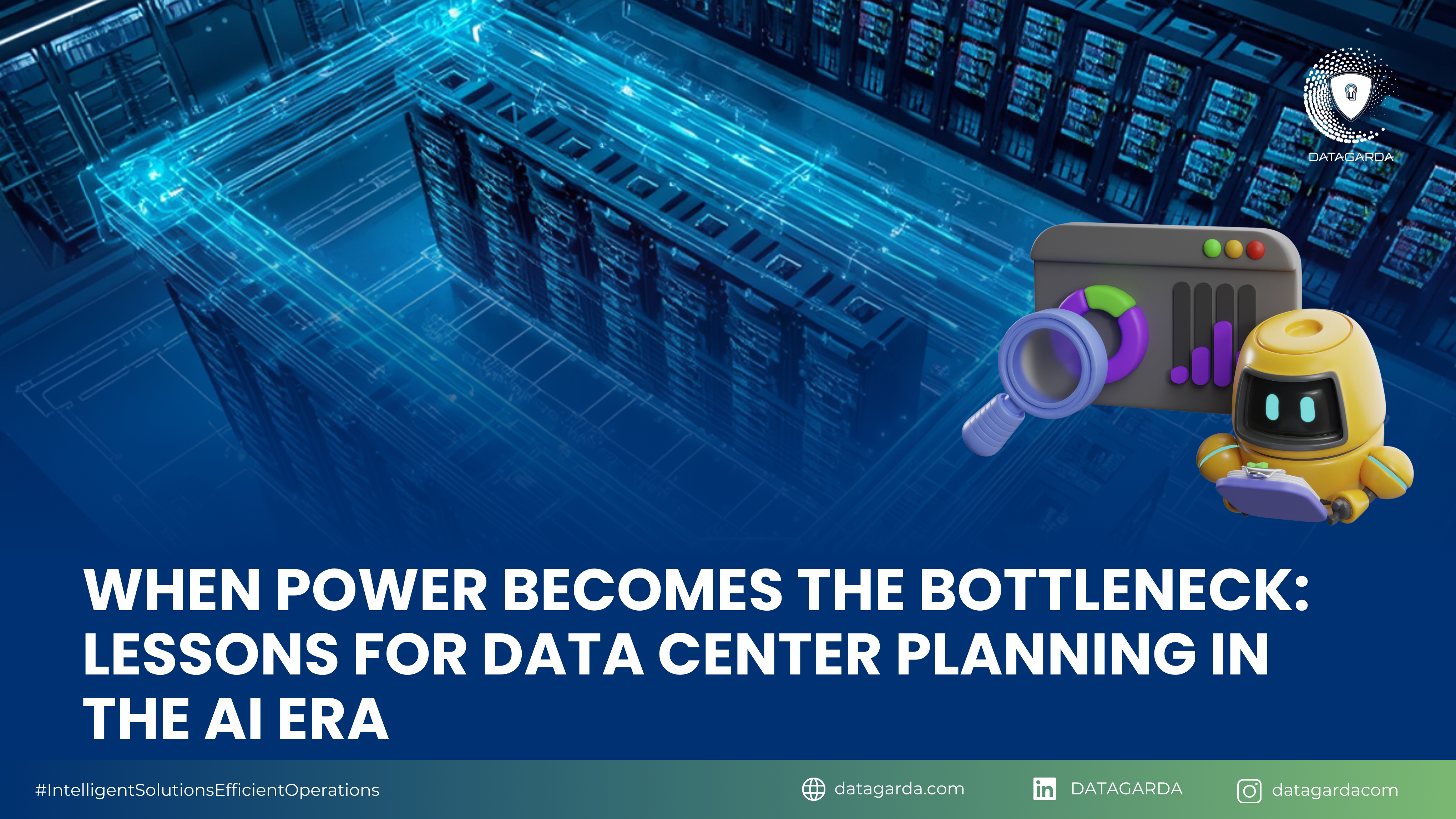
Artificial intelligence is changing the way data centers are planned, built, and operated.
As AI adoption accelerates, data centers are expected to support higher compute density, greater processing demand, and more intensive workloads. This shift creates new opportunities for digital growth, but it also creates a major challenge: power can quickly become the bottleneck.
For years, data center planning often focused on space, connectivity, rack capacity, and redundancy. Today, those factors still matter. But in the AI era, one question becomes increasingly urgent:
Can the power infrastructure support the workload that the business wants to run?
If the answer is unclear, the data center may face hidden risks long before the first AI workload goes live.
Why Power Is Becoming a Strategic Planning Issue
Power is no longer just a technical requirement. It is now a strategic factor in data center growth.
AI workloads can place heavier demands on electrical infrastructure, backup power, UPS systems, power distribution, monitoring, and cooling. When power planning is not aligned with future workload requirements, organizations may face capacity constraints, higher operational risk, inefficient expansion, and delayed deployment.
This means data center planning must move beyond the question of “how much space is available?” and start asking:
Is the power distribution system ready for higher density?
Is the UPS system aligned with critical load requirements?
Can backup power support the expected operating scenario?
Are electrical safety and compliance processes strong enough?
Can cooling systems handle the heat generated by higher power demand?
Are operations teams prepared to monitor, maintain, and respond?
DataGarda’s company profile highlights electrical engineering services such as power distribution system maintenance and management, UPS monitoring and maintenance, electrical safety inspections, compliance, and backup power solutions implementation. These areas are becoming increasingly important as data centers prepare for more demanding digital workloads.
AI Workloads Change the Risk Profile
AI changes the risk profile of data centers because it increases the relationship between compute demand, power consumption, cooling requirements, and operational complexity.
A data center may have enough physical space for more IT equipment, but that does not automatically mean it has enough power capacity. It may also have sufficient power on paper, but if cooling, monitoring, and operational procedures are not aligned, the facility may still face reliability risks.
This is why power must be reviewed as part of a larger readiness assessment.
DataGarda’s previous content direction has already recognized AI as a major force shaping data center infrastructure, including themes such as “The AI Boom: Why Next-Gen Data Centers Matter More Than Ever” and “The Role of Data Centers in Powering the AI Revolution.” These topics show how AI is becoming central to the future of digital infrastructure.
But the AI opportunity can only be supported if the underlying infrastructure is ready.
The Hidden Cost of Power Bottlenecks
A power bottleneck can create several operational and business challenges.
First, it can slow expansion. A data center may want to add new capacity, but limited power availability can delay deployment or require expensive redesign.
Second, it can increase operational risk. Higher power demand creates more pressure on electrical systems, UPS infrastructure, backup power, and cooling. If these systems are not reviewed together, weak points may remain hidden.
Third, it can affect customer confidence. Enterprises, cloud providers, financial institutions, and mission-critical users need confidence that the facility can support their workloads reliably.
Fourth, it can increase total cost of ownership. When power infrastructure is not planned properly from the beginning, operators may face higher retrofitting costs, inefficient layouts, and increased maintenance complexity.
In short, power bottlenecks are not only engineering issues. They are business continuity issues.
Planning Power for AI-Ready Data Centers
To prepare for AI-driven demand, data center power planning should be approached through an integrated review process.
1. Review Electrical Load Distribution
Electrical load distribution must be reviewed to ensure that current and future workloads can be supported safely and efficiently.
This includes evaluating load balance, distribution paths, redundancy, power quality, and system capacity. Without a clear understanding of how power is distributed, data center expansion can create operational blind spots.
DataGarda’s project scope for SMX01 Yellowstone Data Center included power systems engineering support, including analysis and review of electrical load distribution, EPMS, and redundancy.
This type of engineering review is essential when facilities are preparing for higher-density environments.
2. Validate UPS and Backup Power Readiness
UPS systems are central to critical infrastructure reliability.
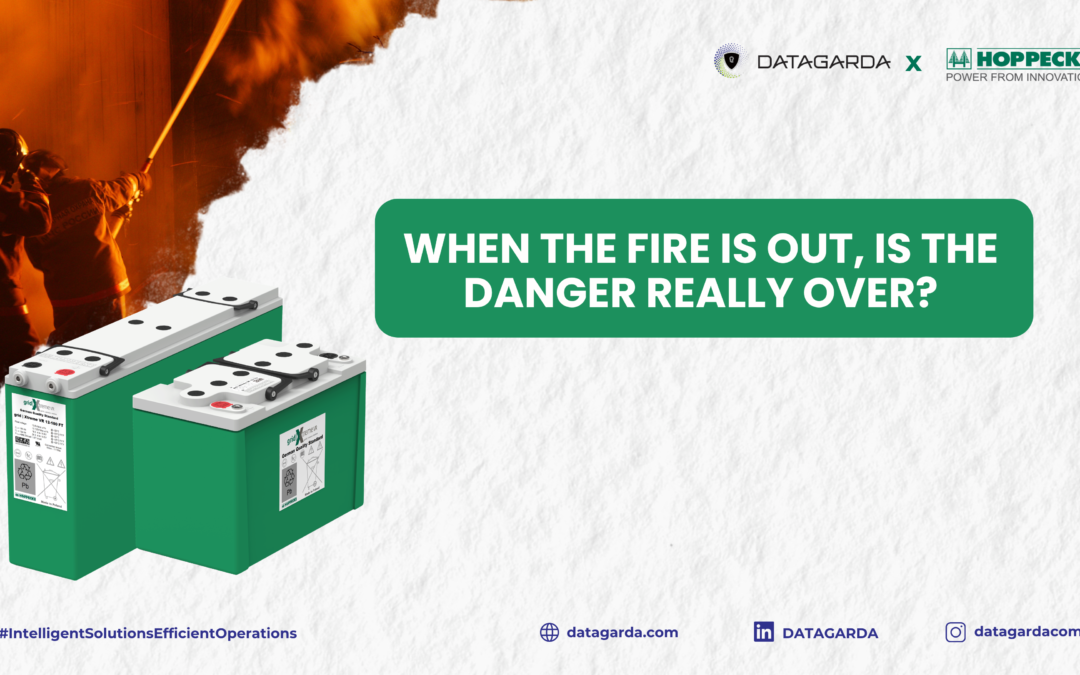
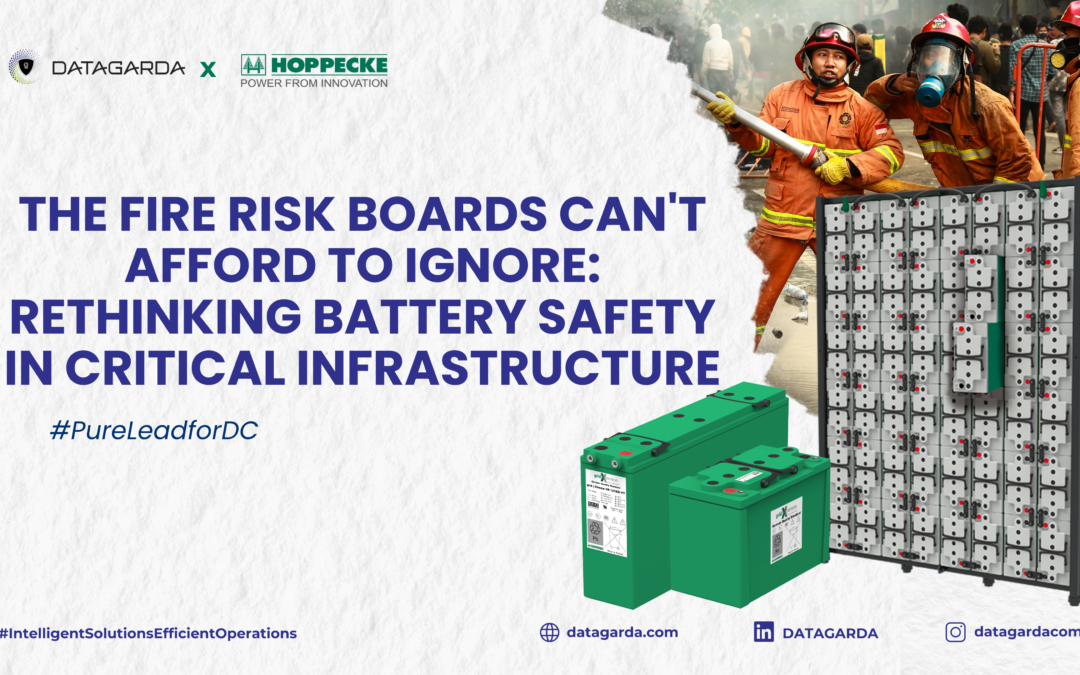
In an AI-driven environment, UPS readiness should not only be measured by backup duration. It should also consider power density, discharge performance, system maintainability, battery room layout, monitoring, and lifecycle planning.
A strong UPS review should answer:
Can the UPS support the critical load profile?
Are battery systems properly sized and maintained?
Is monitoring sufficient for early warning and response?
Are maintenance procedures documented and followed?
Is the backup power strategy aligned with operational risk?
As data centers become more critical, UPS and backup power planning should be treated as part of the reliability strategy, not just as an equipment selection process.
3. Align Power Planning with Cooling Design
Power and cooling must be planned together.
Higher power demand produces higher heat output. This means any increase in IT load must be reviewed alongside cooling capacity, airflow strategy, thermal efficiency, and environmental monitoring.
If power expansion is planned without cooling review, the facility may face hot spots, equipment stress, or inefficient energy use. If cooling upgrades are planned without reviewing electrical capacity, the facility may create another layer of power demand.
DataGarda’s company profile includes cooling engineering services such as cooling system design and optimization, precision cooling solutions, environmental monitoring for temperature and humidity control, and emergency cooling implementation.
This reinforces the importance of reviewing power and cooling as one connected system.
4. Include Commissioning and Performance Validation
Design assumptions must be validated before operations begin.
Commissioning helps ensure that electrical, mechanical, cooling, monitoring, and control systems perform as intended. This is especially important in AI-ready environments where system margins may be tighter and operational expectations are higher.
DataGarda’s engineering services include design document review, stakeholder coordination, pre-commissioning and commissioning support, site management, QA/QC management, and technical advisory during project execution.
For data center planning, commissioning is not just a project milestone. It is a risk reduction process.
5. Prepare Operations Before Expansion
A power upgrade alone does not guarantee readiness.
Operational teams must be prepared to manage higher complexity. This includes SOP, MOP, EOP, monitoring, escalation, preventive maintenance, incident response, and training.
DataGarda’s service scope includes managed operations, facility operations, IT and network operations, cybersecurity, physical security, facility management, audit and assessment, training, certification, IoT, machine learning, and monitoring systems.
This end-to-end operational view is important because AI-ready infrastructure depends not only on what is installed, but also on how it is operated every day.
The Importance of Early Assessment
The best time to identify a power bottleneck is before expansion begins.
Early assessment helps data center owners and operators understand whether the facility is ready for new workloads, higher density, or future AI requirements. It can also help identify gaps in documentation, system design, redundancy, operational procedure, and maintenance planning.
A strong assessment should cover:
Power distribution
UPS and backup power
Cooling and airflow
Monitoring and control systems
Electrical safety
Operational procedures
Commissioning readiness
Maintenance strategy
Certification and compliance readiness
Future expansion requirements
DataGarda’s business scope includes audit and assessment, critical equipment safety inspection, functional testing, harmonics monitoring, power analysis, IR thermography, and CFD simulation as specialized engineering services related to data center operations.
These capabilities are highly relevant when power becomes a constraint in data center planning.
Power Bottlenecks and Business Continuity
Data centers support mission-critical digital services. When power becomes a bottleneck, the impact can extend beyond the facility.
It can affect service availability.
It can delay customer onboarding.
It can limit AI adoption.
It can increase operational costs.
It can reduce confidence among stakeholders.
It can create avoidable downtime risk.
This is why power planning should be discussed not only by engineering teams, but also by business leaders, investors, and enterprise decision-makers.
In the AI era, power readiness becomes business readiness.
Lessons for Data Center Planning in the AI Era
The AI era requires a new planning mindset.
Data center stakeholders should avoid treating power, cooling, and operations as separate workstreams. Instead, they should approach infrastructure readiness as an integrated lifecycle process.
Key lessons include:
Power must be reviewed before capacity is promised.
Available floor space does not mean available power capacity.
UPS readiness must match workload criticality.
Backup systems must support the actual risk profile of the facility.
Cooling must follow power density.
More power means more heat, and heat must be managed before it becomes operational risk.
Operations must be ready before go-live.
Infrastructure reliability depends on SOP, monitoring, maintenance, and trained teams.
Assessment should happen early.
The earlier risks are identified, the easier and more cost-effective they are to address.
Power Is the Foundation of AI-Ready Infrastructure
AI will continue to reshape digital infrastructure. But without strong power planning, even the most ambitious AI strategy can be limited by facility constraints.
Modern data centers must review electrical infrastructure, UPS readiness, cooling alignment, commissioning, and operations as one connected system. This integrated approach helps reduce risk, improve reliability, and support long-term scalability.
When power becomes the bottleneck, growth becomes harder.
But when power is planned properly, data centers can move from capacity concerns to operational confidence.
Is your data center ready to support AI-driven power demand?
Connect with DataGarda to assess your power infrastructure, UPS readiness, cooling alignment, and operational preparedness — and build a stronger foundation for AI-ready digital infrastructure.
Visit: www.datagarda.com