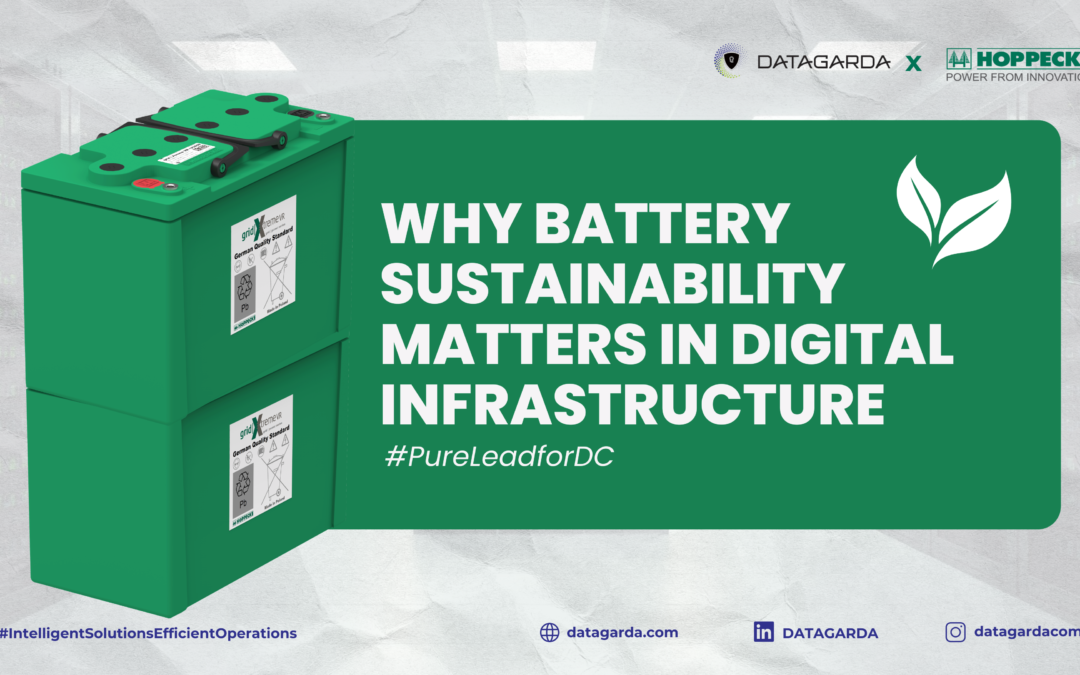
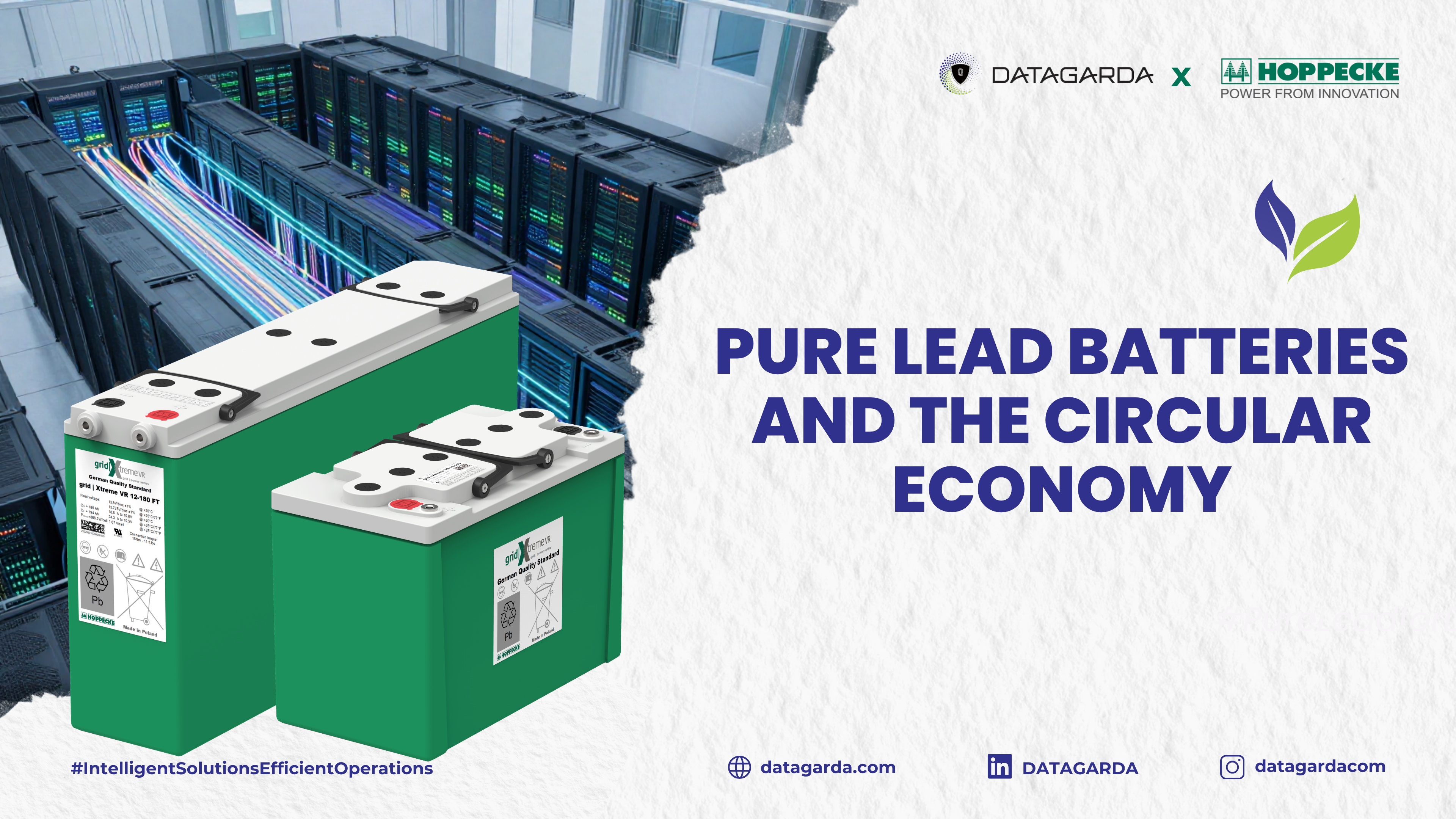
As data centers continue to expand globally, sustainability has become a defining factor in infrastructure design. Operators are no longer focused solely on uptime and efficiency—they are also expected to reduce environmental impact and support long-term ESG commitments.
While much of the conversation centers around renewable energy and cooling efficiency, one critical component is often overlooked: battery technology.
Batteries are essential to ensuring uninterrupted operations, but they also carry a lifecycle impact that extends far beyond daily performance. This is where the concept of the circular economy becomes increasingly relevant—and where pure lead battery technology offers a clear advantage.
What Is the Circular Economy?
The circular economy is an economic model focused on minimizing waste and maximizing resource efficiency. Instead of the traditional “take–make–dispose” approach, it emphasizes:
- Reuse of materials
- Recycling and recovery
- Extending product lifecycle
- Reducing environmental impact
For data centers, adopting circular principles means selecting technologies that support long-term sustainability—not just short-term performance.
The Hidden Impact of Battery Waste
Battery systems in data centers are periodically replaced as part of lifecycle management. The environmental impact of these replacements depends heavily on the type of battery technology used.
Challenges associated with certain battery chemistries include:
- Complex recycling processes
- Limited material recovery rates
- Growing volumes of electronic waste
- Environmental risks during disposal
As digital infrastructure scales, these challenges become more significant, making battery sustainability a strategic concern.
Why Pure Lead Batteries Fit the Circular Economy
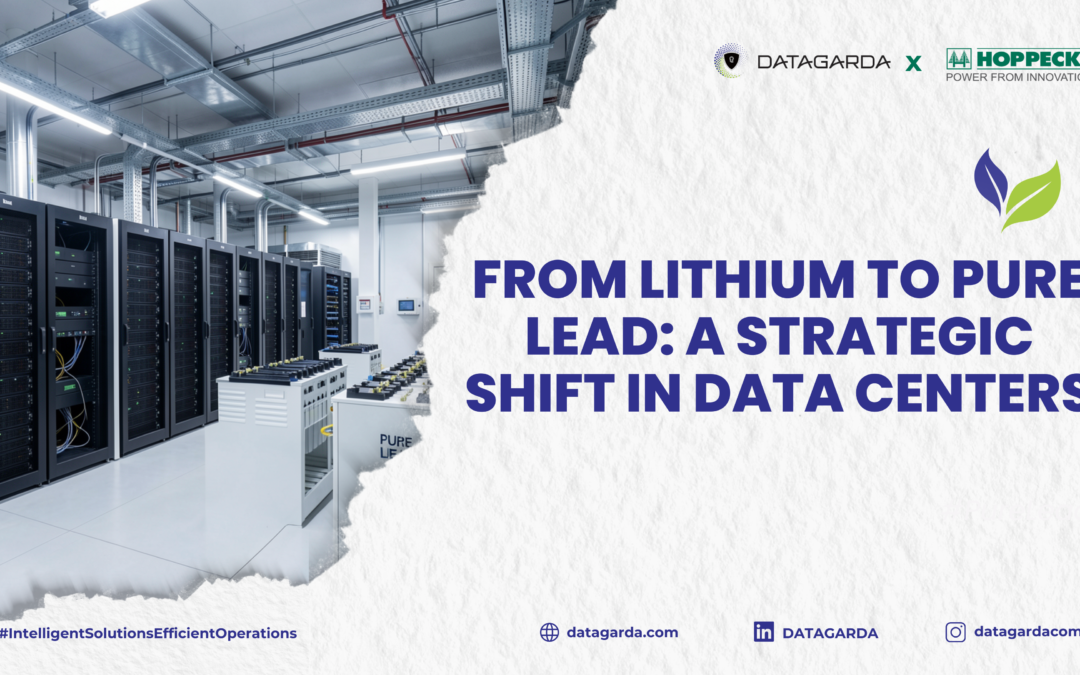
Pure lead battery technology aligns naturally with circular economy principles due to its mature and efficient lifecycle model.
1. High Recycling Efficiency
Lead is one of the most recycled materials in the world. Pure lead batteries can achieve exceptionally high recycling rates, with materials recovered and reused in new battery production.
2. Closed-Loop Lifecycle
Pure lead batteries support a closed-loop system, where used batteries are collected, processed, and transformed into new products with minimal waste.
3. Established Recycling Infrastructure
Unlike newer battery technologies, lead-based systems benefit from a well-developed global recycling ecosystem, ensuring consistent and responsible material recovery.
4. Reduced Environmental Impact Over Time
Long service life combined with high recyclability significantly lowers the overall environmental footprint across the battery lifecycle.
Sustainability Meets Reliability
In data centers, sustainability must go hand in hand with reliability.
Pure lead batteries not only support circular economy principles but also deliver:
- Stable performance in standby applications
- Predictable behavior under stress
- Long operational lifespan
- Minimal risk of hazardous failure events
This combination allows data center operators to achieve both environmental and operational objectives without compromise.
Supporting ESG Goals in Digital Infrastructure
Environmental, Social, and Governance (ESG) frameworks are increasingly influencing investment decisions and regulatory expectations.
Battery technology plays a direct role in:
- Reducing environmental impact
- Supporting responsible resource management
- Demonstrating commitment to sustainable operations
By adopting technologies aligned with circular economy principles, data centers can strengthen their ESG positioning while maintaining infrastructure resilience.
The Future of Sustainable Energy Storage
As digital demand grows, the need for scalable and sustainable infrastructure will continue to rise.
The future of energy storage in data centers will not be defined by performance alone, but by the ability to:
- Minimize waste
- Maximize material reuse
- Support long-term environmental responsibility
Pure lead battery technology represents a proven pathway toward achieving these goals.
Conclusion
The transition toward sustainable digital infrastructure requires a holistic approach—one that considers not only how energy is used, but also how it is stored and managed throughout its lifecycle.
Pure lead batteries offer a unique advantage by combining reliability with a circular economy model that minimizes waste and maximizes resource efficiency.
For data centers committed to long-term sustainability, adopting circular energy storage solutions is not just a responsible choice—it is a strategic one.