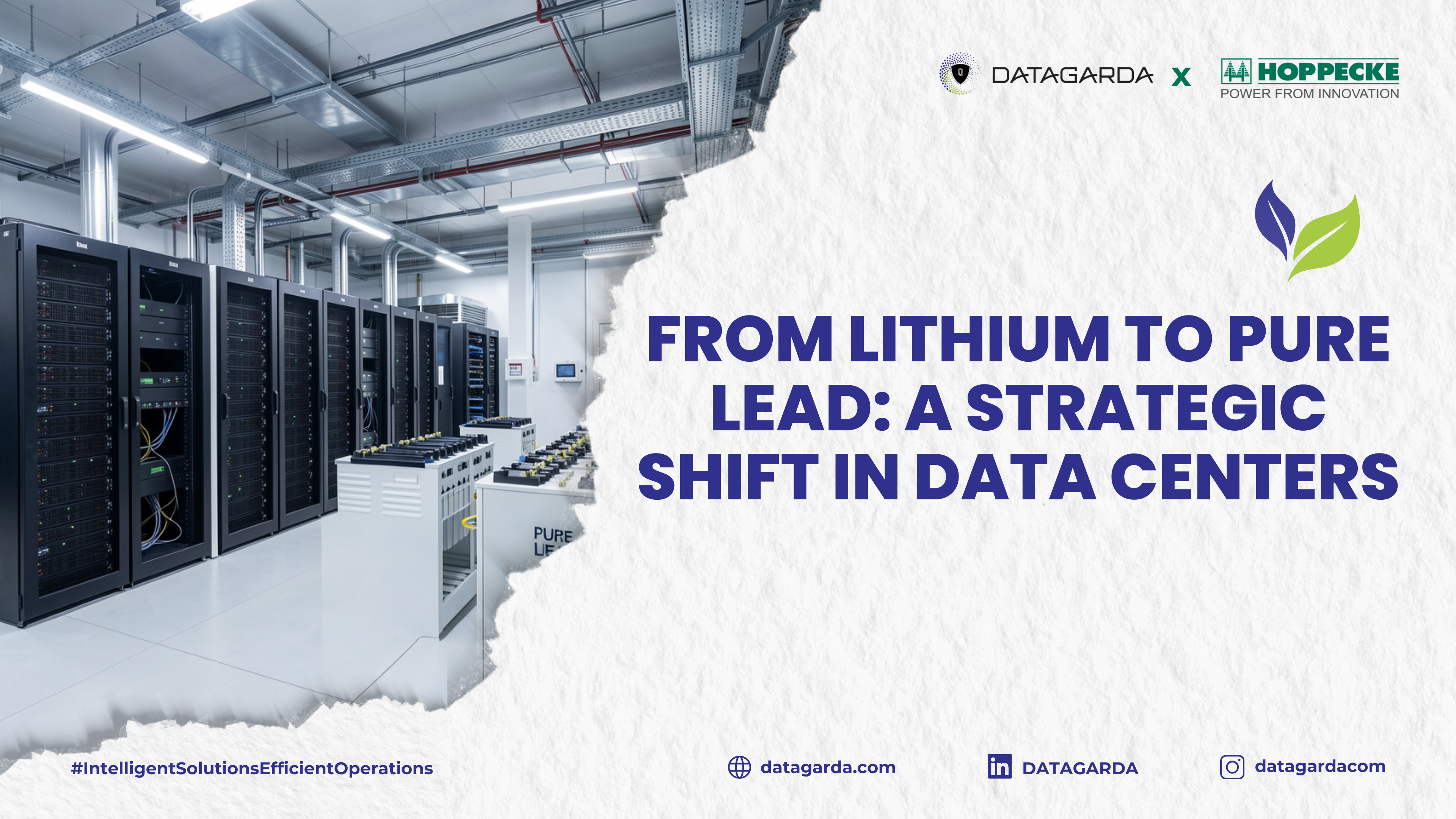
For years, lithium-ion batteries have been positioned as the modern solution for energy storage. Compact, high in energy density, and widely adopted across industries, lithium technology quickly found its way into data center UPS systems.
But as infrastructure standards evolve and real-world incidents accumulate, data center operators are reassessing a fundamental question:
Is lithium-ion truly aligned with the long-term safety and resilience requirements of mission-critical environments?
Increasingly, the answer is driving a strategic shift—from lithium to pure lead battery technology.
Why Lithium Became Popular
Lithium-ion batteries gained traction in data centers primarily because of:
- High energy density
- Smaller footprint
- Faster charging capability
- Reduced weight
On paper, these benefits appear attractive—especially where space efficiency is a priority.
However, data centers are not consumer environments. They are engineered ecosystems where predictability, safety, and uptime matter more than compact design.
The Risk Factor: Thermal Runaway
The key concern behind this strategic shift is thermal runaway.
Lithium-ion chemistry carries an inherent risk of uncontrolled heat escalation under fault conditions. A single cell failure can trigger:
- Rapid temperature increase
- Fire propagation between cells
- Explosion risk
- Total UPS system shutdown
Once initiated, thermal runaway is extremely difficult to contain. For facilities operating under strict uptime guarantees and SLAs, this risk profile is increasingly unacceptable.
Data centers are designed to eliminate cascading failures—not introduce them.
High Energy Density, High Consequence
Lithium-ion batteries concentrate significant energy into compact spaces. When operating normally, this is efficient. But under failure conditions, that concentration of energy becomes a liability.
The consequences can include:
- Severe damage to battery cabinets and UPS systems
- Fire suppression activation and facility evacuation
- Extended downtime and service interruption
- Reputational and contractual impact
In critical infrastructure, the severity of failure matters just as much as the probability.
Why Pure Lead Is Gaining Strategic Attention
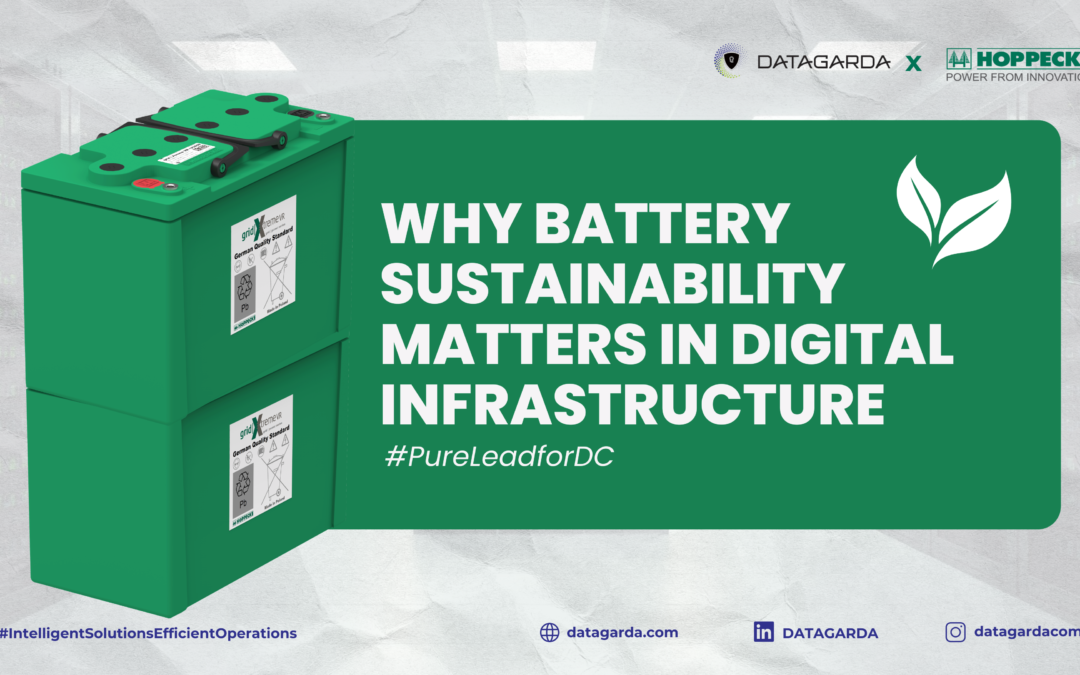
Pure lead battery technology represents a fundamentally different approach to energy storage in data centers.
Key advantages include:
1. No Thermal Runaway Risk
Pure lead batteries do not self-ignite and do not propagate fire between cells.
2. Predictable Failure Behavior
In abnormal conditions, failure modes are controlled and non-violent.
3. High Reliability for Standby Applications
Designed specifically for UPS and critical backup systems, pure lead batteries provide consistent performance over long service life.
4. Sustainability and Circular Lifecycle
Pure lead batteries support high recycling efficiency and closed-loop material recovery—aligning with growing ESG expectations.
A Strategic, Not Just Technical, Decision
The transition from lithium to pure lead is not merely a technical upgrade—it is a strategic infrastructure decision.
Data center operators today must consider:
- Safety compliance
- Insurance implications
- Regulatory trends
- Long-term ESG commitments
- Infrastructure resilience planning
Battery chemistry directly influences all of these factors.
Increasingly, forward-looking facilities are prioritizing controlled behavior, fire-safe design, and lifecycle sustainability over energy density advantages.
The Future of Critical Power
The future of data center energy strategy is not about chasing the newest technology—it is about selecting the most stable and resilient one.
As uptime expectations rise and risk tolerance decreases, eliminating thermal runaway risk becomes a logical step.
The shift from lithium to pure lead reflects a broader industry movement toward infrastructure maturity—where safety, predictability, and sustainability define competitive advantage.
Lithium-ion batteries offered compelling advantages in space and energy density. But in mission-critical environments, their risk profile has prompted serious reconsideration.
Pure lead battery technology provides a safer, more stable alternative aligned with the core principles of data center design.
The transition from lithium to pure lead is more than a trend—it is a strategic shift toward resilient, future-ready infrastructure.