For years, lithium-ion batteries have been widely adopted in data centers due to one key advantage: compact footprint. In environments where space is expensive and scalability is critical, minimizing physical space has become a major consideration in battery selection.
However, recent advancements in battery system design are redefining this assumption. Today, pure lead battery systems with stack racked configurations are proving that high safety and compact design are no longer mutually exclusive.
Data centers no longer need to choose between safety and space efficiency.
The Traditional Perception: Lithium = Smaller Footprint
Lithium-ion batteries gained popularity partly because of their high energy density, allowing more power to be stored in a smaller space.
In comparison, traditional battery setups were often seen as:
- Larger in footprint
- Less space-efficient
- More challenging to scale
But this perception is based on older system designs, not modern engineering approaches.
The Evolution: Stack Racked Pure Lead Systems
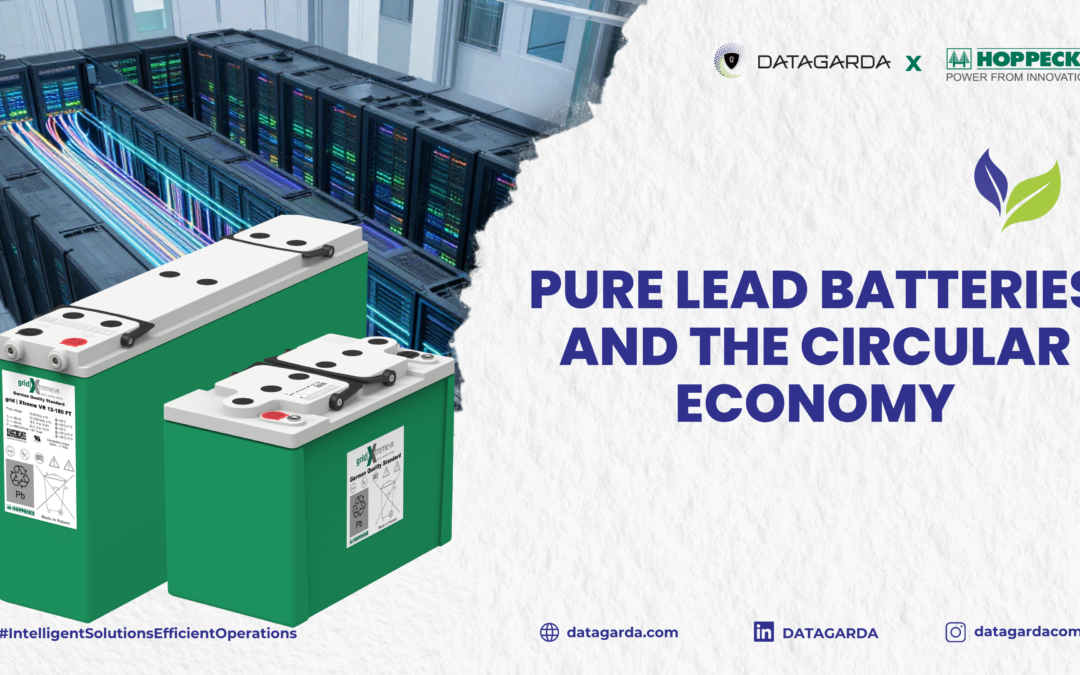
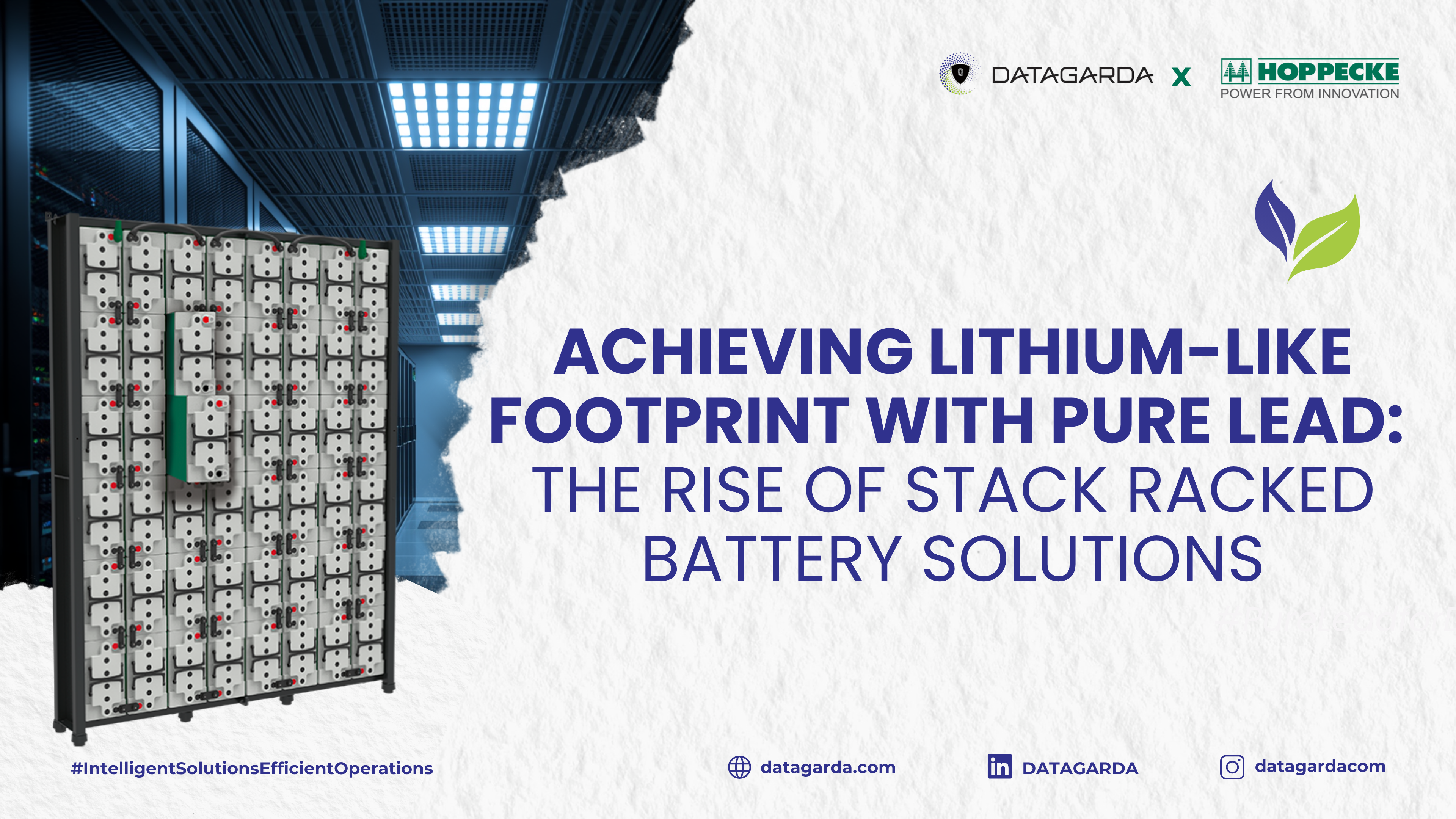
Modern pure lead battery systems now utilize high-density stack racking configurations, significantly improving space utilization.
Instead of spreading battery modules across multiple cabinets, stack racked systems:
- Optimize vertical space
- Reduce floor footprint
- Simplify system layout
- Improve accessibility and maintenance
This design evolution allows pure lead systems to match—or even outperform—lithium systems in space efficiency.
Comparing Footprint and Efficiency
Based on current system configurations:
- Lithium systems typically require multiple cabinets and distributed modules
- Pure lead stack racked systems consolidate batteries into a more compact, vertically optimized structure
Key outcomes include:
- Up to ~59% reduction in footprint
- Up to ~60% improvement in space efficiency
- Reduced installation complexity
- More efficient use of white space in data centers
This proves that footprint is no longer a limitation for pure lead technology.
Beyond Footprint: Safety Advantage Remains
While achieving comparable footprint, pure lead batteries retain a critical advantage: inherent safety.
Unlike lithium-ion batteries, pure lead systems:
- Do not experience thermal runaway
- Do not propagate fire between cells
- Do not generate oxygen during failure
- Fail in controlled and predictable ways
This means data centers can achieve compact design without introducing high-risk failure modes.
A Better Balance: Space, Safety, and Cost
Stack racked pure lead systems also deliver advantages beyond space efficiency:
- Lower system cost compared to lithium
- Simplified compliance and safety requirements
- Reduced risk of downtime due to battery failure
- Long service life with predictable performance
This creates a more balanced infrastructure strategy—where efficiency does not come at the expense of safety.
Rethinking Battery Selection in Data Centers
The assumption that lithium is the only solution for compact battery systems is no longer valid.
With modern stack racked designs, data center operators can now achieve:
- Comparable footprint
- Higher safety standards
- Better lifecycle value
- Reduced operational risk
Battery selection is no longer about choosing between space vs safety—it is about achieving both.
Conclusion
The evolution of stack racked pure lead battery systems marks a significant shift in data center energy strategy.
By delivering lithium-like footprint with inherently safer chemistry, pure lead technology offers a compelling alternative for mission-critical environments.
For data centers aiming to optimize space without compromising safety, the future is not about choosing lithium—it is about choosing smarter system design.